




The rivalry between the India national cricket team and the South Africa national cricket team is one of the most competitive matchups in international cricket. Both teams have produced exceptional batters, world-class bowlers, memorable performances, and thrilling contests across Test matches, One Day Internationals (ODIs), and Twenty20 Internationals (T20Is). Their encounters often combine technical batting, aggressive fast bowling, tactical captaincy, and intense competition.
India is widely recognised for its strong batting line-ups, talented spinners, and passionate cricket following. South Africa, meanwhile, has traditionally been known for its fast-bowling strength, athletic fielding, and powerful middle order. These contrasting strengths make their matches exciting for cricket enthusiasts worldwide. Whether the teams meet in a bilateral series, a major ICC tournament, or a World Cup knockout match, the contest attracts significant attention.
The India national cricket team vs South Africa national cricket team rivalry has grown through decades of competition, creating unforgettable moments and establishing several players as international stars. Understanding their cricketing history, important encounters, and individual achievements helps explain why this fixture remains a major attraction in world cricket.
History of India vs South Africa Cricket
South Africa returned to international cricket in the early 1990s after the end of its sporting isolation. India and South Africa played their first official ODI encounters during South Africa’s return to international competition in 1991. Their first Test series followed in 1992, opening a new chapter in their cricketing relationship.
The early contests introduced supporters to a competitive sporting relationship between two teams with different cricketing traditions. India relied heavily on technically accomplished batters and spin bowling, particularly in home conditions. South Africa brought a strong pace attack, disciplined fielding, and a reputation for competitive performances away from home.
Over the following decades, both teams developed stronger squads and more sophisticated strategies. India became increasingly successful overseas, while South Africa continued to produce outstanding fast bowlers and technically gifted batters. Their bilateral series became important tests of adaptability, especially when India toured South Africa’s quicker pitches or South Africa faced India’s spin-friendly conditions.
The rivalry also gained importance through ICC tournaments, where one match could influence a team’s entire campaign. Major tournaments have highlighted the pressure associated with playing against a strong opponent, making preparation, composure, and execution essential elements of success.
Head-to-Head Record Across Cricket Formats
The head-to-head record between India and South Africa differs according to the format. Test cricket places greater emphasis on patience, technique, and sustained bowling pressure. ODIs require teams to balance innings construction with scoring acceleration, while T20Is reward quick decision-making and aggressive execution. Consequently, a team’s success in one format does not necessarily guarantee dominance in another.
In men’s Test cricket, records through November 2025 show that South Africa had won 20 of 46 matches, India had won 16, and 10 had ended in draws. In ODIs, South Africa has historically maintained a strong record, while India has produced several important victories in bilateral series and global tournaments. T20Is have delivered closely contested encounters, with both sides demonstrating the ability to win through powerful batting and disciplined bowling.
| Cricket format | Main challenge | Important factors |
|---|---|---|
| Test matches | Sustaining performance over five days | Technique, stamina, bowling discipline |
| One Day Internationals | Building and defending a competitive total | Partnerships, middle overs, death bowling |
| T20 Internationals | Maximising impact in limited overs | Power-hitting, match-ups, execution |
| ICC tournaments | Performing under knockout or qualification pressure | Composure, adaptability, teamwork |
For supporters researching the India national cricket team vs South Africa national cricket team, it is important to compare records within the same format and date range. Overall figures can change after every international series, and statistics from men’s cricket should not be mixed with women’s cricket records.
Memorable Matches Between India and South Africa
Several encounters have strengthened this rivalry and demonstrated how quickly a cricket match can change direction. Some games have been decided by outstanding individual batting performances, while others have turned on a short spell of fast bowling or a disciplined effort from the spinners.
One significant moment came during the 2011 ICC Cricket World Cup, when South Africa defeated India in a group-stage match in Nagpur. India posted a competitive total, but South Africa successfully chased it after a strong batting performance. The result highlighted the importance of maintaining pressure throughout an innings rather than relying only on early wickets.
Another memorable contest took place during the 2023 ICC Men’s Cricket World Cup. India defeated South Africa by 243 runs in Kolkata, producing a dominant all-round performance. Virat Kohli scored an unbeaten century, while India’s bowlers restricted the South African batting line-up. The match illustrated how effective batting depth and disciplined bowling can combine to create a commanding victory.
The teams also met in the final of the 2024 ICC Men’s T20 World Cup. India won by seven runs in a dramatic finish, defending their total despite a powerful late assault from South Africa. The match became a defining moment for India’s T20 team and demonstrated the importance of composure under extreme pressure.
These contests show why this fixture remains compelling: neither reputation nor a strong start guarantees victory. Teams must execute their plans across every phase of the match.
Key Players Who Have Shaped the Rivalry
The history of India and South Africa features many celebrated international cricketers. Their contributions have shaped the teams’ identities and influenced the way future players approach high-pressure matches.
India’s influential players
Sachin Tendulkar played a major role in establishing India’s competitive presence against South Africa during the 1990s and 2000s. His technical ability, concentration, and adaptability made him a difficult batter to dismiss in different conditions.
Virat Kohli has become one of India’s most influential batters in this rivalry. His ability to build long innings in Tests and ODIs, combined with his intensity in limited-overs cricket, makes him particularly important in major contests. His century during the 2023 World Cup match against South Africa was an outstanding example of his ability to perform on a major occasion.
Rohit Sharma has contributed through aggressive opening batting and experienced leadership. His approach can put pressure on South Africa’s bowlers early, especially in shorter formats. Bowlers such as Jasprit Bumrah and spinners including Ravichandran Ashwin and Ravindra Jadeja have also played important roles by taking wickets and controlling scoring opportunities.
South Africa’s influential players
Jacques Kallis was one of South Africa’s most dependable all-rounders. His contributions with both bat and ball helped his team compete consistently across formats.
AB de Villiers brought extraordinary versatility to limited-overs batting. His innovative stroke play and ability to accelerate scoring made him a dangerous opponent, particularly when South Africa needed quick runs.
Dale Steyn was renowned for his pace, swing, and ability to challenge batters with accurate fast bowling. More recently, players such as Kagiso Rabada, Quinton de Kock, Aiden Markram, and David Miller have contributed to South Africa’s competitive strength in different formats.
The contributions of these players underline an important point: individual brilliance can influence a match, but sustained success requires a balanced team with dependable batters, effective bowlers, and reliable fielders.
Recent Performance and Major Tournament Encounters
Recent international tournaments have continued to add new chapters to this rivalry. The teams’ performances in ICC events are especially important because they provide a neutral setting where conditions, preparation, and execution often determine the outcome.
During the 2024 T20 World Cup final, India recovered from a tense closing phase to defeat South Africa by seven runs. The result was significant for Indian cricket, while South Africa was left reflecting on a narrow defeat after coming close to securing its first men’s senior World Cup title.
In the 2025 ODI series in India, the teams produced high-scoring cricket. India won the opening ODI in Ranchi by 17 runs after scoring 349 for eight, with Kohli making 135 from 120 balls. South Africa responded with 332, keeping the contest competitive until the closing overs.
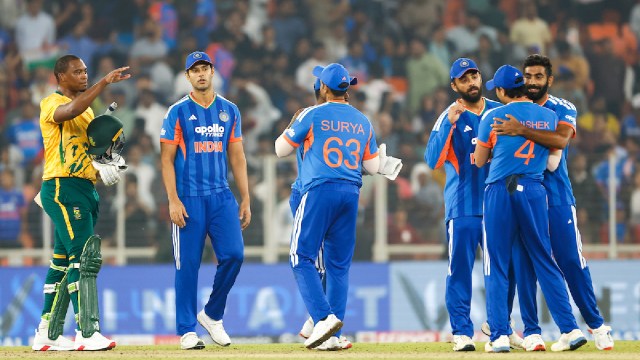
The teams met again in the 2026 Men’s T20 World Cup Super Eight stage in Ahmedabad. South Africa scored 187 for seven, led by David Miller’s 63 from 35 balls, before bowling India out for 111 to win by 76 runs. This result demonstrated South Africa’s ability to deliver a strong performance against a leading opponent on a major tournament stage.
These matches also demonstrate why past results cannot determine future outcomes. Team combinations, player availability, pitch conditions, and tactical adjustments can all change the balance of a contest.
Tactical Differences Between the Two Teams
India and South Africa frequently approach matches with different strengths, although their strategies vary according to the players selected and the conditions.
India often looks to establish control through technically sound top-order batting, strong spin options, and varied pace bowling. At home, spinners can play a particularly influential role, especially when the surface offers turn or uneven bounce. In limited-overs matches, India’s batting depth can help the team accelerate after a steady start.
South Africa traditionally places considerable emphasis on fast bowling, athletic fielding, and aggressive batting. Its pace attack can exploit bounce and movement, particularly in South African conditions. The team can also apply pressure through powerful middle-order hitters who are capable of changing the scoring rate quickly.
Three tactical factors often influence the outcome:
-
Powerplay performance: Early wickets or rapid scoring can determine the direction of an ODI or T20 match.
-
Middle-over control: Spinners, changes of pace, and intelligent field placements can prevent partnerships from developing.
-
Death-over execution: Accurate yorkers, effective slower balls, and smart batting decisions are crucial in close finishes.
In Test cricket, the tactical contest becomes more complex because captains must manage workloads, changing pitch conditions, and multiple innings. The side that adapts more effectively often gains the decisive advantage.

Venues and Playing Conditions
Home conditions have a major influence on the rivalry. Indian grounds can offer surfaces that reward spin bowling, patient batting, and an understanding of local conditions. However, some Indian venues also produce high-scoring limited-overs contests where aggressive batting becomes essential.
South African venues frequently provide pace and bounce, giving fast bowlers opportunities to challenge visiting batters. Indian players must adjust their footwork, balance, and shot selection when playing on these surfaces. South African batters face a different challenge when touring India, where spin, heat, and slower pitches may require a more measured approach.
Weather, dew, and the toss can also affect match strategy. In day-night limited-overs games, dew may make it harder for bowlers to grip the ball, potentially influencing the decision to bat or bowl first. In Test cricket, changes in cloud cover and pitch deterioration can alter bowling conditions from one session to the next.
Successful teams prepare for these variations instead of relying on a fixed game plan. Adaptability is one of the most important qualities in a rivalry where both sides have players capable of exploiting even a small weakness.
What Makes India vs South Africa Exciting for Fans?
The appeal of this matchup extends beyond statistics and tournament standings. Both nations have deep cricketing traditions, enthusiastic supporters, and a history of producing players who can perform under pressure.
Fans enjoy watching the contest between India’s technically skilled batting and South Africa’s renowned fast-bowling tradition. The rivalry also provides individual battles, such as a leading batter facing an experienced pace bowler or a middle-order finisher attempting to overcome a disciplined bowling attack.
For younger cricket followers, these matches offer opportunities to understand strategy, player roles, and the differences between formats. A Test match rewards patience and sustained concentration, whereas a T20 match can change within a handful of deliveries. ODIs combine elements of both, requiring teams to plan carefully while remaining prepared for sudden acceleration.
The India national cricket team vs South Africa national cricket team fixture is therefore more than a contest between two national sides. It represents contrasting playing styles, evolving tactics, sporting ambition, and the unpredictability that makes international cricket so engaging.
How to Analyse an India vs South Africa Match
Readers who want to evaluate a match should look beyond the final score. A useful analysis includes the following details:
-
Batting contributions: Identify the highest scorers, meaningful partnerships, and the impact of the top order.
-
Bowling figures: Compare wickets, economy rates, overs bowled, and performances during crucial phases.
-
Fall of wickets: Examine whether dismissals occurred in clusters and how they affected the innings.
-
Conditions: Consider the pitch, weather, venue, and toss when assessing team performance.
-
Match situation: Determine whether the result depended on a successful chase, a strong defence, or a late recovery.
A complete scorecard provides the evidence needed to understand these factors. Comparing scorecards from several matches can reveal patterns, such as a team’s difficulty against spin or its strength while chasing large totals.
It is equally important to distinguish between a bilateral series and an ICC tournament. Players may approach a league-stage fixture differently from a knockout match, where one poor session can end a team’s campaign. Context makes cricket statistics more meaningful and prevents misleading comparisons.
Conclusion
The rivalry between India and South Africa remains an important part of international cricket, built on competitive Test series, exciting ODI encounters, and dramatic T20 matches. Both teams have produced legendary players, memorable victories, and performances that continue to influence cricket fans across generations.
India’s batting depth, spin resources, and growing experience in high-pressure situations have helped it compete against South Africa in varied conditions. South Africa’s fast-bowling tradition, athletic fielding, and powerful batting have made it a formidable opponent across formats. Neither team can rely solely on its historical strengths, as current form, conditions, selection decisions, and execution all influence results.
For anyone following the India national cricket team vs South Africa national cricket team, the most useful approach is to study the history alongside current scorecards, individual performances, and format-specific records. The rivalry continues to evolve, and every new series offers opportunities for players to create fresh milestones and memorable moments.