



Introduction
India vs SA Women is an exciting contest in international women’s cricket, bringing together two competitive teams with different strengths, experienced players, talented young cricketers, and strong ambitions across formats. India Women are known for their technically skilled batters, quality spin bowling, and ability to build pressure through partnerships. South Africa Women, meanwhile, have developed a reputation for aggressive batting, powerful all-round performances, and disciplined pace bowling. When these sides meet, the result often depends on how effectively they manage pressure during crucial phases of the match.
The rivalry attracts attention in One Day Internationals (ODIs), Twenty20 Internationals (T20Is), and Test cricket. Each format creates different challenges, from building long innings in ODIs to making quick decisions in T20Is and maintaining concentration over several days in Tests. Their encounters also provide opportunities to evaluate individual performances, team combinations, fielding standards, and tactical approaches.
Recent meetings have demonstrated how closely matched these teams can be. India defeated South Africa by 52 runs in the 2025 ICC Women’s Cricket World Cup final, while South Africa won four of the five T20Is during their April 2026 home series. These contrasting results show why India vs SA Women statistics are useful for understanding the rivalry rather than judging either team by a single match.
This article explores their head-to-head rivalry, important match results, leading players, batting and bowling strengths, format-specific strategies, and the statistics that help readers understand future contests.
India vs SA Women Head-to-Head Record Across Formats
The head-to-head record provides a useful starting point for understanding the India Women vs South Africa Women rivalry. Both teams have experienced periods of dominance, but their results differ depending on the format. India have historically performed strongly in ODIs and have won all three women’s Tests played between the sides through 2024. T20Is, however, have been much more evenly balanced.
Available historical records through 2026 list three Tests, 35 ODIs, and 25 T20Is between the teams. India have won all three Tests and 21 ODIs, while South Africa have won 13 ODIs. In T20Is, each team has recorded 11 victories, with three matches ending without a result. One additional ODI ended without a result.
These figures show why it is important to examine each format separately. India’s record in longer international cricket reflects their ability to build substantial innings and maintain pressure over extended periods. South Africa’s competitive T20I record highlights their capacity to chase targets quickly and change a match through explosive batting or timely wickets.
Head-to-head numbers should also be interpreted in context. Cricket has evolved significantly over the years, with changes in fitness, coaching, playing conditions, and batting approaches. Older results help establish historical patterns, but recent performances often provide a more useful indication of current team strengths.
India vs SA Women Match Results and Recent Performances
Recent encounters have made this rivalry particularly interesting because neither team has maintained complete control across all competitions. India’s victory in the 2025 Women’s Cricket World Cup final was a landmark achievement, while South Africa’s subsequent T20I series win demonstrated their strength in the shorter format.
In the World Cup final on 2 November 2025, India scored 298 for seven in 50 overs. South Africa were dismissed for 246 in 45.3 overs, giving India a 52-run victory and their first Women’s ODI World Cup title. Shafali Verma scored 87 from 78 balls, Deepti Sharma made 58, and Laura Wolvaardt produced a century for South Africa.
The final illustrated the importance of contributions from several players. India’s opening partnership gave the innings momentum, the middle order maintained the scoring rate, and Richa Ghosh added valuable late runs. South Africa’s captain kept the chase alive with an excellent hundred, but the loss of wickets prevented the team from completing the pursuit.
The April 2026 T20I series in South Africa produced a different outcome. South Africa won the first three matches before India secured a 14-run victory in the fourth. The hosts then won the fifth match by 23 runs, finishing the series with a 4–1 advantage.
India’s 192 for four in the third T20I was a competitive total, but South Africa reached 193 for one in only 16.3 overs. The result highlighted the impact of a successful chase when top-order batters maintain a high scoring rate without losing wickets. In the fourth match, India responded by scoring 185 for five and restricting South Africa to 171 for nine.
The contrast between these results demonstrates that a previous victory does not guarantee success in the next encounter. Teams must adapt to the format, conditions, bowling combinations, and tactical decisions required on the day.
India vs SA Women Statistics at a Glance
A statistical comparison helps readers understand the historical balance of this contest. The following table summarises the available international head-to-head record through 2026. These figures represent historical results rather than predictions about upcoming matches.
| Format | Matches played | India Women won | South Africa Women won | Other results |
|---|---|---|---|---|
| Test cricket | 3 | 3 | 0 | 0 |
| One Day Internationals | 35 | 21 | 13 | 1 no result |
| T20 Internationals | 25 | 11 | 11 | 3 no results |
| Total | 63 | 35 | 24 | 4 no results |
Source: Historical head-to-head figures reported by CricketTaken, updated in August 2026.
The table highlights India’s overall advantage, particularly in Test cricket and ODIs. Their ODI record reflects a strong ability to score competitive totals and defend them through disciplined bowling. South Africa’s 13 ODI victories, however, show that they have repeatedly challenged India, including in important tournament matches.
The T20I figures are especially revealing. Eleven wins apiece, alongside three no-results, demonstrate how closely contested the shorter-format rivalry has been historically. A small difference in execution can decide these matches, making death-over bowling, powerplay scoring, and fielding efficiency particularly important.
Statistics also need context. A win recorded several years ago contributes to the historical total, but it does not necessarily reflect the current form of either side. For a complete assessment, readers should combine head-to-head records with recent scorecards, player availability, venue conditions, and tournament circumstances.
Key Indian Players to Watch in India vs SA Women Matches
India’s strength comes from a combination of aggressive opening batters, experienced middle-order players, adaptable all-rounders, and bowlers capable of taking wickets at important moments. The team’s most effective performances generally occur when these roles complement one another rather than relying on a single star.
Smriti Mandhana is an important part of India’s batting approach. Her timing, placement, and ability to find boundaries through the off side can help India establish a strong foundation. She can accelerate when required while also managing the early overs carefully against quality pace bowling.
Shafali Verma offers a more aggressive option at the top of the order. Her attacking style can place immediate pressure on the opposition, especially during the powerplay. Her 87 in the 2025 World Cup final demonstrated how a fast-scoring innings can help establish a challenging total in a high-pressure match.
Harmanpreet Kaur provides experience and composure in the middle order. She can rebuild an innings after early wickets or accelerate when the team needs a stronger finish. Her leadership is also valuable when India must make tactical adjustments during difficult phases.
Deepti Sharma contributes in multiple areas. Her batting can stabilise an innings, while her off-spin bowling gives India another option for controlling the middle overs and breaking partnerships. In the 2025 World Cup final, she scored 58 and took five wickets for 39 runs, delivering one of the most influential all-round performances in the match.
Richa Ghosh is another important player, particularly in limited-overs cricket. Her ability to accelerate late in an innings can significantly improve India’s final score. Wicketkeeping also gives her opportunities to influence the match through catches, stumpings, and quick decisions behind the stumps.
The exact importance of each player depends on the playing XI, fitness, pitch, and format. India’s best approach is usually to build a reliable batting platform while retaining enough power and bowling variety to respond when South Africa take control.
Key South African Players to Watch Against India
South Africa’s competitive performances are built around strong top-order batting, experienced all-rounders, and a bowling attack that can create pressure with pace, movement, and variations. Their players have demonstrated the ability to challenge India in both high-scoring contests and matches where wickets fall regularly.
Laura Wolvaardt is central to South Africa’s batting plans. She combines sound technique with the ability to score boundaries without taking unnecessary risks. Her 101 in the 2025 World Cup final was a clear example of her importance. Although South Africa lost that match, her century kept the chase competitive for a substantial period.
Marizanne Kapp offers significant value as an all-rounder. Her seam bowling can trouble batters with movement and changes of pace, while her batting gives South Africa flexibility in the middle order. She is particularly influential when the team needs a wicket or a quick scoring contribution to shift momentum.
Sune Luus provides batting depth and useful bowling options. Her role can vary depending on the team combination, but she can contribute to partnerships and help maintain stability when the top order loses wickets. Her experience is valuable in matches where the required run rate changes quickly.
Nonkululeko Mlaba offers a left-arm spin option that can be effective against batters who struggle to rotate the strike against slower bowling. Her ability to vary pace and use changes in trajectory makes her useful during the middle overs.
Other players, including Tazmin Brits, Chloe Tryon, and Nadine de Klerk, can influence matches through aggressive batting or all-round contributions. Their impact depends on their role in the selected lineup and the conditions on the day.
South Africa’s biggest advantage is the variety available across their squad. When the top order produces a strong start and the all-rounders contribute in the middle and lower order, the team can build totals quickly or chase demanding targets with confidence.
Batting Comparison Between India Women and South Africa Women
Batting is often the decisive factor in India vs SA Women matches, particularly in ODIs and T20Is. Both teams possess technically sound top-order players and batters capable of changing the scoring rate quickly. The difference often comes down to how effectively they balance aggression with the need to preserve wickets.
India traditionally place considerable emphasis on building partnerships. Openers such as Mandhana and Verma can provide contrasting approaches, with one focusing on timing and placement while the other looks to attack early. When this combination succeeds, India can establish a strong platform for the middle order.
India’s middle order becomes especially important when early wickets fall. Experienced batters must assess the required run rate, identify the bowlers they can target, and avoid losing wickets in quick succession. Players such as Harmanpreet and Deepti can help stabilise the innings before accelerating during the final overs.
South Africa also have a powerful batting structure. Wolvaardt provides stability at the top, while aggressive teammates can increase the scoring rate. Their approach is particularly effective when the opening partnership survives the new ball and creates opportunities to attack during the middle overs.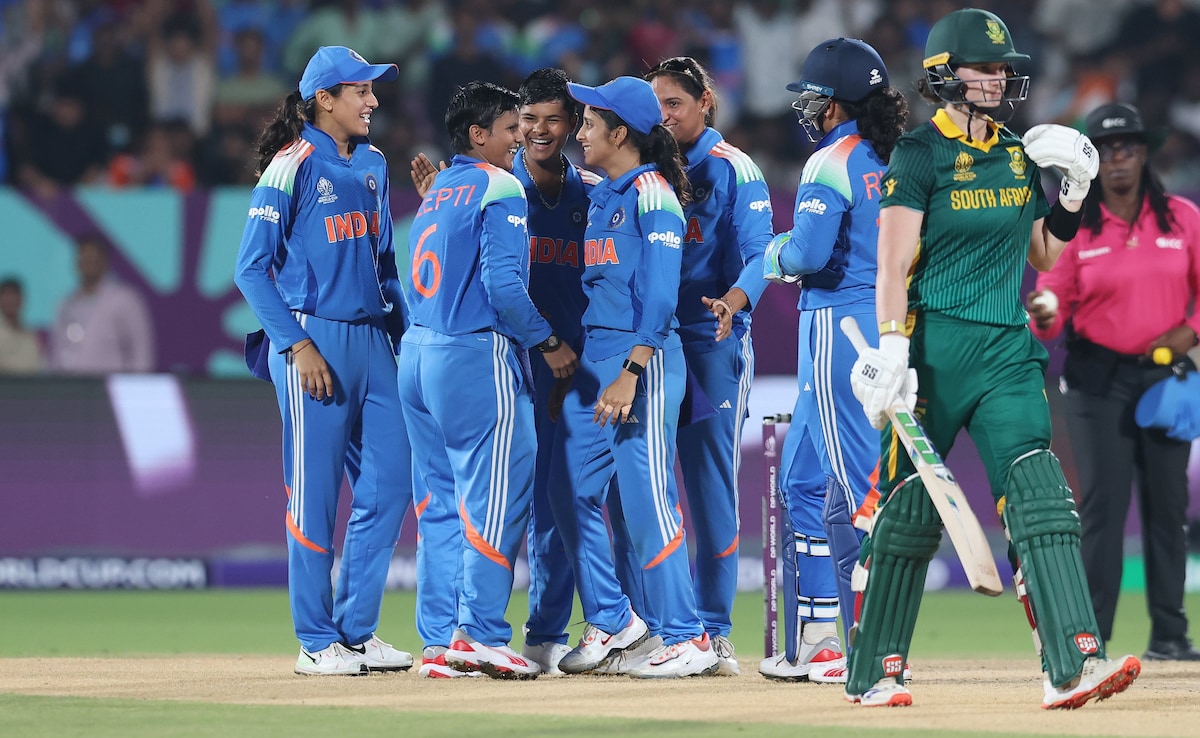
The 2026 T20I series illustrated the difference between a competitive total and a successful innings. India’s 192 for four in the third match was not enough because South Africa chased it with nine wickets remaining. This result showed that even a strong batting performance can be overshadowed when the opposition builds an exceptionally productive partnership.
In a future encounter, the key batting questions will include whether India can maintain a high scoring rate without losing too many wickets and whether South Africa can prevent India’s middle order from accelerating. The answers may determine which team controls the match.
Bowling Strengths and Wicket-Taking Strategies
Bowling is equally important in the India Women vs South Africa Women rivalry. A team may score more than 180 in a T20I or approach 300 in an ODI, but its bowlers must still execute their plans to defend the total. Wickets, dot balls, and pressure during the final overs can change the outcome dramatically.
India have a combination of seamers and spinners that allows the captain to adjust according to conditions. Seam bowling can be particularly useful at the beginning of an innings, when movement through the air or off the pitch creates opportunities. Spinners often become more influential during the middle overs, especially when the surface offers grip or batters try to force the scoring rate.
Deepti Sharma is a valuable option because she can bowl economical spells while looking for wickets. Her performance in the 2025 World Cup final, when she claimed five wickets, showed the value of attacking spin during a chase. Her contribution helped India turn a competitive match into a decisive victory.
South Africa can counter this approach with a combination of pace, seam movement, and spin. Marizanne Kapp is particularly valuable because she can challenge batters with disciplined lengths and movement. Other seamers can use changes in pace and variations to prevent batters from settling into a rhythm.
For both sides, the death overs require careful planning. Bowlers need to decide when to use yorkers, slower deliveries, wide lines, and short balls. Poor execution can result in boundaries, while accurate bowling can force batters into risky shots.
Fielding supports these plans. A dropped catch can prolong an important innings, while a direct hit or a sharp boundary save can prevent valuable runs. In close matches, these small moments can prove as important as a half-century or a three-wicket spell.
How Pitch and Weather Conditions Influence India vs SA Women
Conditions can significantly affect the balance between India Women and South Africa Women. A venue that encourages stroke play may favour aggressive batters, while a slower surface can give spinners greater control. Understanding these factors is essential when analysing match previews, scorecards, and team strategies.
Indian pitches can vary considerably. Some offer good pace and bounce, allowing batters to play through the line, while others become slower and reward players who use placement and rotation. On surfaces that assist spin, India may benefit from having several bowling options capable of controlling the middle overs.
South African venues can offer different challenges, particularly when the pitch provides bounce or movement for seamers. Batters may need to adjust their footwork, avoid playing away from their bodies, and choose their attacking shots carefully. However, conditions vary by ground and season, so it would be inaccurate to assume that every South African venue favours fast bowling.
Weather can also influence a match. Rain interruptions may shorten an innings and change the target under the applicable playing regulations. Cloud cover and humidity can affect bowling conditions, although their actual influence depends on the surface and match situation.
Before evaluating an upcoming India vs SA Women fixture, readers should consider the venue, recent results at that ground, the expected weather, and the likely playing XIs. These details provide a more reliable basis for analysis than broad assumptions about home advantage.
What Makes India vs SA Women Matches Competitive?
Several factors explain why this contest remains compelling for cricket followers. Both teams have enough quality to win through different methods, and their strengths frequently overlap.
The most important elements to examine are:
-
Opening partnerships: A strong start can create a platform for a large ODI total or a competitive T20I score.
-
Middle-over control: Spinners and accurate seamers can slow the scoring rate and create opportunities for wickets.
-
All-round performances: Players who contribute with both bat and ball give captains greater tactical flexibility.
-
Death-over execution: Accurate bowling and sensible batting decisions can determine the final margin.
-
Fielding standards: Catches, run-outs, and boundary saves can influence the result of closely contested matches.
These factors are connected. For example, an early wicket may force a team to rebuild rather than attack, which changes the pressure on the middle order. A successful partnership may then allow the team to accelerate late in the innings. Similarly, a bowler who breaks a partnership can shift the momentum even if the batting side has already scored quickly.
The strongest team is not necessarily the one with the biggest individual stars. It is often the team that combines individual skill with consistent execution and responds most effectively to changing circumstances.
Conclusion
India vs SA Women is a competitive international cricket rivalry shaped by strong batting lineups, varied bowling attacks, experienced all-rounders, and the ability of both teams to perform under pressure. India’s historical advantage in Test cricket and ODIs demonstrates their strength in longer formats, while the evenly balanced T20I record highlights South Africa’s competitiveness in shorter games.
The 2025 Women’s Cricket World Cup final, which India won by 52 runs, and South Africa’s 4–1 T20I series victory in April 2026 illustrate how dramatically results can differ between formats. These encounters underline the importance of partnerships, wicket-taking spells, fielding, and tactical flexibility.
For anyone following India vs SA Women, the most useful analysis combines head-to-head records with recent performances, player contributions, venue conditions, and match-specific statistics. Rather than relying on historical numbers alone, readers should examine how each team performs in the relevant format and responds to its opponent’s strengths. This balanced approach offers a clearer understanding of the rivalry and makes every new encounter more interesting to follow.