

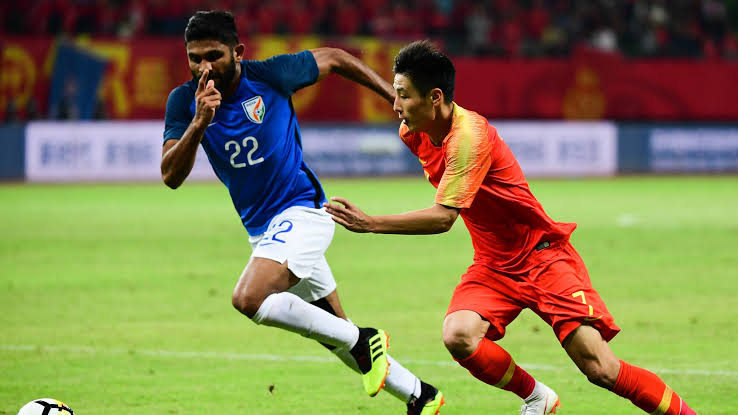


Football in Asia has developed through very different paths, and the comparison between China and India offers an interesting look at two of the continent’s most populous nations. Both countries have large potential audiences, established domestic competitions, national football associations and long-running football traditions. Yet their men’s national teams have experienced different levels of success at various points in their histories. When supporters search for china vs india, they are often looking for more than a simple scoreline. They want to understand the history between the teams, their competitive records, playing styles, rankings and the wider football environment surrounding them.
The senior men’s teams have met on several occasions across Asian competitions and international friendlies. Their most recent senior international meeting recorded by major football databases was a 0-0 draw in Suzhou in October 2018. The result was notable because China created pressure and opportunities but India defended effectively enough to preserve a clean sheet. Since then, the two national teams have followed separate competitive paths, making their head-to-head history particularly important when examining the matchup today.
The modern china vs india discussion also needs to be placed in the context of Asian football. FIFA’s official men’s ranking page listed China PR at 91st and India at 138th in its latest official update dated July 20, 2026, with the next official update scheduled for October 7. These positions can change with international results, so rankings should be viewed as a snapshot rather than a permanent measure of a team’s quality.
China vs India Football: A Look at the Head-to-Head History
The historical record between the two senior sides has generally favored China. According to 11v11’s head-to-head record, China have recorded eight wins and seven draws against India, while India have not recorded a victory in the listed senior international meetings. The historical matches include encounters in the Asian Games, AFC Asian Cup, Nehru Cup and international friendlies.
One of the earliest notable results came in 1974, when China defeated India 7-1 at the Asian Games. Subsequent meetings were considerably tighter, including several draws during the 1980s and 1990s. India held China to draws in matches such as the 1982 Asian Games and 1986 Nehru Cup, while China collected victories in important encounters including the 1984 AFC Asian Cup and 1988 AFC Asian Cup. These results show why the rivalry cannot be understood simply through one period of football history.
| Head-to-head detail | China PR | India |
|---|---|---|
| Wins in listed senior meetings | 8 | 0 |
| Draws | 7 | 7 |
| Most recent listed meeting | 0-0 draw | 0-0 draw |
| Most recent meeting | October 2018 | October 2018 |
The 2018 encounter remains especially relevant when discussing china vs india because it is the latest senior meeting listed in the commonly referenced head-to-head record. The match ended without a goal, despite China controlling significant portions of the contest. India’s defensive organization and goalkeeper performance helped them avoid defeat, while China’s inability to turn territorial pressure into a goal ultimately shaped the result.
China’s Football Development and National Team Profile
China has invested heavily in football infrastructure, professional clubs and youth development over different periods. The Chinese Super League has provided a professional environment for domestic players, while the country has also attracted international players and coaches during various phases of its development. At national-team level, China have reached the FIFA World Cup finals once, in 2002, although they did not progress beyond the group stage.

In recent years, the senior national team has faced the challenge of converting domestic investment and football popularity into consistent international results. FIFA’s ranking data shows China at 91st in the July 2026 official ranking, while its historical highest position listed by FIFA is 37th. The team’s ranking history illustrates that its international standing has moved considerably across different eras.
From a tactical perspective, Chinese football has traditionally placed considerable importance on structured organization, technical passing and maintaining shape. The exact approach changes with the coaching staff and player group, however, so it is better to avoid treating one tactical identity as permanent. International football can change quickly because coaches have limited preparation time and must adapt systems to available players.
Recent Competitive Context for China
China’s road through the 2026 FIFA World Cup Asian qualifying campaign included matches against Thailand, Singapore and Korea Republic in Group C. FIFA’s published qualification results show China beating Thailand 2-1 away, drawing Singapore 2-2, defeating Singapore 4-1, drawing Thailand 1-1 and losing 3-0 to Korea Republic before losing 1-0 to Korea Republic in the final matchday.
These results demonstrate the competitive difficulty of Asian qualifying football. China were able to collect important results against Thailand and Singapore but faced a significantly more demanding challenge against Korea Republic. For any future china vs india meeting, this broader Asian context matters because both teams operate within a region where tactical discipline, physical preparation and tournament experience can strongly influence individual matches.
India’s Football Development and National Team Profile
India’s football story is equally distinctive. The sport has deep roots in different regions of the country, with domestic competitions and clubs creating strong local supporter cultures. The national team has also experienced periods of success in South Asian football and has regularly competed in AFC competitions. However, converting domestic popularity into sustained success against Asia’s strongest national teams remains an important challenge.
FIFA’s July 20, 2026 ranking placed India at 138th in the men’s world ranking. FIFA lists India’s highest historical ranking as 94th, while the team’s 2026 ranking range through that point had remained between 136th and 141st. These figures provide useful context, but they should not be interpreted as a direct prediction of what would happen in an individual match.
India’s football has traditionally produced technically capable attacking players, energetic midfielders and defenders accustomed to compact systems. The national team has also increasingly emphasized structured buildup and tactical organization. At the same time, the availability of players, coaching philosophy, international experience and preparation time can change the way India approaches a particular opponent.
India’s Recent International Picture
India’s 2026 World Cup qualifying campaign placed them in Group A alongside Qatar, Kuwait and Afghanistan. FIFA’s qualification records show India collecting results against Kuwait and Afghanistan but ultimately failing to advance to the later stages of the World Cup qualification route.
India’s more recent international results have included a mixture of competitive performances and difficult outcomes. This is important when analyzing china vs india because a team’s current level cannot be determined solely by its historical record. Player availability, coaching changes, recent form and the strength of opponents all influence how a national team performs at a particular moment.
How the Playing Styles Can Differ
A China-India matchup can be fascinating because the teams may approach possession, defensive positioning and attacking transitions differently depending on their respective coaching staffs. China have often been associated with a more possession-oriented and physically structured approach, while India have frequently relied on organization, quick transitions and disciplined defensive blocks when facing stronger opponents.
However, modern international football has become increasingly flexible. Teams rarely use exactly the same system from one match to another. A side may begin with four defenders and shift into a different shape when attacking, while another may use a compact midfield before quickly transitioning forward after winning possession. Therefore, a meaningful tactical analysis should focus on the actual lineups and coaching instructions for the specific match rather than relying entirely on historical stereotypes.
For china vs india, midfield control would likely be an important area to watch. The team that manages the central areas effectively can influence possession, tempo and the number of opportunities created. Defensive transitions would also matter because losing the ball in an advanced position can leave space for fast counterattacks.
Key Factors That Could Shape a Future Meeting
Several elements would influence a future meeting between the two teams. The first is preparation. International teams often have only a short training window before a match, meaning coaches must simplify tactical instructions and prioritize defensive organization. A team that adapts quickly can gain an advantage even without dominating possession.
The second factor is finishing. The 2018 meeting illustrated how territorial superiority does not automatically produce goals. China controlled important phases of that match but could not convert its opportunities, while India successfully protected its goal. This is a useful lesson for analyzing any future encounter because chances created, chances converted and defensive errors can matter more than possession statistics alone.
A third factor is the experience of the players. Matches between national teams can have different dynamics depending on whether coaches select experienced internationals, emerging players or a combination of both. Injuries, club commitments and tactical experimentation can also influence selections.
Why the Matchup Remains Interesting for Asian Football
The appeal of china vs india extends beyond the two national teams. China and India represent enormous football markets, and both countries have millions of potential supporters who follow international football alongside domestic and overseas competitions. A competitive meeting between their national teams can therefore attract considerable attention.
There is also a developmental dimension. International matches give coaches an opportunity to test tactical systems, evaluate emerging players and identify weaknesses before major competitions. For players, facing a different football culture can provide valuable experience. A match between China and India therefore has significance beyond the final score because it can form part of a longer process of national-team development.
What Supporters Usually Watch For
When analyzing a future match, supporters can focus on a few simple indicators:
- Recent results and the quality of opponents faced.
- Starting lineups and important player absences.
- Midfield possession and transition efficiency.
- Defensive organization and finishing quality.
These factors can provide more meaningful insight than relying exclusively on reputation or historical head-to-head results.
China vs India and the Broader Asian Football Landscape
Asian football has become increasingly competitive, with nations such as Japan, Korea Republic, Iran, Australia, Saudi Arabia, Qatar and Uzbekistan regularly demonstrating strong international standards. China and India therefore face a demanding regional environment where qualification for major tournaments requires consistent performances across several matches.
The World Cup qualification structure has also expanded the opportunities available to Asian teams. FIFA’s 2026 qualification format provided Asia with eight direct World Cup places plus an additional potential route through the FIFA Play-Off Tournament. This expansion has changed the competitive landscape, although it has not removed the difficulty of progressing through the Asian qualification stages.
For china vs india, this broader environment creates an interesting benchmark. Neither country’s football development can be assessed only by its record against the other. Results against stronger and similarly ranked Asian opponents, youth development, domestic league quality, coaching structures and the ability to produce international-level players all contribute to the long-term picture.
What the Historical Record Tells Us
The head-to-head record gives China a clear historical advantage, with eight wins and seven draws in the listed senior meetings. Yet the long sequence of draws also shows that India have been capable of making the fixture competitive, particularly when defensive organization has been effective.
The 0-0 result in 2018 is perhaps the clearest modern example. China were unable to convert their pressure into goals, while India demonstrated that disciplined defending could keep the game level. If the teams meet again, the old record would provide historical context, but the actual result would depend on the players, coaches and circumstances at that time.
Conclusion
The china vs india football matchup combines a long Asian football history with two national teams developing along different paths. China’s senior side has the stronger historical head-to-head record and stood at 91st in FIFA’s July 2026 men’s ranking, while India were ranked 138th in the same official update. These figures help establish the current context, but they do not determine the outcome of a future match. Historically, the fixture has included decisive Chinese victories, several competitive draws and the memorable 0-0 meeting in 2018. The next chapter would depend on factors such as squad selection, preparation, tactical approach, finishing and defensive discipline. As Asian football continues to evolve, china vs india remains a useful matchup for understanding the contrasting challenges and ambitions of two major football nations.