




The T20 format has transformed international cricket into a fast-paced contest where every over can change the direction of a match. When India and Australia meet, the excitement becomes even greater because both teams have a history of performing under pressure, producing remarkable individual performances, and competing fiercely in high-stakes situations. The t20 ind vs aus rivalry attracts cricket fans who enjoy aggressive batting, tactical bowling changes, spectacular fielding, and dramatic finishes that often remain memorable long after the final ball.
India and Australia bring different strengths to the shortest international format. India often combines explosive top-order batting with versatile spin options and a strong collection of pace bowlers. Australia, meanwhile, is known for its aggressive approach, physical intensity, powerful hitters, and ability to adapt to difficult conditions. These qualities make their encounters interesting not only for supporters but also for people who enjoy studying cricket tactics. Whether the match is played in India or Australia, the outcome frequently depends on how effectively each side handles the powerplay, controls the middle overs, and executes its plans during the final stages.
T20 IND vs AUS: Latest Series Context and Match Overview
The most recent completed five-match T20I series between India and Australia took place in Australia from October 29 to November 8, 2025. The series provided several different types of contests, including a rain-affected opening match, a close encounter in Melbourne, and an important Indian victory in Hobart. India won the series 2–1, with the first and fifth matches ending without a result because of rain. The fourth match in Queensland was particularly significant, as India registered a convincing 48-run victory to strengthen its position in the series.
These results demonstrated how quickly the balance can shift in T20 cricket. Australia showed its ability to recover from difficult situations, while India responded effectively after losing the second match. Weather interruptions also highlighted the importance of making the most of limited playing opportunities. For fans following t20 ind vs aus, this series remains a useful example of why individual scorecards tell only part of the story. Bowling discipline, partnerships, the timing of attacking shots, and decisions made by captains all contributed to the overall outcome.
Important Results from the 2025 T20I Series
The following table summarizes the five matches and their outcomes.
| Match | Venue | Result |
|---|---|---|
| 1st T20I | Canberra | No result due to rain |
| 2nd T20I | Melbourne | Australia won by 4 wickets |
| 3rd T20I | Hobart | India won by 5 wickets |
| 4th T20I | Queensland | India won by 48 runs |
| 5th T20I | Brisbane | No result due to rain |
The series offered a balanced mixture of batting performances and bowling displays. Australia’s win in Melbourne showed its ability to chase a target efficiently, while India’s successful chase in Hobart demonstrated the value of maintaining momentum without losing too many wickets. The fourth match also underlined the importance of setting a competitive total and then applying pressure through disciplined bowling. Rather than relying on one superstar to decide every contest, both teams needed contributions across several departments.
Why the India vs Australia T20 Rivalry Is So Popular
India and Australia have developed one of international cricket’s most closely followed rivalries. Their contests bring together passionate fan bases, experienced international players, and younger cricketers looking to establish themselves on a major stage. Australian teams have traditionally emphasized aggression, direct cricket, and relentless pressure, while Indian sides have increasingly combined technical batting with fearless stroke play and greater flexibility in team selection. These contrasting approaches create fascinating tactical battles.
The rivalry also carries significance because both countries regularly compete for major international honours. A bilateral T20I series gives players an opportunity to test their skills against a strong opponent, while tournament encounters can have consequences for qualification and championship ambitions. For spectators, the appeal lies in the uncertainty. A team that appears comfortably ahead after ten overs can lose control through two expensive overs, while a struggling batting side can recover through a single partnership. This unpredictability is one of the main reasons the fixture continues to attract attention.
Key Indian Players Who Can Influence a T20 Match
India’s T20 strength comes from the variety of skills available across its batting and bowling departments. Aggressive openers can make immediate use of the fielding restrictions, middle-order batters can accelerate after assessing the conditions, and all-rounders can provide valuable balance. The precise playing eleven depends on fitness, selection decisions, opposition tactics, and the venue, so fans should distinguish between established team strengths and confirmed match-day selections.
Explosive Batting at the Top
India’s opening batters play a particularly important role because the first six overs often establish the scoring rate for the entire innings. An opener who finds boundaries early can force the opposing captain to change field placements and introduce bowling variations sooner than planned. However, aggressive batting also creates risks. A team that loses two or three wickets quickly may have to spend valuable overs rebuilding rather than attacking.
The ideal approach combines intent with awareness. Indian batters need to identify which bowlers are vulnerable to particular shots, recognize when the ball is moving in the air, and avoid repeating unsuccessful attacking options. Against Australia’s quicker bowlers, a well-timed drive or controlled pull can be more productive than attempting a risky boundary on every delivery. A strong opening partnership gives the middle order the freedom to accelerate without being forced into unnecessary risks.
Middle-Order Power and Finishing Ability
Middle-order players often determine whether India can convert a promising start into a match-winning total. Their responsibilities include rebuilding after early wickets, maintaining the scoring rate against spin, and accelerating during the final five overs. Players who can hit boundaries against both pace and spin are especially valuable because they prevent the opposition from controlling the game through a single bowling strategy.
Finishing requires more than powerful hitting. Batters must understand which end of the ground offers better scoring opportunities, when to take a single, and how to retain strike against the opposition’s strongest bowler. A calculated innings of 35 runs from 20 deliveries can sometimes contribute more to a team’s success than a quick but poorly timed burst of boundaries. In a close contest, these small decisions often separate a competitive total from an exceptional one.
Australia’s Main Strengths in T20 Cricket
Australia’s T20 approach frequently relies on power, adaptability, and the ability to take control during short periods of play. Its batting line-up can feature players capable of clearing the boundary against fast bowlers and spinners alike. This creates a difficult challenge for opponents because even an apparently economical over can be followed by a sudden burst of scoring. Australian batters also tend to look for opportunities to disrupt a bowler’s rhythm rather than allowing the fielding side to settle into a predictable pattern.
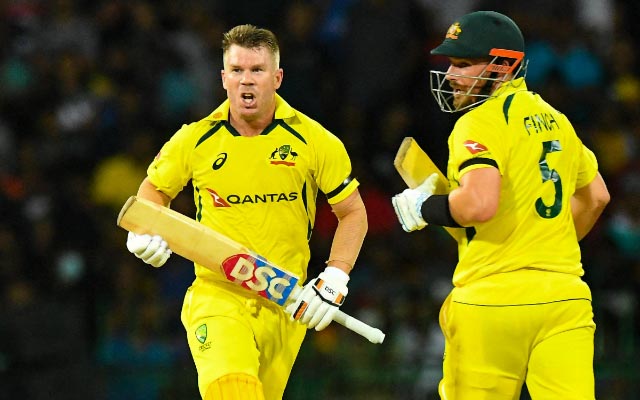
Australia’s bowling attack can be equally influential. Fast bowlers use changes in pace, hard lengths, yorkers, and bounce to restrict scoring opportunities. Spinners can slow the game down when the pitch offers assistance, especially if the batting side struggles to rotate the strike. In Australian conditions, bounce and pace may encourage attacking shots, but those same characteristics can create catching opportunities when batters mistime their strokes. Successful Indian bowlers must therefore combine aggression with control instead of relying exclusively on defensive lines.
The Importance of Australia’s Middle Overs
The overs between the powerplay and the final phase are often crucial to Australia’s strategy. If the team has made a strong start, the middle order can continue attacking while ensuring that wickets remain available for the final overs. If early wickets fall, the priority may shift toward rebuilding a partnership without allowing the required scoring rate to rise too sharply.
Australian batters also need to respond intelligently to spin bowling. Attempting a boundary on every delivery can create opportunities for catches and bowled dismissals. By rotating the strike and choosing specific deliveries to attack, the middle order can keep the innings moving while preserving its main hitters for the closing overs. Against India, this balance is especially important because disciplined spin bowling can make an apparently easy chase much more demanding.
Match Conditions, Pitch Report, and Weather Factors
Pitch conditions have a major influence on how an India-Australia T20 match develops. A flat surface with consistent bounce can favour aggressive batting, allowing players to play through the line and target gaps with confidence. On slower pitches, batters may need to wait for the ball to arrive before committing to a shot. Such conditions can reward bowlers who use cutters, slower deliveries, and changes in length rather than relying on speed alone.
Ground dimensions also influence team strategy. A relatively short boundary can encourage batters to target the leg side, while a larger playing area may reward placement and running between the wickets. Weather is another important factor, particularly in Australia, where rain can interrupt play and reduce the number of overs available. Humidity, wind, and the possibility of dew may affect bowling grip and the effectiveness of spin. Therefore, any prediction about a match should be based on the actual venue and conditions rather than assumptions drawn from previous encounters.
How Both Teams Can Win the Match
The result of a T20 international often depends on how successfully a team performs in three phases: the powerplay, the middle overs, and the final overs. A side that wins all three phases places itself in a strong position, but even a poor start can be overcome through disciplined execution later in the innings.
For India, the main priority is to create scoring opportunities without allowing Australia’s pace attack to take repeated early wickets. The bowlers must also limit easy boundaries and avoid predictable patterns during the final overs. Australia, meanwhile, needs to apply pressure to India’s top order and prevent the middle-order batters from building partnerships. If its batters can maintain a strong scoring rate against spin, the team can put India under pressure during the second innings.
The following factors deserve particular attention before a match:
-
Powerplay performance: early boundaries matter, but preserving wickets is equally important.
-
Middle-over control: rotating the strike prevents the bowling side from building sustained pressure.
-
Death-over execution: yorkers, slower balls, and accurate hitting can determine the final margin.
-
Fielding standards: catches, direct hits, and saved boundaries can change a close contest.
These elements are closely connected. For example, a team that saves 10 runs through excellent fielding may effectively gain the value of several additional scoring shots. Likewise, a batter who remains at the crease until the final overs can create more opportunities for a late acceleration than one who scores quickly and is dismissed early.
T20 IND vs AUS: Head-to-Head Statistics and Their Meaning
Head-to-head records are useful for understanding the history of a rivalry, but they should not be treated as a guarantee of future results. Overall T20I statistics can include matches played under different conditions, with different squads and team combinations. A historical advantage may reflect long-term consistency, yet the next match can be influenced by current form, player availability, pitch conditions, and tactical adjustments.

When evaluating this fixture, fans should distinguish between total matches played, victories, defeats, tied matches, and games abandoned without a result. It is also useful to separate bilateral T20I series from World Cup encounters because tournament pressure and qualification scenarios can affect decision-making. Recent results may offer a better indication of how the current generation of players matches up, while older records provide context for the rivalry’s development.
For anyone analysing t20 ind vs aus, the most meaningful comparison combines historical statistics with recent performances. Batting averages, strike rates, bowling economy rates, and wicket-taking ability can reveal useful patterns, but these numbers must be interpreted according to conditions and opponents. A batter’s high strike rate on a small ground may not translate directly to a larger venue, just as a spinner’s success on a slow surface may be harder to reproduce on a pitch offering extra pace and bounce.
Fantasy Cricket and Match Prediction Considerations
Fantasy cricket players often focus on star batters and fast bowlers, but balanced selections can be more effective than choosing players solely because of their reputation. All-rounders are valuable when they are likely to contribute in both innings, while top-order batters may receive more opportunities to score than players lower down the batting order. Bowlers who regularly deliver during the powerplay or death overs can also offer opportunities for wickets, although their economy rates may vary according to conditions.
Before making a prediction, consider the confirmed squads, likely batting positions, venue history, recent form, and weather forecast. Do not assume that a famous player will automatically deliver a strong performance. T20 cricket is particularly sensitive to small samples: one dropped catch, one successful review, or a short burst of boundaries can change the outcome. Predictions should therefore be viewed as informed estimates rather than certainties, and fantasy selections should always reflect personal risk preferences.
What Fans Should Watch During the Next Encounter
The most interesting aspect of this rivalry is how each team responds when its original plan stops working. If India loses early wickets, the response of its middle order will reveal whether the team can rebuild without sacrificing scoring momentum. If Australia starts quickly, India’s captain will need to identify the right moment to introduce spin or change the pace of the attack. The contest becomes particularly compelling when both sides are forced to adjust their tactics in real time.
Fans should also watch the battle between the leading batters and the opposition’s best bowlers. A fast bowler who consistently targets the stumps may force a batter to change their preferred scoring areas. A spinner who varies flight and pace may tempt an attacking batter into a risky shot. These individual duels can influence the broader contest because captains frequently build their bowling plans around specific matchups. Understanding these details makes the game more engaging than simply following the score.
Conclusion
India versus Australia remains one of the most exciting contests in international T20 cricket because both teams possess the talent and tactical flexibility to recover from difficult positions. India’s combination of aggressive batting, spin options, and versatile bowling gives it several ways to challenge opponents. Australia’s power hitters, fast bowlers, and competitive mindset make it equally capable of turning a match around. The 2025 T20I series, which India won 2–1, demonstrated how closely matched the teams can be when conditions, momentum, and execution all play important roles.