



Introduction
The India vs SA ODI rivalry is one of the most exciting matchups in international cricket, bringing together two teams known for their powerful batting, quality fast bowling and competitive approach. India, officially represented by the Board of Control for Cricket in India (BCCI), and South Africa, represented by Cricket South Africa, have produced numerous memorable One Day International matches featuring outstanding individual performances, dramatic finishes and important tournament encounters.
An India vs South Africa ODI match offers an interesting contest between different cricketing strengths. India traditionally relies on technically skilled batters, adaptable spin bowlers and a strong middle order. South Africa is widely associated with athletic fielding, aggressive batting and a pace attack capable of exploiting bounce and movement. These qualities make their meetings competitive across different conditions.
Fans searching for India vs SA ODI information often want to understand the head-to-head record, historical results, leading run-scorers, bowling performances, famous matches and factors that influence the outcome of an upcoming game. Understanding these elements provides a clearer picture of the rivalry than looking at a single scorecard.
This article explores the history of India versus South Africa in ODI cricket, the importance of home advantage, the influence of individual players, tactical differences and the statistics that help explain their performances. Because records change after every international match, current series results and player rankings should always be checked against an up-to-date scorecard before being treated as definitive.
India vs SA ODI Head-to-Head Record
The overall head-to-head record is an important starting point for understanding this rivalry. India and South Africa have faced each other in nearly a hundred men’s ODI matches, with South Africa holding the historical advantage. However, the gap between the teams has changed across different periods, and results from individual series show that India can compete strongly against the Proteas both at home and away.
According to historical records updated through December 2025, the two sides have played 97 ODIs. South Africa have won 52 matches, India have won 42, and three matches ended without a result. These figures reflect the overall rivalry rather than performance in a particular venue, tournament or recent series.
The numbers also demonstrate why a head-to-head record should not be used in isolation when assessing an upcoming match. Historical results cover different generations of players, changes in playing conditions and significant developments in ODI tactics. A team that performed well two decades ago may have a different squad, captain and approach today.
India’s record includes strong performances during home series and major international tournaments. South Africa, meanwhile, have frequently demonstrated their ability to win in challenging overseas conditions. Both sides have experienced periods of dominance, making the rivalry more interesting than a simple comparison of total victories suggests.
The following table summarizes the overall record and selected milestones from their ODI history.
| ODI record or milestone | Details |
|---|---|
| Total matches through December 2025 | 97 |
| India victories | 42 |
| South Africa victories | 52 |
| Matches without a result | 3 |
| First ODI meeting | November 10, 1991 |
| India’s World Cup victory in 2015 | Won by 130 runs |
| India’s World Cup victory in 2023 | Won by 243 runs |
| Latest completed bilateral ODI series covered here | India won 2–1 in December 2023 |
The historical totals and early meeting are documented in published match records, while the tournament results are supported by ICC coverage.
It is worth distinguishing bilateral series from ICC tournament meetings. A bilateral series typically allows teams to adjust after each match, while a World Cup fixture may have a different level of pressure because every result can affect qualification or tournament standings. Both types of matches contribute to the rivalry, but they test teams in different ways.
How the India vs South Africa ODI Rivalry Began
India and South Africa first met in an ODI on November 10, 1991, in Kolkata. The encounter came shortly after South Africa’s return to international cricket following the end of its sporting isolation. India won the match by three wickets, establishing an early moment in what would become a long-running international rivalry.
During the 1990s, South Africa developed a reputation for disciplined bowling, excellent fielding and well-organized batting. Players such as Gary Kirsten, Hansie Cronje, Jonty Rhodes and Jacques Kallis helped shape the team’s identity. India, meanwhile, built its limited-overs reputation around technically gifted batters, experienced all-rounders and an expanding group of match-winning players.
The teams’ contrasting strengths created several compelling contests. Indian batters often looked to build partnerships and use their knowledge of subcontinental pitches, whereas South Africa’s quick bowlers could exploit pace, bounce and movement on suitable surfaces. Nevertheless, neither team’s style was fixed. Both learned to adapt to different opponents and conditions.
The introduction of more aggressive batting approaches, improved fitness standards and increasingly specialized bowling plans changed ODI cricket over time. Teams became more comfortable targeting particular overs, protecting wickets during the middle phase and accelerating towards the end of an innings.
As the rivalry developed, individual performances became part of its identity. Big centuries, fast-bowling spells and tense run chases repeatedly demonstrated that the outcome could depend on one decisive partnership or a short burst of wickets. That history continues to influence how fans evaluate every India vs SA ODI series.
Memorable India vs SA ODI Matches
Some matches stand out because of the quality of the cricket, while others remain memorable because of their significance in a major tournament. India and South Africa have produced both types of contests, particularly at the ICC Men’s Cricket World Cup.
One early example came at the 1992 World Cup in Adelaide. South Africa won by six wickets after India made 180 for six in a rain-reduced 30-over match. Peter Kirsten scored 84, helping South Africa complete the chase with five balls remaining. The match formed part of South Africa’s early World Cup history after its return to international competition.
At the 1999 World Cup in Hove, India posted 253 for five, with Sourav Ganguly scoring 97 and Rahul Dravid contributing 54. South Africa responded through Jacques Kallis, who made 96, and won by four wickets. The result illustrated how a strong individual innings could change the direction of a match even when the opposition had produced a competitive total.
The 2011 World Cup encounter in Nagpur was another dramatic contest. India scored 296, supported by Sachin Tendulkar’s century, Virender Sehwag’s 73 and Gautam Gambhir’s 69. Dale Steyn took five wickets, and South Africa eventually reached the target with three wickets remaining and two balls to spare. The narrow finish made it one of the most memorable meetings between the teams in a World Cup.
India changed the World Cup narrative in 2015, defeating South Africa by 130 runs in Melbourne. Shikhar Dhawan scored 137, while Ajinkya Rahane added 79 from 60 balls. India’s bowlers then restricted South Africa, delivering a comprehensive victory that ended India’s losing run against the Proteas at the tournament.
The 2023 World Cup meeting in Kolkata provided another remarkable result. India scored 326 for five, with Virat Kohli making an unbeaten 101 and Shreyas Iyer scoring an attacking half-century. India’s bowlers then dismissed South Africa for 83, securing a 243-run victory. The win also saw Kohli equal Sachin Tendulkar’s record of 49 ODI centuries at that time.
These matches demonstrate that the rivalry is not defined by one era or one playing style. India and South Africa have both produced commanding victories, successful run chases and performances that have influenced the wider history of ODI cricket.
India vs South Africa ODI Series Results in Recent Years
Recent series results offer a useful perspective on how the rivalry has evolved. India and South Africa have traded victories in bilateral cricket, and neither side can rely on historical records alone to predict the result of a new contest.
In December 2023, India toured South Africa for a three-match ODI series. India won the opening match by eight wickets after restricting South Africa to 116. South Africa responded by winning the second ODI by eight wickets, chasing India’s total of 211 with considerable ease. India then secured the series with a 78-run victory in the third match, scoring 296 for eight before bowling South Africa out for 218.
The series illustrated how quickly momentum can change. India’s bowlers dominated the first match, South Africa’s batting responded strongly in the second, and India’s batting depth proved decisive in the final game. Rather than producing three similar contests, the series showcased different routes to victory.
The teams met again in a three-match ODI series in India in December 2025. The series included a high-scoring contest in Raipur, where South Africa chased India’s 358 for five and won by four wickets after reaching 362 for six. That result demonstrated the Proteas’ capacity to chase a very large target, even when the opposition had produced a formidable batting performance. The broader series results should be checked against the complete scorecards when reviewing match-by-match outcomes.
The distinction matters when comparing series. A single large victory may influence the overall run difference, but a series winner is determined by the number of matches won. Similarly, a team that loses a close opening game can still recover through tactical adjustments, changes in batting tempo or better execution with the ball.
For readers following India vs SA ODI news, the most useful approach is to check the latest series scorecards alongside the long-term head-to-head record. This gives a more balanced view of historical strength and current form.
Leading Batters in India vs SA ODI Cricket
Batting has been one of the defining features of this rivalry. Both teams have produced players capable of controlling an innings, scoring quickly during the middle overs and changing a match with a century.
For India, Virat Kohli has been particularly influential in ODI cricket against South Africa. His ability to rotate the strike, find gaps and accelerate without relying exclusively on power hitting makes him effective in different match situations. He can build an innings patiently before increasing the scoring rate when the team needs a stronger finish.
Rohit Sharma has brought a different set of strengths. His timing, pull shots and ability to clear the boundary make him dangerous during the opening overs. When Rohit establishes himself at the crease, India’s scoring rate can rise quickly, placing pressure on the opposition captain to change bowling plans.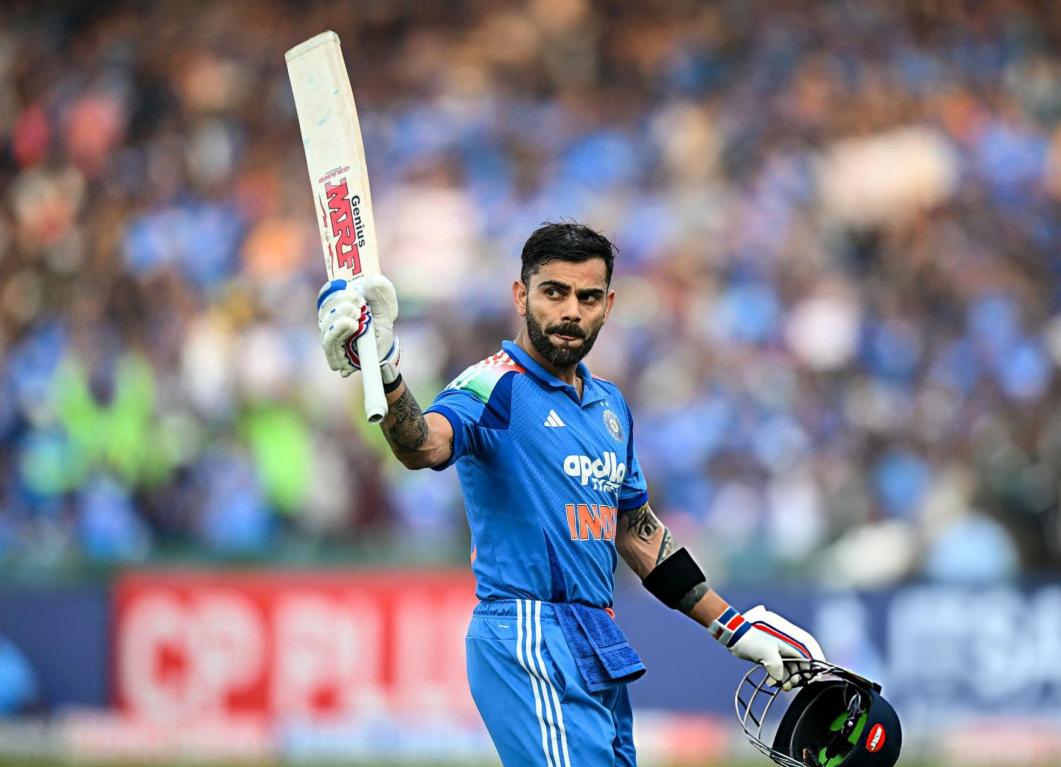
Shikhar Dhawan also produced important performances against South Africa, including his 137 during the 2015 World Cup. His ability to combine controlled stroke play with attacking shots helped India build a strong platform in that tournament match.
South Africa have relied on equally accomplished batters. AB de Villiers was known for his versatility and ability to score around the ground, while Hashim Amla combined technical control with a high level of consistency. Quinton de Kock has offered an aggressive opening option, and David Miller has been an important source of middle- and lower-order power.
The value of these players cannot be measured only by the number of boundaries they hit. Their contributions also depend on the situation. An opener who survives a difficult new-ball spell can allow the middle order to attack later. A batter who remains at the crease during a collapse can stabilize the innings. A finisher who scores quickly in the final overs can turn a competitive total into a challenging one.
Individual statistics should therefore be read alongside match context, opposition quality and the conditions in which the innings was played.
Important Bowlers in the India vs SA ODI Rivalry
Bowling often determines whether a strong batting performance becomes a winning total. India and South Africa have traditionally approached this part of the game with different combinations of pace, spin, movement and control.
India’s bowling attack has featured wrist spinners, finger spinners, swing bowlers and fast bowlers capable of generating pace. Kuldeep Yadav has been particularly effective at creating uncertainty through changes in flight, turn and trajectory. His wicket-taking ability can be valuable during the middle overs, when batters are trying to maintain momentum without taking unnecessary risks.
Jasprit Bumrah offers a different challenge through his accuracy, pace variations and execution under pressure. Fast bowlers with strong yorkers and well-disguised slower deliveries can restrict scoring at the death, particularly when batters are trying to reach a large total.
South Africa have produced notable fast bowlers such as Dale Steyn, Kagiso Rabada and Lungi Ngidi. Steyn’s five-wicket haul against India at the 2011 World Cup remains a memorable example of how pace and accuracy can disrupt even a powerful batting order.
The best bowling performance is not necessarily the one with the highest wicket tally. A bowler who concedes few runs during the middle overs can force the opposition to attack another bowler. That pressure may create mistakes and wickets elsewhere. Equally, a bowler who removes two established batters early can change the entire structure of an innings.
Bowling figures are most meaningful when considered alongside pitch conditions, the age of the ball, field placements and the quality of the batters dismissed.
How Pitch Conditions Influence India vs SA ODI Matches
Pitch conditions have a major influence on India versus South Africa contests because the teams often play in environments with different characteristics. Indian venues can offer flat batting surfaces, slower pitches or conditions that help spin bowlers as the match progresses. South African venues may provide extra bounce, carry or movement for fast bowlers, although conditions vary significantly from ground to ground.
On a good batting surface, teams may aim for a total above 300, depending on the ground dimensions, weather and available batting resources. A quick outfield and consistent bounce can reward well-timed shots, while short boundaries can make aggressive batting more productive. However, a large total is not automatically safe if the opposition has a strong top order and sufficient batting depth.
On a slower pitch, batters may need to work harder for singles and choose their attacking shots carefully. Spinners can become influential when the surface grips, while cutters and changes of pace may help fast bowlers control scoring. Teams must avoid assuming that every venue in the same country will behave identically.
Weather can also affect a match. Cloud cover may help seam movement at certain venues, while rain can reduce the available overs and introduce a revised target under the applicable playing conditions. Dew may influence grip for bowlers during an evening match, particularly when the ball becomes wet.
The toss can therefore be important, but it is not a guarantee of victory. A captain’s decision should reflect the specific pitch, weather forecast, likely dew, team strengths and whether the side has greater confidence batting first or chasing.
Key Factors That Can Decide an India vs SA ODI Match
A successful ODI performance requires more than individual talent. Teams must balance aggressive batting with risk management, take wickets at important moments and maintain discipline throughout the 50 overs. In India vs SA ODI matches, several factors often determine which side gains the advantage.
The first is the performance of the opening batters. A strong start gives the middle order time to settle and allows the team to attack later. Conversely, early wickets can force batters to rebuild instead of maintaining a high scoring rate. Against a quality pace attack, the opening partnership becomes particularly important.
The second factor is middle-over control. During this phase, teams must keep the scoreboard moving while protecting wickets. Spinners and accurate fast bowlers can make scoring difficult, especially when captains use field placements that close off easy singles. Batters who rotate the strike effectively can prevent pressure from building.
The third factor is finishing ability. A team with wickets available in the final overs can increase its scoring rate through calculated aggression. However, poor shot selection can result in a collapse and leave valuable runs unscored. Similarly, bowlers who execute yorkers and slower deliveries accurately can prevent a strong finish.
Other important considerations include:
-
Powerplay performance: Early wickets or rapid scoring can influence the entire innings.
-
Partnerships: Two batters working together can stabilize a difficult situation or build a match-winning total.
-
Fielding standards: Direct hits, safe catching and athletic boundary stops can change the result of a close contest.
-
Death-over execution: Accurate bowling and intelligent batting decisions are crucial during the final overs.
-
Adaptability: Teams that adjust to changing pitch conditions and match situations often gain an advantage.
These factors explain why India vs South Africa games can produce very different results even when the teams have comparable talent. The side that executes its plans more consistently is usually better positioned to win.
Conclusion
The India vs SA ODI rivalry reflects the competitive nature of international one-day cricket. With 97 matches played through December 2025, South Africa have recorded 52 victories, India have won 42, and three games have ended without a result. These historical figures highlight South Africa’s overall advantage while also showing India’s considerable success across different periods.
Memorable World Cup encounters, outstanding centuries, match-changing bowling spells and closely fought bilateral series have helped establish the fixture as an important part of international cricket. Both teams possess the ability to dominate when their batters build partnerships and their bowlers execute plans effectively.