


Introduction
India and New Zealand have developed an exciting rivalry in One Day International (ODI) cricket, producing memorable matches through skill, tactical discipline, and individual brilliance. Both teams have established reputations for adapting to different playing conditions, building competitive batting lineups, and using their bowling resources effectively. Their meetings attract attention from cricket fans because the contests often involve strategic decisions that can influence the outcome from the opening overs to the final stages of an innings.
Interest in ind vs nz odi matches extends beyond the final score. Supporters follow team selections, player form, batting partnerships, bowling changes, pitch conditions, and the impact of weather on match preparation. India have traditionally relied on technically accomplished batters and a varied bowling attack, while New Zealand have often demonstrated the value of disciplined execution, flexible batting, and coordinated teamwork. These broad characteristics provide useful context, although the actual balance between the teams depends on the players available and their form on the day.
Understanding an ODI contest requires more than comparing reputations. The format allows 50 overs per side, giving teams time to recover from early setbacks, accelerate during the middle overs, and create pressure through carefully planned bowling spells. Examining these stages helps readers understand the tactical details that make India versus New Zealand encounters interesting for both experienced followers and newer cricket fans.
India vs New Zealand ODI Rivalry: An Overview
India and New Zealand have competed against each other in ODI cricket for decades, including bilateral series and major international tournaments. Their encounters have taken place in different countries, under contrasting weather conditions, and on pitches that reward different styles of cricket. This variety makes their rivalry particularly interesting because strategies that work in one venue may not produce the same results elsewhere.
India’s home conditions can offer familiarity with local pitches, ground dimensions, and weather patterns. Depending on the venue, Indian batters may benefit from surfaces that allow them to build innings through timing and placement, while spinners can become influential as matches progress. New Zealand’s players, meanwhile, have frequently been associated with structured game plans, athletic fielding, and an ability to make productive use of seam movement when conditions support it. Neither advantage is automatic, and preparation remains essential for both sides.
Major tournament meetings can carry additional pressure because teams have fewer opportunities to correct mistakes. Bilateral series, by comparison, allow players to adjust tactics across multiple matches. In either setting, ind vs nz odi contests demonstrate how communication, decision-making, and execution can matter as much as individual talent.
India vs New Zealand ODI Series 2026: Schedule and Venues
As of October 28, 2026, India are scheduled to tour New Zealand for a five-match ODI series in November. The series forms part of a broader international tour that also includes T20 internationals and Test matches. The ODI fixtures are scheduled across Auckland, Wellington, Hamilton, and Mount Maunganui, giving both teams opportunities to adjust to different grounds and playing conditions. The series is also relevant to longer-term planning as teams continue building combinations ahead of the 2027 ODI World Cup.
The following table summarises the announced ODI fixtures. Match dates and venues are based on the published schedule, while final playing XIs and conditions should be checked closer to each match.
| Match | Date | Venue |
|---|---|---|
| 1st ODI | November 4, 2026 | Eden Park, Auckland |
| 2nd ODI | November 7, 2026 | Wellington |
| 3rd ODI | November 10, 2026 | Seddon Park, Hamilton |
| 4th ODI | November 13, 2026 | Bay Oval, Mount Maunganui |
| 5th ODI | November 15, 2026 | Bay Oval, Mount Maunganui |
These fixtures offer an interesting test of adaptability. New Zealand will be familiar with home conditions, while India will need to assess the bounce, movement, and outfield characteristics at each venue. Supporters should also distinguish scheduled fixtures from confirmed match-day details, since weather and official announcements can affect preparations.
India ODI Team: Batting Strength and Bowling Options
India’s ODI approach generally centres on building a reliable top order, maintaining scoring momentum through the middle overs, and retaining enough batting depth for a strong finish. Experienced players can provide stability when early wickets fall, while aggressive batters can change the pace of an innings once they become comfortable at the crease. The ideal combination depends on recent performances, fitness, the opposition’s bowling attack, and the conditions expected at the venue.
The middle order is particularly important because it must balance risk with responsibility. If the opening batters provide a strong start, the next players can maintain the run rate without taking unnecessary risks. If early wickets fall, the same batters may need to rebuild through singles, doubles, and selective boundaries. All-rounders can add flexibility by contributing useful overs and strengthening the lower order, giving the captain more options when the match situation changes.
Bowling selection is equally important. India may need a combination of seamers who can exploit early movement, spinners who control the middle overs, and death-overs specialists who can execute yorkers and slower deliveries. The captain’s challenge is to distribute overs effectively while retaining a dependable option for the final stages. In ind vs nz odi matches, that balance can become decisive when a strong batting lineup threatens to accelerate late in the innings.
New Zealand ODI Team: Home Conditions and Tactical Discipline
New Zealand’s familiarity with local pitches and weather can be valuable during a home series. Depending on the ground and conditions, seam bowlers may find movement early in the innings, particularly when there is cloud cover or moisture in the surface. Batters must therefore assess the ball carefully before committing to aggressive shots. A patient opening partnership can help the team avoid losing several wickets during the powerplay and create a platform for later acceleration.
New Zealand have also demonstrated the importance of collective execution in international cricket. Their approach can involve rotating the strike, targeting specific bowling matchups, and applying pressure through accurate fielding. Rather than depending entirely on one outstanding performance, a well-balanced side seeks contributions across the batting order and bowling unit. However, current player availability and form remain important, and historical team characteristics should not be treated as guarantees about an upcoming result.
Home advantage is not simply about knowing the grounds. It also involves adapting quickly when the pitch behaves differently from expectations. A surface that initially supports seam bowling may become easier for batting, while a slow pitch can make timing more difficult as the match progresses. New Zealand will need to evaluate these conditions carefully, especially when facing India’s technically strong batters.
Key Players to Watch in India vs New Zealand ODI Matches
Individual performances can shape an ODI, but their importance depends on the match situation. Experienced Indian batters such as Rohit Sharma and Virat Kohli have played major roles in the team’s ODI history, while players such as Shubman Gill have represented India’s newer generation of top-order batting talent. Their participation in a particular fixture should not be assumed without checking the announced squad and playing XI.
For New Zealand, players such as Kane Williamson, Daryl Mitchell, and Mitchell Santner illustrate different dimensions of ODI cricket: composed batting, middle-order adaptability, and all-round contributions. Their availability and selection for the November series must be confirmed through official team announcements. The wider lesson is that a successful ODI side needs players who can respond to changing conditions rather than follow a rigid plan regardless of circumstances.
Several individual matchups deserve attention:
-
Opening batters against the new ball: Early movement can test footwork, shot selection, and patience.
-
Middle-order batters against spin: Strike rotation and calculated aggression help prevent scoring pressure.
-
Fast bowlers at the death: Yorkers, slower balls, and accurate wide deliveries can limit late acceleration.
-
All-rounders under pressure: Contributions with both bat and ball can provide crucial tactical flexibility.
These matchups are useful indicators of how a game may develop, but they do not independently determine the outcome. Partnerships, fielding quality, and the ability to respond after setbacks remain equally important.
Pitch Conditions and Weather: Factors That Can Influence Results
Pitch conditions can significantly influence the tactical direction of an ODI. In New Zealand, some grounds may provide assistance to seam bowlers early in the innings, while others can offer better batting conditions once the ball loses its initial hardness. Ground dimensions also matter because a short boundary can reward well-timed shots, whereas larger boundaries may encourage batters to focus on placement and running between the wickets. Teams must assess these details before deciding how aggressively to approach the powerplay.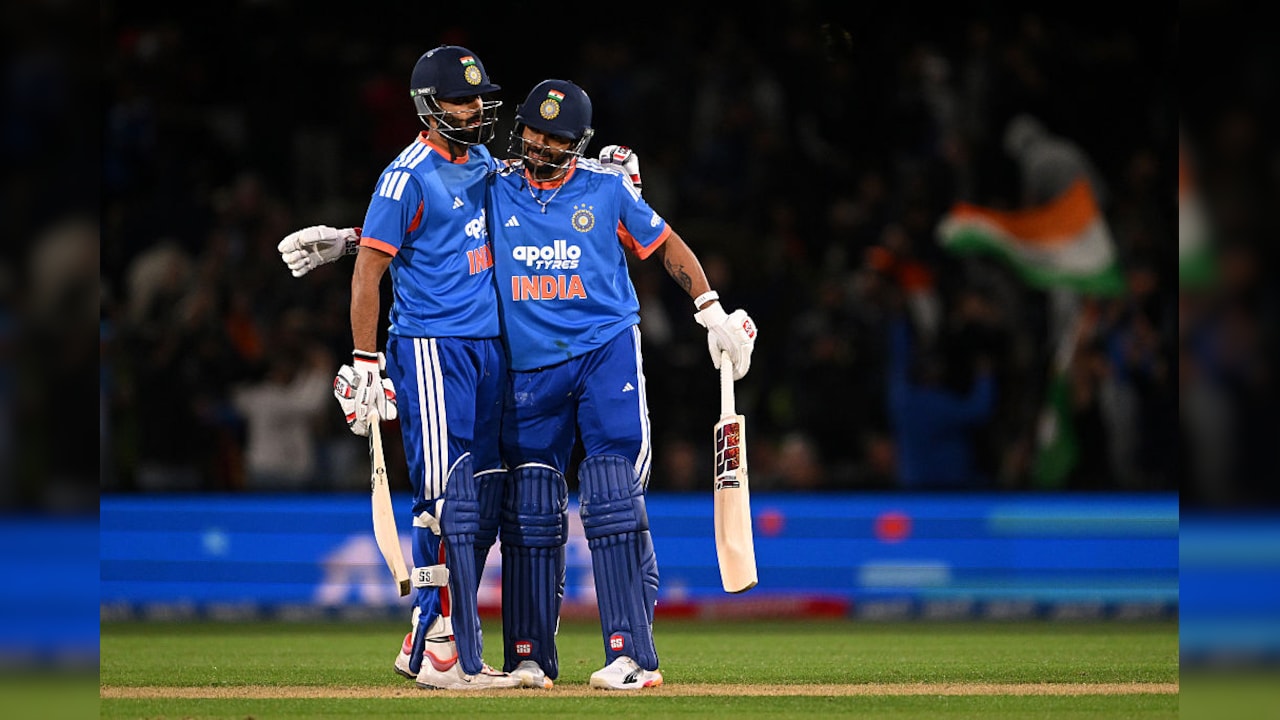
Weather deserves similar attention. Wind, cloud cover, and the possibility of rain can influence bowling plans, field placements, and the timing of an innings. If rain interrupts a match, the playing conditions and any applicable revised-target method may change the approach required from the chasing team. During ind vs nz odi fixtures, monitoring the forecast and the official match-day information can help fans understand why captains make particular decisions at the toss.
Batting Strategy: Building an Effective ODI Innings
A successful ODI innings generally develops through three broad phases. During the powerplay, batters aim to score efficiently while assessing the movement and pace of the ball. They must find a balance between taking advantage of fielding restrictions and protecting their wickets. An opening partnership of moderate scoring can still be valuable if it allows the incoming batters to continue without having to rebuild after an early collapse.
The middle overs require a different approach. Batters often concentrate on rotating the strike, identifying favourable matchups, and targeting loose deliveries. For example, a team scoring steadily without frequent boundaries may still maintain a competitive run rate through singles and doubles. As the innings approaches its final overs, the emphasis shifts toward acceleration. Set batters can attack more confidently when wickets remain in hand, while the lower order may need to contribute quick runs against specialist death bowlers.
This progression explains why an ODI score should not be judged solely by the number of runs accumulated during the first 15 overs. Wickets in hand, the quality of the incoming batters, and the expected conditions later in the innings all affect the final total. In ind vs nz odi contests, a disciplined middle phase can be the difference between an ordinary score and a challenging target.
Bowling and Fielding: How Teams Build Pressure
Bowling plans should reflect the batter at the crease and the condition of the ball. Fast bowlers may use fuller deliveries to encourage movement early, then vary their lengths as the pitch and ball change. Spinners can slow the scoring rate by attacking the stumps, varying their pace, and forcing batters to take calculated risks. Captains must also manage their bowlers’ workloads so that reliable options remain available for crucial overs at the end.
Fielding can strengthen these plans. A well-positioned fielder can turn a potential boundary into a single, while sharp catching can break an established partnership. Teams that save runs consistently reduce the pressure on their bowlers and force opposition batters to search for riskier scoring options. A dropped catch or misfield can have the opposite effect, particularly when an established batter goes on to score heavily.
The best bowling strategy is not necessarily the most aggressive one. Sometimes, maintaining a tight line and length for several overs creates more pressure than repeatedly attempting difficult deliveries. This principle is relevant to both teams because ODI cricket rewards consistency over long periods as well as individual moments of brilliance.
What Fans Should Check Before an ODI Match
Following an international fixture becomes more informative when supporters understand which details are confirmed and which remain uncertain. Team announcements, the toss, pitch reports, weather updates, and recent player performances provide a stronger foundation for match analysis than assumptions based on reputation alone.
Before the match begins, consider these practical points:
-
Check the confirmed playing XIs and any injury-related changes.
-
Review the pitch report and the expected weather conditions.
-
Consider each team’s recent form and the balance of its batting and bowling units.
-
Follow the toss and assess whether batting first or chasing appears tactically suitable.
These checks are especially helpful for fans following the upcoming November fixtures. A scheduled match date does not confirm every detail of team selection or playing conditions, so the latest announcements remain important.
Conclusion
India and New Zealand bring contrasting strengths and extensive international experience to ODI cricket. India’s batting depth and variety of bowling options can create pressure, while New Zealand’s familiarity with home conditions and emphasis on disciplined execution can make the contest demanding. The actual balance will depend on player availability, pitch behaviour, weather, and how effectively each team adapts during the match.
The November 2026 series provides another opportunity to assess both sides as they continue developing their ODI combinations. For supporters following ind vs nz odi encounters, the most useful indicators will include opening partnerships, middle-over scoring, bowling accuracy, fielding standards, and decisions made under pressure. Looking beyond the final score helps reveal how a match was won or lost and why particular tactical choices mattered.
Ultimately, ODI cricket rewards patience, flexibility, and consistent execution across 50 overs. Whether a match becomes a high-scoring contest or a close, low-scoring battle, the interaction between individual skill and team strategy is what makes India versus New Zealand cricket worth following.