



Introduction
Cricket has created some unforgettable rivalries over the years, and the competition between India and South Africa is one of the most fascinating in international cricket. Both teams have produced outstanding players, memorable performances and exciting contests across Test matches, One Day Internationals (ODIs) and Twenty20 Internationals (T20Is). Their encounters have often tested batting skills, bowling quality, patience and the ability to perform under pressure.
The south africa national cricket team vs india national cricket team timeline represents a journey of changing cricketing styles, competitive series and remarkable individual achievements. From South Africa’s return to international cricket in the early 1990s to India’s growing success across different formats, this rivalry has developed into an important part of modern cricket history. Matches between these sides have attracted worldwide attention because both teams regularly feature talented batters, experienced bowlers and exciting young cricketers.
Understanding this rivalry means looking beyond match results. Conditions in South Africa, India’s spin-friendly pitches, different playing strategies and performances in major tournaments have all influenced the relationship between these teams. Their cricketing history also demonstrates how both nations have developed their international teams and adapted to the changing demands of the game.
The Beginning of the India vs South Africa Cricket Rivalry (1991–1996)
The rivalry began in 1991 when South Africa returned to international cricket after years of isolation. India became one of the first international teams to compete against the returning South African side. Their first ODI encounter took place in Kolkata on 10 November 1991, where India secured a three-wicket victory. This match marked the beginning of an international cricket relationship that would grow stronger with every passing season.
The first Test series between the nations took place in South Africa during 1992–93. India toured the country for four Test matches, beginning with a drawn encounter in Durban in November 1992. South Africa won the third Test at Port Elizabeth by nine wickets, while the other three matches ended in draws. The series provided Indian players with valuable experience of South African conditions, particularly the pace, bounce and movement offered by local pitches.
India’s First Test Series Victory Against South Africa (1996–2000)
The 1996–97 period introduced a new level of competitiveness into the rivalry. South Africa toured India for a three-match Test series, and the hosts delivered an impressive performance. India won the opening Test in Ahmedabad by 64 runs, while South Africa responded with a convincing victory in Kolkata. India eventually secured the series by winning the third Test in Kanpur by 280 runs.
However, India’s success at home did not immediately translate into similar results in South Africa. During the return tour in December 1996 and January 1997, South Africa dominated the Test series. The Proteas won the first two matches in Durban and Cape Town before the final Test in Johannesburg ended in a draw. This period highlighted the difference between playing in familiar Indian conditions and competing on fast, challenging South African surfaces.
The 1999–2000 series in India also demonstrated South Africa’s growing strength. The visitors won both Test matches, including a victory by an innings and 71 runs in Bengaluru. Their bowling attack regularly challenged India’s batting order, while their experienced players helped the team control important moments. These early encounters established South Africa as a difficult opponent in both home and away conditions.
The 2001–2010 Era: Competitive Cricket and Historic Achievements
The first decade of the 2000s brought several memorable encounters. During India’s 2001–02 tour of South Africa, the hosts won the opening Test at Bloemfontein by nine wickets, while the second match in Port Elizabeth ended in a draw. India continued to develop its international team, with experienced batters and emerging bowlers gradually improving their ability to compete overseas.
South Africa toured India in 2004–05 for a two-match Test series. The opening match in Kanpur ended in a draw, but India won the second Test in Kolkata by eight wickets. The result demonstrated India’s ability to compete against South Africa through disciplined batting and effective bowling.
One of the most important moments came during India’s 2006–07 tour of South Africa. India won the opening Test in Johannesburg by 123 runs, achieving a significant overseas result. South Africa responded by winning the next two matches in Durban and Cape Town, taking the series 2–1. The Johannesburg victory remained an important milestone because it showed that India could succeed against South Africa in challenging conditions.
Another memorable chapter arrived in 2010 when India and South Africa produced remarkable batting performances. During the second Test in Kolkata, India scored 643/6 declared, creating a strong position in a match that showcased the quality of the Indian batting lineup. The same period also produced an extraordinary ODI performance from Sachin Tendulkar.
On 24 February 2010, Tendulkar scored the first men’s ODI double century in international cricket history, reaching an unbeaten 200 against South Africa in Gwalior. India won the match by 153 runs. This achievement became one of the defining moments in the history of the rivalry and changed expectations about what an individual batter could accomplish in the 50-over format.
The 2011–2015 Period: World Cup Encounters and Growing Competition
The 2011 Cricket World Cup added another important chapter to the competition. India and South Africa faced each other in a group-stage match in Nagpur. India posted 296 runs, but South Africa successfully chased the target, winning by three wickets. The match demonstrated South Africa’s ability to perform under pressure and highlighted the competitive nature of international tournament cricket.
During the 2013–14 tour of South Africa, India played a two-match Test series. The opening match in Johannesburg ended in a draw after both teams produced strong batting performances. South Africa won the second Test in Durban by ten wickets, securing the series 1–0. The tour included impressive contributions from Indian batters and South African bowlers, making it an important learning experience for the visiting team.
India hosted South Africa for the 2015–16 Freedom Trophy, a four-match Test series. The Indian team delivered an outstanding performance, winning the series 3–0. The matches were largely influenced by spin-friendly conditions, where Indian spinners played an important role in restricting South Africa’s batting lineup.
The series was especially significant because it demonstrated how home conditions could influence the outcome of a long international contest. South Africa had previously enjoyed considerable success against India, but the 2015–16 result showed that the balance of the rivalry could change depending on playing conditions and team combinations.
The 2017–2020 Period: India’s Overseas Progress and Test Dominance at Home
The 2017–18 South African tour became another major event in the south africa national cricket team vs india national cricket team timeline. India travelled to South Africa with high expectations, but the home team won the first two Test matches in Cape Town and Centurion. India responded with a victory in Johannesburg, reducing the final series margin to 2–1.
Virat Kohli played an important role during this period, particularly through his batting performances and leadership. The ODI series that followed was even more successful for India. The visitors won the six-match ODI series 5–1, demonstrating their ability to adapt to South African conditions in the limited-overs format.
The 2019–20 Test series in India brought another remarkable achievement. India defeated South Africa in all three matches, winning the series 3–0. The victories came in Visakhapatnam, Pune and Ranchi. Indian batters produced substantial scores, while the bowling attack consistently created pressure on South Africa’s batting lineup.
This period also highlighted the development of India’s pace-bowling resources. Earlier generations of Indian teams often depended heavily on spin when playing at home, but the growing quality of fast bowlers gave India more options across different conditions.
The 2021–2024 Period: Memorable Test Matches and T20 World Cup Glory
The 2021–22 tour of South Africa started with an impressive Indian victory at Centurion. India won the opening Test by 113 runs, becoming the first Asian team to secure a Test victory at that venue. The result created expectations of a historic series victory, but South Africa responded strongly.
The Proteas won the second Test in Johannesburg by seven wickets and followed it with another seven-wicket victory in Cape Town. South Africa therefore won the series 2–1. The comeback demonstrated the importance of consistency and adaptability in Test cricket, particularly when playing in unfamiliar conditions.
The next Test series in South Africa took place during 2023–24. South Africa won the opening match in Centurion by an innings and 32 runs. India responded in spectacular fashion at Newlands in Cape Town, winning the second Test by seven wickets. The match became historic because it was completed in just two days, making it one of the shortest completed Test matches in men’s cricket history.
The teams also produced exciting limited-overs contests during this period. India won the 2023 ODI series in South Africa 2–1, while the T20I series ended 1–1 after the opening match was affected by rain.
One of the most memorable modern encounters came in the 2024 ICC Men’s T20 World Cup final in Barbados. India scored 176/7 in 20 overs, with Virat Kohli making 76 runs. South Africa came close to the target but finished on 169/8. India won by seven runs, securing the T20 World Cup trophy. The result became an important moment for Indian cricket and added another unforgettable match to this rivalry.
The 2025–2026 Period: Recent Results and Current Rivalry
The 2025–26 period added several significant matches to the rivalry. South Africa toured India for a multi-format contest that included Test, ODI and T20I cricket. The Test series proved particularly challenging for India, with South Africa winning both matches and completing a 2–0 series victory.
The limited-overs contests produced a different pattern. India won the three-match ODI series 2–1, with the final match in Visakhapatnam ending in a convincing nine-wicket victory for the hosts. The T20I series also featured competitive performances from both teams, with India winning the series 3–1.
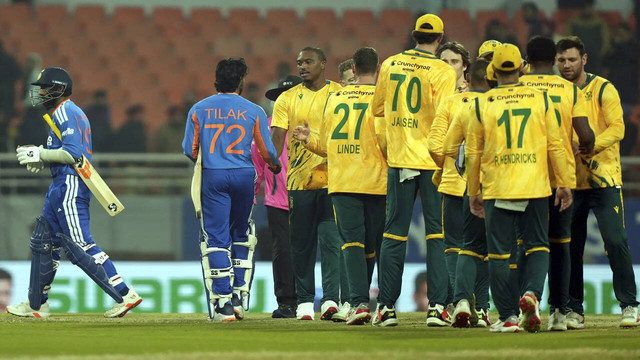
The south africa national cricket team vs india national cricket team timeline reached another important point during the 2026 ICC Men’s T20 World Cup. On 22 February 2026, the teams met in a Super Eight Group 1 match at Narendra Modi Stadium in Ahmedabad. South Africa scored 187/7 in 20 overs before bowling India out for 111 in 18.5 overs. South Africa won by 76 runs, producing a commanding result in a major international tournament.
These recent results show that neither team can rely entirely on previous achievements. Both sides continue to develop new players, experiment with combinations and adjust their strategies according to the format and conditions.
Complete Timeline of Major India vs South Africa Cricket Events
The following table highlights important milestones from the rivalry, covering its development from the first international meetings to the latest major tournament encounter.
| Year | Major event | Result or achievement |
|---|---|---|
| 1991 | First ODI encounter | India won by 3 wickets |
| 1992–93 | First Test series | South Africa won 1–0 |
| 1996–97 | Test series in India | India won 2–1 |
| 1999–2000 | South Africa’s tour of India | South Africa won 2–0 |
| 2006–07 | India toured South Africa | South Africa won 2–1 |
| 2010 | Tendulkar’s ODI double century | India won by 153 runs |
| 2011 | Cricket World Cup encounter | South Africa won by 3 wickets |
| 2015–16 | Freedom Trophy | India won 3–0 |
| 2017–18 | India toured South Africa | India won ODI series 5–1 |
| 2019–20 | Test series in India | India won 3–0 |
| 2021–22 | Test series in South Africa | South Africa won 2–1 |
| 2023–24 | Test series in South Africa | Series drawn 1–1 |
| 2024 | T20 World Cup final | India won by 7 runs |
| 2025–26 | Test series in India | South Africa won 2–0 |
| 2026 | T20 World Cup Super Eight | South Africa won by 76 runs |
India vs South Africa Head-to-Head Records Across Formats
The rivalry has developed differently in Test cricket, ODIs and T20Is. South Africa has historically enjoyed an advantage in Test cricket and ODI cricket, while India has established a stronger record in T20 Internationals. These differences reflect the playing styles, conditions and strategies associated with each format.
According to available head-to-head records updated through February 2026, the two teams have played 46 Tests, 97 ODIs and 36 T20Is. South Africa leads the overall Test and ODI win counts, whereas India leads in T20Is. The figures below provide a useful statistical overview of their international competition.
| Format | Matches | India wins | South Africa wins | Drawn/No result |
|---|---|---|---|---|
| Test | 46 | 16 | 20 | 10 |
| ODI | 97 | 42 | 52 | 3 |
| T20I | 36 | 21 | 14 | 1 |
| Total | 179 | 79 | 86 | 14 |
Source: Historical head-to-head records, updated through February 2026. Test draws and limited-overs no-results are grouped for this summary.
These statistics demonstrate why the rivalry remains competitive. India’s T20I success reflects its depth in batting and ability to perform in high-scoring matches. South Africa’s record in Tests and ODIs highlights its long-standing strength in pace bowling, fielding and limited-overs consistency.
Legendary Players Who Have Shaped the Rivalry
Several outstanding cricketers have contributed to the history of these two teams. Their individual achievements have influenced important matches and helped establish the reputation of the rivalry. From technically gifted batters to fast bowlers capable of changing a game within a few overs, both countries have produced exceptional international performers.
Famous Indian Cricketers
Sachin Tendulkar remains one of the most memorable names associated with India versus South Africa cricket. His unbeaten 200 in Gwalior in 2010 was a historic achievement that changed the ODI format. Virat Kohli has also made significant contributions, particularly through his batting performances in South Africa and his leadership during important international series.
Other notable Indian players include:
-
Rahul Dravid: Known for his patience, technique and important contributions in challenging overseas conditions.
-
MS Dhoni: Remembered for his leadership, wicketkeeping and ability to finish limited-overs matches.
-
Jasprit Bumrah: Recognised for his accuracy, pace variations and effectiveness across formats.
-
Rohit Sharma: Known for his attacking batting and ability to produce substantial scores.
Famous South African Cricketers
South Africa has also featured several legendary players who have made the rivalry memorable. Jacques Kallis was an outstanding all-rounder whose batting and bowling provided balance to the team. AB de Villiers became famous for his innovative batting, while Dale Steyn and Shaun Pollock established themselves as influential fast bowlers.
Other important South African players include Hashim Amla, Graeme Smith, Faf du Plessis, Kagiso Rabada and Quinton de Kock. Their performances across different generations have helped South Africa remain a competitive opponent against India.
Why India vs South Africa Matches Are So Competitive
One major reason behind the popularity of this rivalry is the difference between playing conditions in the two countries. Indian grounds generally offer conditions that can support spin bowling, although the amount of assistance varies from venue to venue. South African grounds are traditionally associated with pace, bounce and movement, which can challenge visiting batters.
Another important factor is the balance between the teams. India has regularly produced technically strong batters and a growing collection of quality fast bowlers. South Africa has traditionally relied on disciplined pace attacks, athletic fielding and aggressive batting. When these different approaches meet, matches often become contests of strategy rather than simply individual talent.
The pressure of international tournaments also increases the importance of these encounters. World Cup matches, knockout games and series-deciding fixtures create situations in which a single partnership, bowling spell or fielding effort can influence the result. This is why supporters continue to follow the south africa national cricket team vs india national cricket team timeline when looking for important moments in international cricket.
Major Differences Between the Three Cricket Formats
Each format has created a different type of competition between India and South Africa. Test matches reward patience, technical ability and endurance. ODI cricket requires teams to balance aggressive scoring with responsible batting, while T20 cricket focuses on quick decision-making and effective execution under pressure.
In Test cricket, South Africa’s fast bowlers have often benefited from local conditions, particularly in Johannesburg, Centurion and Cape Town. India, meanwhile, has enjoyed considerable success on home pitches through its batting depth and spin-bowling resources. The south africa national cricket team vs india national cricket team timeline reflects these contrasting strengths across several decades.
In ODIs, both sides have produced impressive batting performances and memorable run chases. India’s success in the 2017–18 ODI series in South Africa demonstrated its ability to dominate away from home. South Africa’s achievements in previous encounters show that it can respond effectively when facing challenging targets.
T20 cricket has introduced another dimension to the rivalry. Players have to make quick decisions, adapt their batting approaches and use bowling variations effectively. India’s 2024 T20 World Cup final victory and South Africa’s 2026 World Cup Super Eight win are examples of how closely contested this rivalry can become in the shortest international format.
What Makes the Future of This Rivalry Interesting?
The future of India and South Africa cricket will depend on how both teams manage the transition between experienced international players and emerging talent. India continues to develop young batters, fast bowlers and all-rounders through its domestic cricket structure. South Africa is also investing in young players who can strengthen its international teams across all three formats.
Another important aspect is the changing nature of international cricket. Franchise leagues, demanding international schedules and evolving batting techniques have influenced how teams prepare for major competitions. Both countries must maintain a balance between workload management, player development and consistent performances.
Upcoming bilateral series and ICC tournaments will provide fresh opportunities for players to create memorable moments. Supporters will also be interested in seeing whether India can improve its historical Test record in South Africa and whether the Proteas can continue their strong performances in major international competitions. The continuing south africa national cricket team vs india national cricket team timeline will therefore remain an interesting subject for cricket followers.
Conclusion
The India-South Africa cricket rivalry has developed from its early beginnings in 1991 into one of the most competitive contests in international cricket. It has included historic Test victories, memorable ODI performances, impressive individual records and exciting T20 encounters. Sachin Tendulkar’s double century, India’s overseas victories, South Africa’s Test achievements and the 2024 T20 World Cup final are among the moments that have defined this sporting relationship.
The south africa national cricket team vs india national cricket team timeline also demonstrates how international cricket has evolved over the years. Both nations have experienced successful periods, developed legendary players and adapted their strategies to different playing conditions. While historical statistics provide an understanding of their achievements, every new series creates an opportunity for another memorable chapter.