

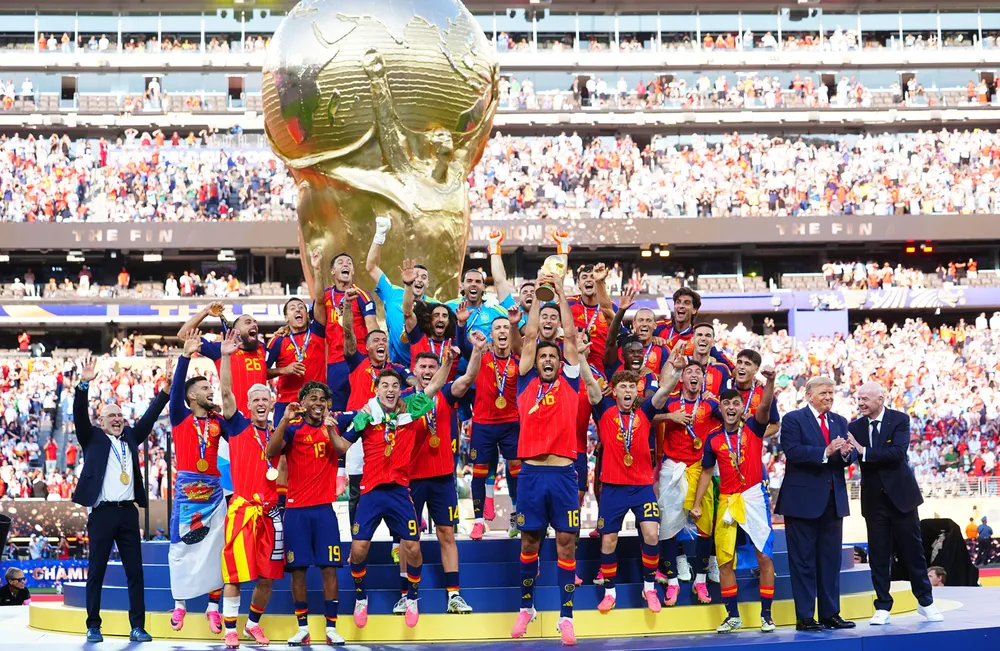


The FIFA World Cup 2026 is set to become one of the biggest sporting events ever staged, bringing together football fans from across the globe for a tournament built on an expanded format and a truly continental scale. Unlike previous editions, the competition will be hosted across three countries: the United States, Canada, and Mexico. This shared hosting model gives the tournament a distinctive identity while allowing supporters to experience football in a wide range of cities, cultures, and stadium environments.
The tournament also represents a major change in the history of the world’s most prestigious international football competition. For the first time, 48 national teams will participate instead of the previous 32-team format. That expansion creates more matches, provides additional opportunities for nations from different confederations, and changes how teams must approach the group stage and knockout rounds. For players, coaches, and supporters, the scale of the event will make preparation, travel, squad management, and tactical consistency especially important.
The FIFA World Cup 2026 is therefore more than simply another edition of the competition. It is a new chapter in international football, combining traditional World Cup excitement with a broader field of participants and a multi-country hosting structure. As qualification concludes and teams finalize their squads, attention will increasingly turn toward the tactical battles, emerging stars, established leaders, and unforgettable moments that could define the tournament.
A New Era of International Football
One of the most significant developments surrounding the FIFA World Cup 2026 is the introduction of the 48-team tournament format. The larger field gives more countries the opportunity to compete on football’s biggest stage. For emerging football nations, qualification can provide valuable international experience and exposure, while established teams face a more diverse competitive environment.
The expanded competition also changes the tournament’s rhythm. The 48 teams are divided into 12 groups of four, with the top two teams from each group progressing alongside the eight best third-placed teams. This creates a 32-team knockout stage after the group phase. The format means that teams must remain focused throughout their group matches because goal difference, points, and overall performance can become important factors when determining progression.
For fans, the expansion means more international matchups and a larger variety of footballing styles. Supporters may see established European and South American powers competing against teams that have historically had fewer opportunities to reach the World Cup. That variety is one of the reasons the expanded competition has attracted significant attention.
Three Host Nations, One Global Tournament
The hosting arrangement is another defining feature of the tournament. Canada, Mexico, and the United States will collectively stage matches across multiple cities. It is a model that combines different football cultures while taking advantage of the large stadium infrastructure available across North America.
Mexico has particularly strong historical connections with the World Cup. It becomes the first country to host matches at three different editions of the men’s tournament. The United States brings its enormous sporting market and modern stadium infrastructure, while Canada continues the rapid growth of football interest that has accompanied the development of its national teams and domestic football environment.
The geographical scale of the tournament will be unusual. Teams and supporters may have to deal with substantial distances between host cities, making travel and recovery important considerations. Coaching staffs will need to balance training intensity with transportation demands, while players must adapt to different climates, time zones, stadium conditions, and match environments.
What the Host Structure Means for Fans
For supporters, the multi-country format creates opportunities to experience very different cities during the same tournament. Football fans can encounter distinct local cultures, food traditions, stadium atmospheres, and communities while following their national teams.
The host cities also provide an opportunity for football to reach audiences that may not traditionally follow the sport as closely as supporters in established football markets. This could contribute to the continued growth of the game across North America, particularly among younger audiences.
Tournament Format and Competition Structure
The tournament structure is designed to accommodate the expanded field without removing the intensity associated with knockout football. The group stage gives each team three matches, allowing nations to recover from an early setback more effectively than in a single-elimination competition.
Once the group stage concludes, 32 teams advance to the knockout phase. From that point onward, every match carries enormous importance because a defeat ends a team’s tournament journey. The knockout rounds include the Round of 32, Round of 16, quarter-finals, semi-finals, and the final.
| Tournament Stage | Number of Matches/Teams | Importance |
|---|---|---|
| Group Stage | 48 teams | Determines knockout qualification |
| Round of 32 | 32 teams | First knockout round |
| Round of 16 | 16 teams | Narrows field to eight |
| Quarter-finals | 8 teams | Determines semi-finalists |
| Semi-finals | 4 teams | Determines finalists |
| Final | 2 teams | Decides world champion |
This structure creates an interesting balance between consistency and adaptability. Teams cannot rely solely on one excellent performance because three group matches provide a broader test. At the same time, knockout football introduces a completely different level of pressure, where one mistake, defensive lapse, missed opportunity, or penalty shootout can determine the outcome.
The Importance of Tactical Preparation
The FIFA World Cup 2026 will place significant demands on coaching teams. International football already provides limited preparation time compared with club football, and the tournament’s geographical scale adds another challenge. Managers will need to develop systems that players can understand quickly while remaining flexible enough to respond to different opponents.
Possession-based teams may face opponents who prefer compact defensive structures and rapid counterattacks. Other matches could become physical battles in midfield, with set pieces playing a major role. Because knockout football rewards efficiency, teams that can defend transitions and make the most of limited scoring opportunities may find themselves in crucial situations where small details decide the result.
Squad depth will also matter. A long tournament can produce fatigue, injuries, suspensions, and changes in form. Managers therefore need reliable alternatives in important positions. Young players could become important contributors if they offer energy and tactical flexibility, while experienced players may provide composure during high-pressure moments.
Players Who Could Define the Tournament
Every World Cup produces a mixture of established superstars and unexpected breakout performers. The 2026 edition is likely to continue that tradition. Players who have already established themselves at international level will enter the competition carrying significant expectations, while younger talents may use the tournament to introduce themselves to a worldwide audience.
The modern international game places enormous importance on versatile players. Attackers capable of operating in several positions can create tactical advantages, while midfielders who can contribute both defensively and creatively are increasingly valuable. Defenders also have greater responsibility in possession because teams often build attacks from the back.
Goalkeepers may become particularly important in decisive matches. A single save during a knockout game can change the course of a tournament, while penalty shootouts often place extraordinary pressure on both goalkeepers and takers. The ability to remain calm under pressure can become as important as technical quality.
Young Talent and the Next Generation
One of the most exciting aspects of every major football tournament is discovering players who have not yet become global household names. By 2026, several young footballers could enter the competition with rapidly growing reputations.
A successful World Cup can dramatically increase a player’s visibility. Strong performances may attract international attention, create new opportunities at club level, and establish a player as an important figure for the next generation of their national team.
How Different Regions Could Shape the Competition
The expanded World Cup provides broader representation across football’s international landscape. European nations continue to bring tactical variety and strong club-level experience, while South American teams traditionally combine technical ability with intense competitive character.
African teams have increasingly demonstrated athleticism, technical quality, and tactical development, while Asian nations have continued to improve their international competitiveness. Teams from North and Central America will also benefit from familiarity with the tournament environment because of the hosting arrangement.
The presence of more teams means supporters can discover unfamiliar football cultures and new international rivalries. It also creates a larger platform for developing football programs to demonstrate their progress against established opponents.
The Role of Stadiums and Matchday Atmosphere
Stadiums will play a major role in the identity of the tournament. Modern venues across the three host countries are expected to provide large capacities, advanced facilities, and different architectural experiences. Yet the most memorable element may be the atmosphere created by supporters.
World Cup football has always been closely connected with fans. National colors, songs, flags, chants, and celebrations transform ordinary football matches into cultural events. In 2026, supporters from dozens of nations will gather across North America, creating a huge international festival around the competition.
The diversity of host cities should make the matchday experience particularly distinctive. A supporter attending multiple games could encounter completely different environments while remaining connected to the same global tournament.
Technology and the Modern World Cup
Technology will continue to influence how football is played, officiated, and experienced. Video review systems have already changed the way major tournaments handle controversial decisions, while advanced performance analysis has become a central part of professional football preparation.
Teams now collect extensive information about player movement, physical workload, passing patterns, defensive positioning, and opposition tendencies. Coaches can use this information to prepare detailed tactical plans before matches and make informed adjustments during competitions.
For viewers, technology also makes it easier to follow matches from almost anywhere. Fans can access statistics, match information, analysis, and social discussion while watching games. This creates a more interactive experience and allows supporters who cannot attend matches in person to remain connected with the tournament.
What Makes the FIFA World Cup 2026 Different
The FIFA World Cup 2026 combines several developments that make the tournament unique. The 48-team format increases participation, the three-country hosting arrangement expands the geographical footprint, and modern football technology continues to influence preparation and viewing.

The tournament will also arrive at a time when international football is becoming increasingly competitive. Many countries have developed stronger youth systems, improved coaching structures, and expanded access to professional football. As a result, traditional assumptions about international football are being challenged.
Several factors could shape the competition:
- Squad depth and injury management over a long tournament.
- Tactical flexibility against different styles and formations.
- Ability to handle travel, climate changes, and recovery.
- Performance under pressure during knockout matches.
- Contributions from emerging young players.
These factors demonstrate why success at a World Cup involves much more than having individual stars. Teams must operate effectively as units, manage pressure, and adapt as the tournament develops.
The Global Impact Beyond Football
The influence of the tournament extends beyond the pitch. A major international sporting event can create opportunities for tourism, hospitality, local businesses, broadcasting, entertainment, and cultural exchange. Supporters traveling between cities will interact with communities across the three host countries.
The tournament may also accelerate football’s development in North America. Increased attention can encourage more young people to participate in the sport, while clubs, academies, schools, and community organizations may benefit from greater public interest.
For the global football community, the event provides another opportunity to connect people who may speak different languages or come from very different backgrounds. The shared experience of following a national team can create powerful cultural connections.
Why Fans Should Watch Beyond the Biggest Teams
While famous football nations naturally attract much of the attention, some of the most interesting World Cup stories can come from teams with lower expectations. Smaller nations often approach major tournaments with tremendous motivation, and their matches can produce tactical surprises and memorable individual performances.
Following the entire competition also gives fans a better understanding of how international football is evolving. Different regions emphasize different tactical approaches, player development systems, and football traditions. Watching a wide variety of matches can therefore be more rewarding than focusing only on the most commercially popular teams.
The expanded format makes this even more relevant because there will be more national teams competing on the world’s largest stage. Supporters may discover new players, rivalries, and footballing cultures that remain outside mainstream attention during ordinary international windows.
Conclusion
The FIFA World Cup 2026 represents a major evolution of international football. With 48 teams, three host nations, a new competition structure, and an enormous geographical footprint, the tournament will provide a different experience from previous editions while preserving the drama that makes the World Cup unique. Its importance will not be measured only by the final result. The tournament will also be remembered through breakout performances, tactical battles, emotional victories, unexpected results, passionate supporters, and moments that become part of football history. The combination of established stars and emerging talent should create a competition filled with different storylines from the opening matches through the final.