

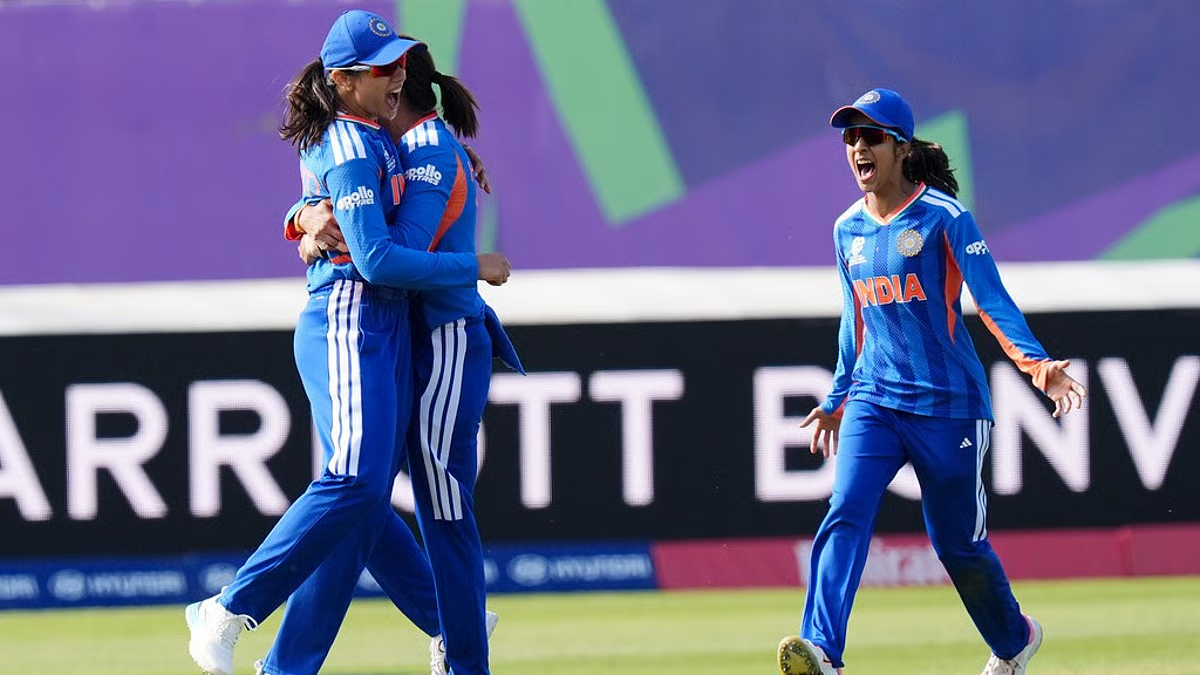


The ind vs pak women world cup 2026 clash was one of the most closely followed matches of the ICC Women’s T20 World Cup in England and Wales. India and Pakistan met in the group stage at Edgbaston, Birmingham, on June 14, 2026, in a match that attracted a record crowd for a Women’s T20 World Cup group-stage fixture. The contest carried the usual intensity associated with the rivalry, but it was also important from a tournament perspective because both teams were competing in a demanding Group A containing Australia, South Africa, Bangladesh and the Netherlands.
India entered the game with an experienced core featuring players such as Smriti Mandhana, Harmanpreet Kaur, Deepti Sharma, Shafali Verma and Richa Ghosh. Pakistan, meanwhile, relied on a combination of experienced campaigners and younger players, with Fatima Sana leading the side. The match ultimately produced a convincing Indian victory, but the individual performances and tactical developments made the contest more significant than the final margin alone.
The ind vs pak women world cup 2026 encounter also demonstrated how quickly a T20 match can change direction. Pakistan made a promising start while chasing, but India’s spin attack gradually reduced the scoring rate before Deepti Sharma’s outstanding spell ended the innings. India eventually won by 64 runs after posting 170 for six and dismissing Pakistan for 106 in 17 overs.
India vs Pakistan Women World Cup 2026 Match Overview
The match was played at Edgbaston, one of England’s most recognized cricket grounds. India won the toss and chose to bat first, setting the stage for a challenging chase. Pakistan’s bowlers made an early impact by removing Shafali Verma and Jemimah Rodrigues, leaving India under pressure during the opening phase of the innings.
The situation changed when Smriti Mandhana and Harmanpreet Kaur combined to rebuild the innings. Their partnership provided stability while also allowing India to increase the scoring rate once the initial pressure had passed. Mandhana produced an important 68 from 44 deliveries, while Harmanpreet contributed 36. Richa Ghosh then supplied a powerful late-innings contribution, scoring 34 from only 17 balls.
India finished on 170 for six, giving Pakistan a substantial target. The innings was particularly notable because India did not depend on one batter alone. The early setbacks were followed by controlled middle-overs batting and an aggressive finish, creating a total that placed considerable pressure on Pakistan’s batting lineup.
Match Summary
| Match Detail | Information |
|---|---|
| Tournament | ICC Women’s T20 World Cup 2026 |
| Match | India Women vs Pakistan Women |
| Venue | Edgbaston, Birmingham |
| Date | June 14, 2026 |
| India | 170/6 in 20 overs |
| Pakistan | 106 all out in 17 overs |
| Result | India won by 64 runs |
| Top India batter | Smriti Mandhana – 68 |
| Top Pakistan batter | Muneeba Ali – 41 |
| Best bowling | Deepti Sharma – 5/10 |
India’s Batting Performance
India’s batting performance was built around recovery and acceleration. Losing two early wickets meant that the middle order had to manage the innings carefully instead of immediately attempting to attack every delivery. Smriti Mandhana played the central role in that recovery, using her timing and ability to find gaps to keep the scoreboard moving.
Her partnership with Harmanpreet Kaur became the foundation of India’s total. Rather than taking unnecessary risks, both batters gradually increased the tempo. Once India moved beyond the difficult opening period, the innings became more aggressive. Mandhana’s ability to combine conventional cricket strokes with attacking shots against spin helped India regain control.
Richa Ghosh provided another major boost near the end of the innings. Her 34 from 17 balls changed the shape of the final score, giving India valuable runs during the closing overs. In T20 cricket, the difference between a competitive total and a difficult target often comes from the final four or five overs, and India’s finishing phase proved particularly effective.
The batting performance also showed the importance of depth. Even after losing several wickets, India continued to find ways of adding runs. Deepti Sharma’s late contribution alongside Ghosh helped India reach 170, giving the bowlers a strong platform to defend.
Pakistan’s Chase and Early Momentum
Pakistan began the chase with some positive intent. Muneeba Ali and Gull Feroza formed a useful opening partnership, and Pakistan reached 25 without losing a wicket after the opening three overs. The start suggested that Pakistan could make India’s total uncomfortable if the opening pair remained together.
However, the introduction of Deepti Sharma changed the momentum. Sharma dismissed Gull Feroza and later removed Ayesha Zafar, while India’s other bowlers continued to restrict Pakistan’s scoring options. The pressure created by the Indian spinners meant that Pakistan struggled to maintain the scoring rate required for a successful chase.
Muneeba Ali provided Pakistan’s most substantial resistance with 41 from 35 deliveries. Her innings helped Pakistan remain competitive for part of the chase, but her run-out became an important turning point. Once Muneeba departed, Pakistan’s lower order found it increasingly difficult to counter India’s bowling attack.
Pakistan eventually lost its remaining wickets quickly and was bowled out for 106 in 17 overs. The 64-run margin reflected India’s stronger batting platform and more effective bowling performance across the second innings.
Deepti Sharma’s Match-Winning Spell
The standout individual performance of the ind vs pak women world cup 2026 match came from Deepti Sharma. The experienced all-rounder finished with five wickets for only 10 runs from her four overs, producing one of the most influential bowling displays of the tournament.
Her success came from controlling both pace and variation. Rather than relying solely on attacking deliveries, she repeatedly made it difficult for Pakistan’s batters to find clean scoring opportunities. Once the required rate began to rise, Pakistan’s batters were forced into higher-risk shots, which created further opportunities for India.
Sharma’s five-wicket haul was also significant statistically. It represented her second five-wicket haul in T20 internationals and gave her a major role in India’s opening victory. During the match, she also reached a landmark as the highest wicket-taker in women’s T20 internationals at that point.
The performance illustrated why experienced all-rounders can be especially valuable in tournament cricket. Sharma contributed with the bat, delivered four economical overs and remained involved in the field. Her overall influence extended beyond the five wickets recorded in the scorecard.
Smriti Mandhana’s Important Contribution
Smriti Mandhana played an equally important role in establishing India’s winning position. Her 68 from 44 balls came after India had lost two early wickets, making the innings particularly valuable in the context of the match.
Mandhana initially focused on rebuilding rather than attempting to score at maximum speed. As the innings progressed, she began attacking more regularly, using drives, cuts and lofted strokes to put pressure on Pakistan’s bowlers. Her partnership with Harmanpreet Kaur helped India move from an uncertain start toward a commanding total.

The knock also highlighted Mandhana’s ability to adapt to match situations. T20 cricket often rewards aggressive batting, but attacking immediately is not always the best approach after early wickets. Mandhana’s innings demonstrated how a batter can absorb pressure first and then increase the tempo once the foundation has been established.
Her contribution was especially important because India’s final total was shaped by several different phases. The early wickets created uncertainty, the middle overs produced recovery, and the final overs generated acceleration. Mandhana was central to the middle phase that connected those parts of the innings.
Pakistan’s Batting Challenges
Pakistan’s batting performance showed how difficult it can be to chase a substantial T20 total after losing wickets during the middle overs. The opening partnership provided encouragement, but India’s spinners gradually restricted the scoring opportunities.
Muneeba Ali’s 41 was the highest individual score for Pakistan and represented the main resistance during the chase. She attempted to maintain momentum while wickets fell around her, but India’s bowlers consistently created pressure.
Pakistan’s middle and lower order struggled to produce the sustained partnerships needed to keep the chase alive. Once the required run rate increased, individual boundaries were not enough to reverse the momentum. India also used its spin options effectively, preventing Pakistan from building another significant partnership.
The match therefore became an example of the importance of partnership cricket in T20 internationals. A strong opening is valuable, but maintaining momentum through the middle overs is equally important when chasing a total above 160.
Key Players Who Shaped the Match
Several players influenced the outcome from different positions. For India, Mandhana provided the major batting contribution, while Harmanpreet Kaur offered stability during the recovery phase. Richa Ghosh supplied late acceleration, and Deepti Sharma delivered the decisive bowling performance.
For Pakistan, Muneeba Ali stood out with the bat. Fatima Sana and Sadia Iqbal also made contributions with the ball, taking two wickets each, but India’s recovery after the early wickets meant Pakistan could not keep the total within a lower range.
The main individual highlights included:
- Smriti Mandhana’s 68 from 44 deliveries.
- Harmanpreet Kaur’s stabilizing 36.
- Richa Ghosh’s rapid 34 from 17 balls.
- Deepti Sharma’s five wickets for 10 runs.
These performances show that the result was not created by one phase alone. India recovered from early batting problems, accelerated late in the innings and then applied sustained pressure with the ball.
The Importance of Edgbaston
The venue added another layer to the ind vs pak women world cup 2026 match. Edgbaston hosted the fixture in Birmingham, and the occasion attracted 18,814 spectators. According to the ICC, this was the highest attendance recorded for a Women’s T20 World Cup group-stage match.
A large crowd can influence the atmosphere of a major cricket contest, particularly when two teams with a long-standing rivalry meet. The packed ground created a memorable setting for the players and demonstrated the growing interest surrounding women’s international cricket.
Edgbaston’s importance was not limited to attendance. The ground has a long association with international cricket and provided an appropriate stage for one of the tournament’s most anticipated group matches. The occasion also reflected the broader effort to expand the visibility and reach of women’s T20 cricket.
India and Pakistan in the 2026 Tournament
The ind vs pak women world cup 2026 match was only one part of a larger tournament campaign. India were placed in Group A alongside Australia, South Africa, Pakistan, Bangladesh and the Netherlands. Pakistan faced the same group opponents, making every result important in the race for qualification.
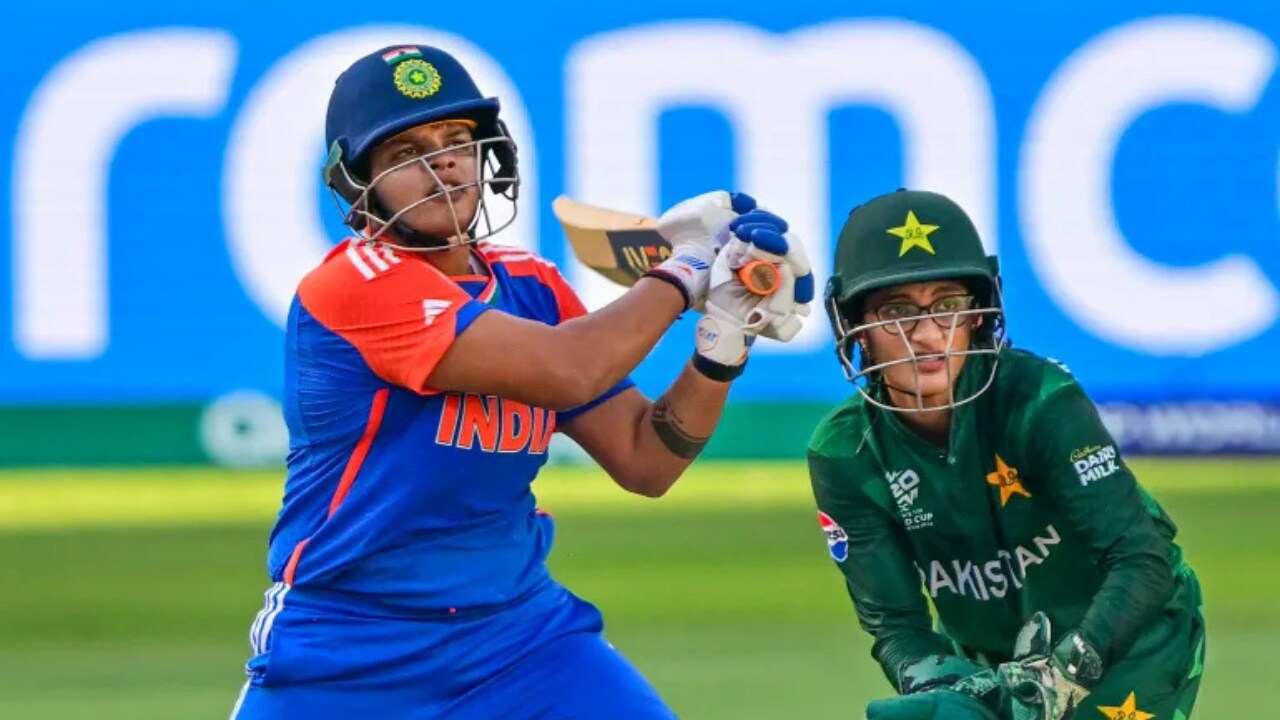
India followed the Pakistan victory with a strong performance against the Netherlands, scoring 209 for five and winning by 95 runs. The team later suffered a six-wicket defeat against South Africa before defeating Bangladesh by five wickets. These results demonstrated that India’s campaign contained both dominant performances and challenging contests.
Pakistan’s campaign was more difficult. After losing to India and South Africa, Pakistan also lost to Bangladesh before finally recording a victory against the Netherlands. That final group-stage success came by 37 runs, with Ayesha Zafar making a significant all-round contribution.
The contrasting campaigns show why a single rivalry match should be considered within the wider tournament context. The result against a major opponent can provide momentum, but progression depends on performances across the entire group stage.
Tactical Lessons From the Match
The match offered several useful lessons about modern women’s T20 cricket. India’s first major advantage came from recovering after early wickets. Instead of allowing the early setbacks to dictate the innings, Mandhana and Harmanpreet rebuilt the score before the late-order acceleration.
The second major lesson was the value of spin during the middle overs. Once Pakistan’s opening partnership was broken, India’s spinners repeatedly challenged the batters. Deepti Sharma’s changes of pace and control created pressure, while Sree Charani also contributed three wickets.
Pakistan, meanwhile, demonstrated that positive starts need to be converted into longer partnerships. The opening phase produced runs, but the middle overs became increasingly difficult. Against a side with multiple quality bowling options, losing wickets while the scoring rate slows can make a large chase almost impossible.
This is one reason T20 matches often turn rapidly. A team may appear comfortable after six overs, but two or three wickets in quick succession can completely change the required approach. India’s ability to capitalize on that transition was one of the defining features of the contest.
Why the Rivalry Continues to Attract Attention
India-Pakistan matches have traditionally attracted significant attention across international cricket, and the women’s game has developed its own audience around the fixture. The 2026 meeting showed that interest is not limited to television or online discussion, with the record group-stage attendance at Edgbaston providing a clear example of the event’s appeal.
At the same time, the sporting importance of the rivalry should not overshadow the individual achievements of the players. Matches like this create opportunities for athletes to perform on major stages, establish tournament records and gain experience in high-pressure environments.
The 2026 encounter also highlighted the increasing depth of women’s cricket. Players such as Mandhana, Deepti Sharma, Richa Ghosh, Muneeba Ali and Fatima Sana represented different aspects of modern T20 cricket, from power hitting and innings construction to spin bowling and all-round ability.
What the 2026 Match Means for Future Encounters
The ind vs pak women world cup 2026 contest will remain an important reference point when the two teams meet again. India’s ability to recover from early wickets and then dominate with spin provided a clear example of how the team approached the matchup in this tournament.
For Pakistan, the game highlighted areas that can become important in future high-pressure encounters. Building longer partnerships, managing the middle overs and maintaining the required scoring rate are crucial when facing a strong bowling unit.
Future India-Pakistan matches will naturally bring different conditions, lineups and tactical plans. Players may change, venues may offer different challenges and previous results do not determine what happens next. However, the lessons from the 2026 encounter can still provide useful context for understanding how both teams approach major tournament cricket.
Conclusion
The ind vs pak women world cup 2026 match produced a clear result, but its significance extended beyond India’s 64-run victory. India overcame an uncertain beginning with the bat, built a competitive 170 for six and then used disciplined bowling to restrict Pakistan to 106 all out. Smriti Mandhana’s 68 provided the foundation, Harmanpreet Kaur’s contribution helped stabilize the innings, and Richa Ghosh supplied valuable late acceleration. With the ball, Deepti Sharma delivered the defining performance with five wickets for 10 runs, supported by Sree Charani’s three-wicket contribution.