

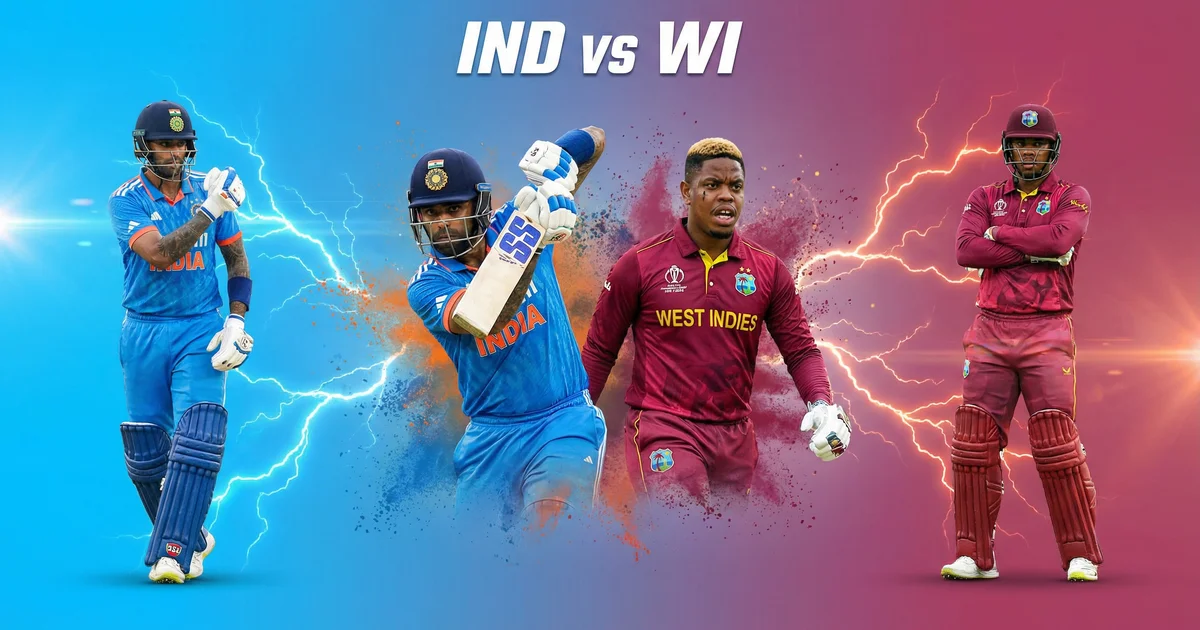


The India vs West Indies T20 2026 series is set to bring another exciting chapter to one of international cricket’s most entertaining limited-overs rivalries. India will host West Indies for a five-match T20I series beginning on October 6, 2026, following the three-match ODI leg of the tour. The T20I matches will be played across Lucknow, Ranchi, Indore, Hyderabad and Bengaluru, giving supporters in different parts of India an opportunity to watch the teams compete under varied conditions.
The timing of the series also makes it significant from a team-building perspective. T20 cricket places enormous importance on flexibility, power hitting, bowling variations and the ability to make quick decisions under pressure. For India, the series provides an opportunity to develop combinations around a new-look T20 leadership group, while West Indies will look to use their natural attacking style to challenge the hosts. With five matches packed into less than two weeks, momentum can change rapidly from one game to the next.
The India vs West Indies T20 2026 contest should therefore be more than a simple battle between two sides. It is an opportunity for players to establish themselves, combinations to become clearer and both teams to test their strategies against quality opposition. Every match can provide valuable information about batting positions, bowling roles, finishing options and how teams respond when conditions do not go according to plan.
India vs West Indies T20 2026 Schedule and Venues
The five-match series starts in Lucknow on October 6 and concludes in Bengaluru on October 17. According to the official schedule, every T20I is scheduled for a 7:00 PM local start in India. The series moves through five different venues, creating a useful test of adaptability because the playing conditions and dimensions can vary considerably from one ground to another.
| T20I | Date | Venue | Local Start |
|---|---|---|---|
| 1st T20I | October 6, 2026 | Lucknow | 7:00 PM |
| 2nd T20I | October 9, 2026 | Ranchi | 7:00 PM |
| 3rd T20I | October 11, 2026 | Indore | 7:00 PM |
| 4th T20I | October 14, 2026 | Hyderabad | 7:00 PM |
| 5th T20I | October 17, 2026 | Bengaluru | 7:00 PM |
The opening match at the Bharat Ratna Shri Atal Bihari Vajpayee Ekana Cricket Stadium in Lucknow will set the tone for the series. The second match moves to the JSCA International Stadium Complex in Ranchi, followed by the third at Holkar Stadium in Indore. Hyderabad hosts the fourth T20I before Bengaluru stages the final match at M. Chinnaswamy Stadium. The official match listings confirm the sequence and venues.
India’s T20I Squad and New Leadership
India’s T20I squad for the series features Shreyas Iyer as captain, with Tilak Varma named vice-captain. The squad combines established international players with younger names who can offer additional energy and flexibility. Abhishek Sharma, Vaibhav Sooryavanshi, Ishan Kishan, Sanju Samson and Tilak Varma provide a range of batting options, while players such as Shivam Dube and Nitish Kumar Reddy add all-round possibilities.
The bowling group also offers considerable variety. Kuldeep Yadav and Ravi Bishnoi provide specialist spin options, while Axar Patel and Washington Sundar can contribute with both bat and ball. Arshdeep Singh remains an important left-arm pace option, and Mayank Yadav brings additional pace potential to the attack. Prince Yadav is another option within the squad, giving the management opportunities to experiment with combinations depending on pitch conditions.
This squad structure makes selection one of the most interesting elements of the India vs West Indies T20 2026 series. India have enough depth to change their playing XI according to conditions, but selecting the correct balance will be crucial. A team with too many specialist batters could leave the bowling attack short of options, while an overly bowling-heavy combination could reduce India’s finishing power.
West Indies’ Challenge in Indian Conditions
West Indies arrive with a reputation for aggressive T20 cricket and a long history of producing players who can change matches quickly. Their approach is often built around attacking batting, powerful stroke-making and bowlers capable of using pace changes and variations effectively. Against India, however, they will have to combine that attacking instinct with disciplined decision-making.
Playing five T20Is in India also means adapting to different venues and match situations. A strategy that works on a high-scoring surface may not be equally effective on a slower pitch. West Indies will therefore need to assess conditions quickly, particularly during the powerplay and at the death. Their ability to preserve wickets while maintaining a strong scoring rate could have a major influence on the series.
The India vs West Indies T20 2026 series gives the visitors an opportunity to challenge India’s depth rather than relying solely on individual performances. If their middle order can handle spin effectively and their bowlers prevent India’s top order from establishing control, West Indies can create pressure across the series.
Key Batting Battles to Watch
T20 matches are frequently decided by short periods of exceptional batting. India’s squad includes several players capable of attacking during the powerplay as well as finishing an innings strongly. Abhishek Sharma can provide explosive starts, while Ishan Kishan and Sanju Samson give India wicketkeeping and batting flexibility. Tilak Varma’s ability to rotate strike while accelerating later in an innings can also become important.
The middle and lower-middle order could be particularly important if West Indies find early breakthroughs. Shivam Dube and Nitish Kumar Reddy can provide additional power and allow India to maintain scoring momentum. The challenge for India’s batters will be to identify when to attack and when to consolidate rather than attempting high-risk shots against every delivery.
West Indies, meanwhile, will want their major stroke-makers to take advantage of the fielding restrictions. Their best route to controlling a T20 innings could involve scoring quickly during the powerplay and forcing India to introduce defensive fields earlier than planned. Once the field spreads, maintaining a high run rate becomes more difficult, making the first six overs particularly important.
Bowling Strategy Could Decide the Series
Bowling in T20 cricket is no longer simply about taking wickets. Teams must also control boundaries, protect specific areas of the ground and use different variations depending on the batter. India have a useful mixture of spin and pace, giving the captain several tactical options.

Arshdeep Singh can provide left-arm pace and new-ball movement, while India’s spinners can be used strategically in the middle overs. Kuldeep Yadav’s ability to create uncertainty with his variations could be especially valuable against batters who attack aggressively. Axar Patel and Washington Sundar offer further control, while Mayank Yadav can provide a different pace dimension when selected.
For West Indies, the challenge will be to prevent India’s batters from dominating the final five overs. Death bowling can quickly change the outcome of a T20 match, because an innings that appears to be under control can suddenly produce 50 or more runs. Yorkers, slower deliveries, wide lines and intelligent field placements will all have a role.
Why the Different Venues Matter
The five venues give the series an interesting tactical dimension. Lucknow can offer conditions where bowlers who vary their pace can become difficult to attack, while Ranchi has traditionally provided an engaging environment for both batting and spin. Indore is known for producing entertaining scoring contests, meaning batters may have an opportunity to attack from the beginning.
Hyderabad and Bengaluru can also create different tactical challenges. Bengaluru’s ground dimensions and traditionally batting-friendly conditions can make boundary prevention particularly difficult. Hyderabad can reward batters who build partnerships while also giving bowlers opportunities if they use variations effectively.
For the teams, travelling between venues means there is limited time to make major corrections. A weakness exposed in one match may become an immediate selection or tactical concern in the next. This makes communication between captain, coaching staff and players extremely important throughout the series.
Players Who Could Make a Difference
Several individuals have the potential to influence the direction of the contest. India’s captain Shreyas Iyer will have an important leadership role in addition to his batting responsibilities. His decisions regarding bowling changes, matchups and batting positions could become particularly significant in close games.
Abhishek Sharma is another player worth watching because his aggressive approach can change the tempo of an innings during the powerplay. Tilak Varma’s versatility could also be valuable, particularly if India need someone capable of adapting between consolidation and acceleration. Among the bowlers, Kuldeep Yadav and Arshdeep Singh could play major roles because they offer contrasting methods of attacking the opposition.
West Indies will similarly need contributions from more than one or two players. Their most effective performances are likely to come when aggressive batting is supported by disciplined bowling. If their top order scores quickly and their bowlers take wickets at important moments, they can put India under pressure even on home soil.
What India Need to Get Right
India’s biggest advantage is depth, but depth only becomes useful when roles are clearly defined. The management will need to decide the preferred opening combination, the ideal number three or four, the best finishing options and the balance between specialist bowlers and all-rounders.
Some of the most important priorities will be:
- Establishing a dependable top-order combination.
- Finding the right balance between pace, spin and all-round options.
- Building a reliable death-bowling strategy.
- Giving younger players meaningful opportunities without weakening the overall XI.
- Managing workloads across five matches in a short period.
A strong start would allow India to experiment more comfortably later in the series. If the opening games become close contests, however, the pressure on selection and tactical decisions will increase quickly.
What West Indies Need to Do Differently
West Indies will need to avoid allowing India to control matches through the middle overs. In T20 cricket, losing momentum for even three or four overs can create a significant gap. Their batters should therefore look for controlled aggression rather than simply attempting maximum-power shots.
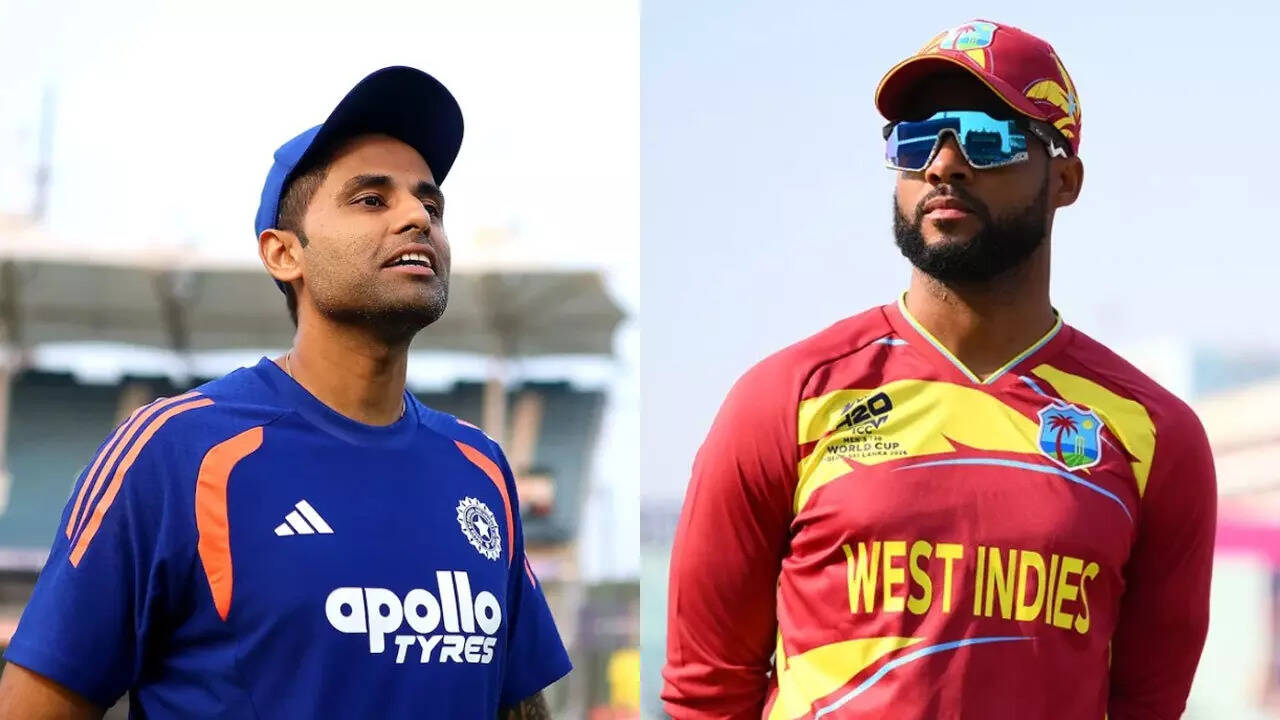
Their bowlers will also have to make India’s batters uncomfortable. Instead of offering predictable pace and length, they can use changes of pace, variations in trajectory and intelligent field placements. Taking wickets rather than merely defending runs could be especially important because India’s batting depth makes traditional containment difficult.
The India vs West Indies T20 2026 series could become highly competitive if West Indies can force India into uncomfortable situations early in each innings. The visitors do not necessarily need to dominate every phase; they need to win enough key moments to prevent India from building sustained control.
How the Series Could Be Decided
The outcome may ultimately depend on three areas: powerplay batting, middle-over wickets and death-over execution. Teams that consistently win these phases usually give themselves a strong chance of winning T20 matches. India have the personnel to perform well in all three areas, but West Indies have enough attacking quality to disrupt that plan.
Another important factor will be adaptability. Because the five matches are spread across different venues, there is no guarantee that the same playing XI or tactics will work throughout the series. Captains who recognize conditions quickly and make proactive changes will have an advantage.
The India vs West Indies T20 2026 contest could also provide valuable preparation for future international tournaments. Players will be competing not only for individual success but also for clearly defined roles within their respective T20 setups. That makes every innings, bowling spell and fielding performance potentially significant.
Conclusion
The five-match series promises an intriguing mixture of experience, youth, aggressive batting and tactical experimentation. India enter with a deep squad and home conditions, while West Indies have the ability to produce explosive performances that can turn matches around quickly. The sequence from Lucknow to Bengaluru provides both sides with different challenges and prevents the series from becoming predictable. For India, consistency will be the central objective. The team must develop dependable combinations while giving emerging players opportunities to establish themselves. For West Indies, adaptability and controlled aggression will be essential if they want to compete strongly across all five matches.