


.avif&description=Explore the latest India vs West Indies Test results, key performances, major battles, team strengths and what the rivalry means for modern Test cricket.)
The India vs West Indies Test rivalry has a special place in international cricket. It combines a long history of memorable contests with contrasting cricketing traditions. India have developed into one of the strongest Test teams of the modern era, while the West Indies continue to carry the legacy of a side that once dominated world cricket through exceptional fast bowling, fearless batting and remarkable athleticism. Whenever these two teams meet in the longest format, the contest offers an opportunity to compare different generations, playing styles and approaches to Test cricket.
For the current cricket scenario, it is important to distinguish the latest Test series from the ongoing 2026 white-ball tour. India and West Indies played a two-Test series in India in October 2025, with India winning both matches. The 2026 home tour does not include Tests; it consists of three ODIs followed by five T20Is. India won the 2026 ODI series 2-1 before the T20I leg began in October.
That distinction matters for readers searching for the India vs West Indies Test because current match discussions can easily become mixed with ODI and T20I updates. The latest Test meetings remain an important reference point, particularly because they formed part of the 2025–27 World Test Championship cycle and provided useful clues about the strengths and weaknesses of both teams.
Latest India vs West Indies Test Series
The most recent Test series between the sides was played in India in October 2025. It consisted of two matches, with the first Test taking place at the Narendra Modi Stadium in Ahmedabad and the second at the Arun Jaitley Stadium in Delhi. India produced dominant performances in both games and completed a 2-0 series victory.
The first Test was particularly one-sided. India posted 448/5 declared after a strong batting display, while West Indies were dismissed for 162 in their first innings and 146 in their second. India therefore won by an innings and 140 runs. Ravindra Jadeja played a major role with both bat and ball and was named Player of the Match after contributing a century and four wickets.
The second Test in Delhi presented a somewhat different contest. West Indies showed greater resistance with the bat, scoring 248 in the first innings and 390 in the second after being asked to follow on. India nevertheless remained in control and chased the relatively modest fourth-innings target, reaching 124/3 to win by seven wickets.
Series Results at a Glance
| Test | Venue | Result | Key Match Story |
|---|---|---|---|
| 1st Test, 2025 | Ahmedabad | India won by an innings and 140 runs | India dominated with bat and ball |
| 2nd Test, 2025 | Delhi | India won by 7 wickets | West Indies showed stronger second-innings resistance |
These results demonstrate why the India vs West Indies Test rivalry remains relevant even when the two sides are competing in different formats. Test cricket places demands on technique, patience, bowling depth and tactical decision-making that cannot be judged simply from a team’s white-ball performances.
India’s Strengths in Test Cricket
India’s biggest advantage in Test cricket is the depth of its overall squad. The team can build pressure through several phases of a match rather than depending on one individual. Strong top-order batting, quality spin bowling and an increasingly versatile pace attack allow India to adapt to different match situations.
The batting unit has also entered an important phase of development. Players such as Yashasvi Jaiswal and Shubman Gill represent the next generation of Indian Test batting, while experienced players can provide stability when conditions become difficult. A successful Test side needs more than aggressive stroke-making; it needs batters who can leave the ball, absorb pressure and convert starts into substantial scores.
Another major advantage is India’s ability to use spin effectively on home pitches. Ravindra Jadeja remains especially valuable because he can influence a match in three departments. His batting gives the lower middle order additional strength, while his bowling can become increasingly dangerous as a Test progresses. This combination makes team selection particularly flexible.
India’s pace resources also provide a different dimension. Modern Indian Test cricket is no longer built entirely around spin-friendly home conditions. Fast bowlers can create early breakthroughs, reverse the pressure later in an innings and give the captain multiple tactical options.
West Indies’ Test Cricket Challenge
West Indies have one of the richest histories in Test cricket, but rebuilding a consistently competitive red-ball team remains an important challenge. The modern side has shown that it can produce impressive individual performances, yet maintaining pressure against a deep team such as India over four or five days requires sustained execution.
One of the biggest areas for improvement is batting consistency. A strong opening partnership can change the entire direction of a Test, particularly against India’s varied bowling attack. West Indies need batters who can survive the first spell, build partnerships and avoid losing clusters of wickets.
Their bowling attack can also become a major weapon when conditions offer movement or bounce. West Indies have historically produced outstanding fast bowlers, and the current generation can draw confidence from that tradition. However, controlling the run rate and maintaining disciplined lines for long spells are essential against India’s deep batting order.
The second Test of the 2025 series offered an encouraging example. After being forced to follow on, West Indies scored 390 in their second innings, showing considerably more resistance than they had managed in Ahmedabad. That innings did not change the result, but it demonstrated that the team could respond after a difficult first Test.
Key Players Who Can Shape a Test
In an India-West Indies Test contest, individual battles can often determine the momentum of an innings. India’s top order has the ability to create huge totals when the first two or three batters settle in. The middle order then has the opportunity to convert that platform into a declaration or a match-winning advantage.

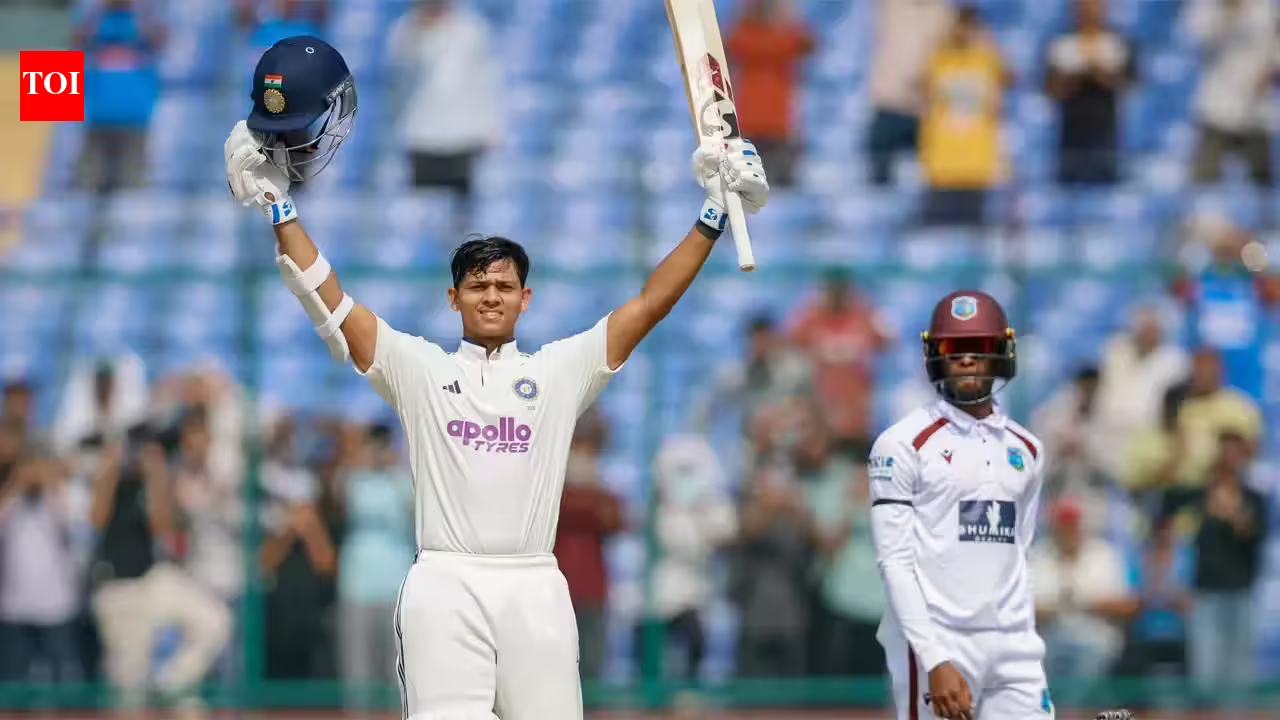
Yashasvi Jaiswal was among India’s leading run-scorers during the 2025 Test series, finishing with 219 runs. KL Rahul contributed 196, while Shubman Gill scored 192 across the two Tests. Those figures underline how important India’s top-order consistency was in controlling the series.
Ravindra Jadeja is another crucial figure because his contribution is not limited to one skill. His century in Ahmedabad demonstrated his batting value, while his four wickets helped India maintain control with the ball. In a long Test match, having a player capable of contributing heavily in multiple departments can significantly alter the balance between the teams.
For West Indies, the priority is to build partnerships rather than rely on isolated performances. A technically sound top order, supported by aggressive middle-order players and disciplined bowling, could make future contests considerably closer.
Why Test Conditions Matter
Conditions are one of the most important factors in any India vs West Indies Test. A match played in India can place considerable emphasis on spin, batting patience and the ability to manage changing pitch conditions. Early in a Test, batting may be relatively comfortable, while later stages can introduce greater assistance for spinners.
West Indies therefore need to adapt quickly when playing in India. Their batters must understand when to attack and when to defend, while their bowlers need to make the most of the new ball before turning to variations and sustained pressure.
India face a different challenge when playing West Indies in Caribbean conditions. Pace, bounce, humidity and movement can influence the match, particularly during the opening sessions. India’s improved fast-bowling depth means they are better equipped than in previous eras to compete in those conditions, but successful Test cricket still requires patience.
This tactical contrast is one reason the India vs West Indies Test remains interesting even when one team appears stronger on paper. Test matches create opportunities for momentum to change over several days, and a strong session can sometimes be worth more than a strong hour in limited-overs cricket.
The Importance of the World Test Championship
Modern Test series also carry significance beyond the individual rivalry because many matches contribute to the ICC World Test Championship. India’s 2025 victory in Ahmedabad provided an important boost to its position in the 2025–27 WTC cycle. The ICC noted that the result strengthened India’s position after the team collected a major percentage-point gain from the win.
This adds another layer to future encounters. Teams cannot approach every Test simply as a standalone fixture. Points percentage, series results and consistency across home and away conditions can influence the larger championship picture.
For West Indies, every successful Test performance can contribute to the development of a more competitive red-ball structure. A strong result against a leading side such as India can provide both championship value and confidence for younger players.
Current 2026 India vs West Indies Scenario
The current 2026 tour should not be confused with a Test series. According to the announced home-season schedule, West Indies are touring India for three ODIs and five T20Is. The ODI series finished 2-1 in India’s favour, while the five-match T20I series began in Lucknow on October 6.
The recent ODI series produced some extraordinary batting performances. In the second ODI, India chased 406 after West Indies posted 405/7, with Shubman Gill scoring an unbeaten 223. West Indies then responded strongly in the third ODI by chasing India’s 351, with captain Shai Hope making an unbeaten 162. India ultimately won the ODI series 2-1.
These performances are relevant to the broader rivalry because they show that both teams possess significant batting firepower. However, Test cricket demands a different skill set. A batter who dominates for 50 overs must still demonstrate patience and defensive technique when facing long spells over multiple days.
For readers following the India vs West Indies Test topic in 2026, the key point is that there is currently no Test match between the two teams in the ongoing Indian home tour. The latest completed Test meetings were the two matches played in October 2025. The next Test fixture between the sides would depend on a future bilateral schedule rather than the ongoing 2026 white-ball series.
How the Rivalry Has Changed
The history of India and West Indies in Test cricket stretches across several eras. West Indies once possessed an extraordinary pace-bowling dynasty that made their team one of the most feared forces in international cricket. India gradually developed its own identity, particularly through world-class spin bowling before building one of the deepest pace attacks in its history.
Today’s rivalry is therefore less about the traditional image of spin versus pace and more about squad depth, preparation and adaptability. India have become a highly competitive all-conditions Test team, while West Indies continue to work toward establishing greater consistency in the longest format.
That evolution makes every future Test meaningful. A strong West Indies performance would demonstrate progress in their red-ball rebuild, while another dominant Indian display would reinforce their position among the leading Test nations.
What Fans Should Watch in Future Tests
Several areas are likely to decide the next major Test contest between these teams:
- The opening partnerships and how each side handles the new ball.
- India’s ability to use spin during the middle and final stages of an innings.
- West Indies’ fast bowlers and their ability to maintain pressure over long spells.
- The performance of the middle order when the first innings reaches a critical stage.
- Captaincy decisions around declarations, field placements and bowling changes.
The most fascinating aspect will be whether West Indies can prevent India from building the huge first-innings totals that have frequently put matches beyond reach. At the same time, India will need to avoid giving West Indies opportunities through loose bowling or unnecessary wicket-taking risks.
Conclusion
The India vs West Indies Test rivalry continues to represent an important part of international cricket, combining historic significance with the changing demands of the modern game. India’s current strength comes from batting depth, versatile bowling and an increasingly balanced squad, while West Indies possess the potential to create competitive contests when their batting and fast bowling operate together.