



Introduction
Women’s cricket has developed into one of the most competitive and entertaining formats of international cricket. India Women and South Africa Women are two strong teams that regularly produce exciting contests through aggressive batting, disciplined bowling and impressive fielding. Fans closely follow their encounters to understand individual performances, team combinations and the factors that influence match results. The india women’s national cricket team vs south africa women’s national cricket team match scorecard is particularly useful for supporters who want a complete picture of how a match unfolds.
Both teams have talented players who can change the direction of a game within a few overs. India’s batting lineup features technically skilled batters and powerful finishers, while South Africa have built a reputation for competitive batting performances and effective bowling combinations. Their T20I encounters are especially interesting because they often involve high scoring rates, partnerships and challenging run chases.
A scorecard does more than display the final result. It records individual runs, wickets, overs, strike rates, economy rates and extras. By studying these details, cricket followers can understand which players made important contributions and where a team gained or lost control. This article examines a recent meeting between the two sides, explains the important scorecard details and discusses the performances that shaped the contest.
India Women vs South Africa Women: Latest Match Overview
One of the notable recent encounters between these teams took place in the fifth T20I of India’s 2026 tour of South Africa. The match was played on April 27, 2026, at Willowmoore Park in Benoni. South Africa entered the contest with strong momentum and continued their impressive performances by defeating India by 23 runs. The hosts scored 155 runs for six wickets in their allotted 20 overs, while India managed 132 runs for eight wickets. The result also confirmed South Africa’s dominance in the five-match T20I series.
The india women’s national cricket team vs south africa women’s national cricket team match scorecard highlights an important difference between the two teams on the day. South Africa had a standout contribution from captain Laura Wolvaardt, who remained unbeaten and guided her team to a competitive total. India’s bowlers produced some useful spells, but the batting lineup struggled to build partnerships during the chase. Although Bharti Fulmali and Richa Ghosh provided some resistance, India could not maintain the required scoring rate.
Match Summary and Important Details
| Match information | Details |
|---|---|
| Match | 5th T20I |
| Tournament | India Women tour of South Africa 2026 |
| Date | April 27, 2026 |
| Venue | Willowmoore Park, Benoni |
| South Africa Women | 155/6 in 20 overs |
| India Women | 132/8 in 20 overs |
| Result | South Africa won by 23 runs |
| Player of the Match | Laura Wolvaardt |
| Laura Wolvaardt’s score | 92* off 56 balls |
The match summary provides a quick understanding of the contest. South Africa’s total of 155 was built around an excellent innings from their captain. India needed a strong start to chase the target, but early wickets created pressure. South Africa used that opportunity effectively and controlled the match through disciplined bowling and fielding.
South Africa Women’s Batting Performance
South Africa Women started their innings with the intention of establishing a strong foundation. Laura Wolvaardt and Sune Luus opened the batting and developed an important partnership. Wolvaardt displayed excellent control, combining well-timed boundaries with calculated attacking shots. She remained at the crease throughout the innings and scored 92 runs from 56 deliveries, including 11 fours and two sixes. Her strike rate of 164.29 demonstrated how effectively she converted her start into a major contribution.
Sune Luus supported the captain by scoring 23 runs from 23 balls. Their opening partnership produced 75 runs, giving South Africa a solid platform. However, India’s bowlers responded by taking wickets in the middle overs. Shree Charani dismissed Luus and Tazmin Brits, while Deepti Sharma removed Annerie Dercksen and Anneke Bosch. These wickets temporarily slowed the scoring, but Wolvaardt continued to hold the innings together.
Laura Wolvaardt Leads from the Front
Laura Wolvaardt was undoubtedly the most influential batter in the match. Her unbeaten 92-run innings demonstrated her ability to balance patience and aggression. Rather than attempting risky shots against every delivery, she identified scoring opportunities and punished loose balls. Her timing through the off side and ability to find gaps made it difficult for Indian bowlers to restrict her scoring.
The captain also received useful support from Sinalo Jafta, who scored an unbeaten 16 from just eight deliveries. Her quick contribution helped South Africa finish with additional runs during the final overs. Although several middle-order batters could not produce substantial scores, Wolvaardt’s consistency ensured that the team reached 155/6. Her innings was particularly important because it gave South Africa a total that could be defended with effective bowling.
South Africa’s Batting Scorecard
| Batter | Runs | Balls | Fours | Sixes |
|---|---|---|---|---|
| Laura Wolvaardt | 92* | 56 | 11 | 2 |
| Sune Luus | 23 | 23 | 2 | 1 |
| Tazmin Brits | 2 | 6 | 0 | 0 |
| Annerie Dercksen | 0 | 4 | 0 | 0 |
| Anneke Bosch | 8 | 11 | 0 | 0 |
| Chloe Tryon | 12 | 10 | 1 | 0 |
| Nadine de Klerk | 1 | 2 | 0 | 0 |
| Sinalo Jafta | 16* | 8 | 2 | 0 |
South Africa Women: 155/6 in 20 overs. Extras: 1. Figures from the fifth T20I scorecard.
India Women’s Bowling Performance
India’s bowling attack had some encouraging moments despite the final result. The team managed to take six wickets and prevented South Africa from scoring an exceptionally large total. Shree Charani and Deepti Sharma were among the important contributors, taking two wickets each. Their ability to break partnerships during the middle overs helped India regain some control after the opening partnership.
Renuka Singh Thakur also played an important role by taking two wickets. She conceded 21 runs in four overs and maintained an economy rate of 5.20, making her one of India’s more economical bowlers. However, the other bowling options were less successful at controlling the scoring rate. Deepti Sharma conceded 37 runs, while Arundhati Reddy also gave away 37 runs without taking a wicket. India’s bowling performance was therefore a combination of useful individual spells and some expensive overs.
India’s Bowling Figures
| Bowler | Overs | Runs | Wickets |
|---|---|---|---|
| Kranti Gaud | 3 | 29 | 0 |
| Renuka Singh Thakur | 4 | 21 | 2 |
| Shree Charani | 4 | 22 | 2 |
| Arundhati Reddy | 4 | 37 | 0 |
| Deepti Sharma | 4 | 37 | 2 |
| Shafali Verma | 1 | 8 | 0 |
The figures show that Renuka Singh Thakur delivered an economical spell, while Shree Charani and Deepti Sharma contributed important wickets. However, India’s challenge was to maintain pressure throughout the innings. Wolvaardt’s presence at the crease made that task difficult, particularly during the final overs when South Africa collected valuable runs.
India Women’s Batting Performance During the Run Chase
India Women began their chase of 156 runs with the expectation of producing a strong batting performance. However, the opening overs did not go according to plan. Shafali Verma was dismissed after scoring just four runs from five balls, while Jemimah Rodrigues managed only one run from four deliveries. Losing two early wickets put additional pressure on the middle order and made it difficult for India to establish a comfortable scoring rate.
Anushka Sharma contributed 17 runs from 21 deliveries, but her innings could not provide the momentum India needed. Captain Harmanpreet Kaur scored 22 runs from 28 balls, attempting to stabilise the innings after the early dismissals. However, South Africa continued to take wickets at important moments. The partnership between Harmanpreet and Bharti Fulmali produced 38 runs, which was India’s highest partnership in the innings. Bharti eventually became the leading Indian scorer with 40 runs from 30 deliveries.
Bharti Fulmali and Richa Ghosh Provide Resistance
Bharti Fulmali played one of the most important innings for India. Her 40 runs included four boundaries and two sixes, and she maintained a strike rate of 133.33. She tried to rebuild the innings after the early setbacks and gave India some hope of getting closer to the target. However, her dismissal at 99/5 in the 15.3 over left the batting lineup with another difficult challenge.
Richa Ghosh remained unbeaten on 25 runs from 15 balls, including three fours and one six. Her aggressive approach towards the end helped India improve the final score, but the required run rate had already become difficult to manage. Deepti Sharma scored eight runs, while Arundhati Reddy and Kranti Gaud could not make significant contributions. India eventually finished at 132/8, falling 23 runs short of the target.
India Women’s Batting Scorecard
| Batter | Runs | Balls | Fours | Sixes |
|---|---|---|---|---|
| Shafali Verma | 4 | 5 | 0 | 0 |
| Anushka Sharma | 17 | 21 | 2 | 0 |
| Jemimah Rodrigues | 1 | 4 | 0 | 0 |
| Harmanpreet Kaur | 22 | 28 | 2 | 0 |
| Bharti Fulmali | 40 | 30 | 4 | 2 |
| Deepti Sharma | 8 | 10 | 0 | 0 |
| Richa Ghosh | 25* | 15 | 3 | 1 |
| Arundhati Reddy | 1 | 2 | 0 | 0 |
| Kranti Gaud | 0 | 4 | 0 | 0 |
| Shree Charani | 1* | 2 | 0 | 0 |
India Women: 132/8 in 20 overs. Extras: 13. Figures from the fifth T20I scorecard.
South Africa Women’s Bowling Performance
South Africa’s bowling unit played a significant role in defending the target. The bowlers understood the importance of taking early wickets and immediately put pressure on India’s batting lineup. Eliz-mari Marx provided an early breakthrough by dismissing Shafali Verma, while Nadine de Klerk removed Anushka Sharma. Ayabonga Khaka then dismissed Jemimah Rodrigues, leaving India struggling at 21/2.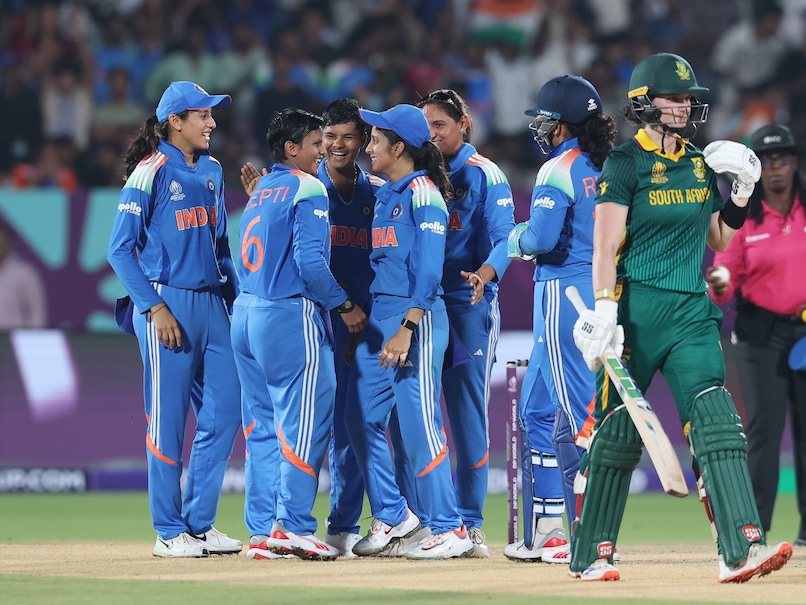
Nonkululeko Mlaba was particularly effective during the middle overs. She conceded just 15 runs in four overs and picked up two wickets, maintaining an excellent economy rate of 3.80. Her economical bowling prevented Indian batters from scoring freely and forced them to take risks. Nadine de Klerk also claimed two wickets, while Chloe Tryon and Ayabonga Khaka picked up one wicket each. This collective effort ensured that India never established the momentum required for a successful chase.
Important Bowling Contributions
A few performances deserve special attention when analysing the india women’s national cricket team vs south africa women’s national cricket team match scorecard. Nonkululeko Mlaba’s disciplined spell was especially valuable because she restricted the flow of runs during a crucial stage of the innings. Her ability to vary her pace and maintain accuracy made it difficult for Indian batters to play attacking shots.
Nadine de Klerk also made a difference by taking two wickets, including the dismissal of Harmanpreet Kaur and Deepti Sharma. Chloe Tryon contributed with both bowling and fielding, while the South African fielders supported their bowlers by maintaining pressure and taking important catches. The bowling attack worked as a coordinated unit rather than depending on one individual.
Key Moments That Decided the Match
Several important moments influenced the final result. The first major turning point was the 75-run opening partnership between Laura Wolvaardt and Sune Luus. It provided South Africa with a strong foundation and allowed the captain to play a controlled attacking innings. Even after losing wickets in the middle overs, Wolvaardt remained unbeaten and ensured that her team reached a competitive total.
India’s early batting collapses were another important factor. Losing Shafali Verma and Jemimah Rodrigues within the first four overs created pressure on the middle order. South Africa capitalised on this situation by keeping their bowling tight and taking wickets at regular intervals. The 38-run partnership between Harmanpreet Kaur and Bharti Fulmali offered some resistance, but India could not establish another substantial partnership.
The following moments were particularly important:
-
Laura Wolvaardt’s unbeaten 92 from 56 deliveries.
-
The 75-run opening partnership between Wolvaardt and Sune Luus.
-
India’s loss of two early wickets during the powerplay.
-
Bharti Fulmali’s valuable contribution of 40 runs.
-
Nonkululeko Mlaba’s economical spell of two wickets for 15 runs.
These moments explain why South Africa maintained control of the match despite India’s efforts to recover.
What the Match Revealed About Both Teams
The match provided useful lessons for both teams. South Africa demonstrated the importance of having a dependable top-order batter who can remain at the crease and guide the innings. Wolvaardt’s performance showed how a captain can take responsibility when other batters are unable to contribute substantial scores. Her ability to accelerate without losing control was one of the biggest reasons behind South Africa’s victory.
For India, the match highlighted the importance of building partnerships and maintaining consistency throughout a T20I innings. The team had some promising individual contributions, particularly from Bharti Fulmali and Richa Ghosh, but the batting lineup needed greater support from the top order. Early wickets made the chase more challenging and forced the middle-order batters to balance recovery with aggressive scoring.
The bowling department also offered positives for India. Renuka Singh Thakur, Shree Charani and Deepti Sharma all picked up two wickets. These performances showed that India had the ability to challenge South Africa’s batting lineup. However, controlling the scoring rate during the final overs remained an important area for improvement.
Why Cricket Fans Follow the Match Scorecard
The india women’s national cricket team vs south africa women’s national cricket team match scorecard attracts attention because it gives supporters a detailed record of the contest. Fans can use it to compare batting performances, understand bowling effectiveness and identify the partnerships that influenced the outcome. It also provides useful information for cricket analysts, sports writers and people following the progress of international women’s cricket.
A scorecard is especially helpful when someone cannot watch the entire match. Instead of relying only on the final result, readers can examine how the innings developed. For example, a batter scoring 40 runs from 30 balls makes a different contribution from someone scoring the same number of runs from 50 balls. Similarly, a bowler taking two wickets while conceding 15 runs in four overs has a different impact from a bowler taking two wickets while giving away 37 runs.
The india women’s national cricket team vs south africa women’s national cricket team match scorecard also helps readers evaluate team performances beyond individual statistics. Partnerships, extras, fall of wickets and powerplay scores provide additional context. These details explain whether a team lost because of poor batting, expensive bowling, unsuccessful partnerships or a combination of different factors.
What to Watch in Future India Women vs South Africa Women Matches
Future encounters between India and South Africa are expected to remain competitive because both teams have experienced international players and emerging talent. India will look to improve its batting partnerships and make better use of the powerplay overs. Players such as Smriti Mandhana, Shafali Verma, Harmanpreet Kaur and Richa Ghosh can provide different attacking options when they find their rhythm.
South Africa, meanwhile, will aim to maintain the consistency demonstrated by Laura Wolvaardt and the team’s bowling unit. Their ability to defend competitive totals and take wickets at crucial moments makes them a challenging opponent. The performances of players such as Sune Luus, Marizanne Kapp, Nadine de Klerk and Nonkululeko Mlaba can also influence future results.
For supporters, the most interesting aspect will be how India responds to South Africa’s disciplined approach. Improvements in shot selection, strike rotation and middle-over partnerships could make the next contest much closer. Both teams have enough quality to produce exciting cricket, and their encounters will continue to attract attention from women’s cricket followers.
Conclusion
The fifth T20I between India Women and South Africa Women on April 27, 2026, was an impressive performance by the South African side. South Africa scored 155/6 in 20 overs, with captain Laura Wolvaardt producing an outstanding unbeaten 92 from 56 deliveries. India responded with 132/8, falling 23 runs short despite Bharti Fulmali’s 40 and Richa Ghosh’s unbeaten 25.
The india women’s national cricket team vs south africa women’s national cricket team match scorecard clearly demonstrates the importance of partnerships, consistent batting and disciplined bowling in T20 international cricket. South Africa succeeded because its captain delivered a match-defining innings and its bowlers consistently pressured India’s batting lineup. India showed some positive individual performances but needed stronger contributions from the top order to complete the chase.
Overall, this encounter offered valuable insights into the strengths and weaknesses of both teams. For cricket fans, analysing the complete scorecard provides a better understanding of the match than simply looking at the final result. It also highlights the growing competitiveness of women’s international cricket and the exciting contests that India and South Africa can produce in the future.