




Sri Lanka and Bangladesh have developed an interesting cricket rivalry over the years, with the two Asian teams regularly meeting in bilateral series and major international tournaments. Their contests have produced memorable performances, unexpected results, close finishes, and several important moments in the development of both sides. While Sri Lanka have historically enjoyed greater success across international cricket, Bangladesh have steadily improved and become increasingly competitive, particularly in limited-overs cricket.
The term sl vs ban represents more than a simple cricket fixture. The matchup can look very different depending on whether the teams are playing a Test, ODI, or T20 international. Test matches demand patience and technical discipline, while ODIs require teams to balance risk and consistency over 50 overs. T20 cricket creates an even faster contest in which a few overs, a single partnership, or an individual bowling spell can dramatically change the outcome.
The rivalry is also significant because both countries have produced talented cricketers who have influenced Asian cricket. Sri Lanka’s tradition includes technically strong batters, creative stroke-makers, and quality spin bowlers, while Bangladesh have built a reputation around determined batting, effective spin, competitive home performances, and passionate cricket support. These different characteristics make their encounters particularly interesting to follow.
Sri Lanka vs Bangladesh Cricket Rivalry
The sl vs ban rivalry has developed gradually as Bangladesh have established themselves as a stronger force in international cricket. Sri Lanka entered the modern international era with a considerably longer record of success, including major tournament achievements and strong performances in Test and ODI cricket. Bangladesh, however, have continued to narrow the competitive gap by developing their domestic structure and producing players capable of performing at international level.
One of the most interesting aspects of this rivalry is that historical strength does not always determine an individual match. Conditions can have a major influence, especially in Asia. A slow pitch may bring spinners into the game, while a good batting surface can reward aggressive stroke-making. Weather can also influence tactics, particularly in shorter formats where a reduction in overs can completely change the approach required from both teams.
The teams have also developed familiarity with each other’s strengths and weaknesses. Players frequently face one another in international cricket and franchise competitions, meaning tactical preparation is often detailed. Captains must decide when to attack, when to protect their strongest bowlers, and how to manage the middle overs without allowing the opposition to gain control.
Head-to-Head Record Across Formats
Historical statistics provide useful background when examining sl vs ban, although records should always be considered according to the format being played. Sri Lanka have traditionally dominated the overall Test and ODI head-to-head numbers, while Bangladesh have been much more competitive in T20 cricket.
Across their Test meetings, Sri Lanka have recorded significantly more victories, with Bangladesh securing only a small number of wins. The ODI record also favours Sri Lanka, although Bangladesh have recorded important victories, particularly when playing with strong home support. T20 cricket has produced a closer contest because the shorter format gives teams less time to recover from mistakes and places greater emphasis on power hitting, bowling variations, and fielding.
| Format | Matches | Sri Lanka Wins | Bangladesh Wins | Other Results |
|---|---|---|---|---|
| Tests | 26 | 20 | 1 | 5 draws |
| ODIs | 57 | 43 | 12 | 2 no results |
| T20Is | 22 | 13 | 9 | 0 |
These numbers demonstrate why it is important to avoid treating the overall rivalry as a single statistical story. A team that has historically performed better in Tests may face an entirely different challenge in a T20 match. The conditions, squad selection, playing XI, and current form all have a significant effect on a particular contest.
Recent Meetings Between the Teams
Recent meetings have shown that the balance between Sri Lanka and Bangladesh can shift from match to match. In the 2025 ODI series, Sri Lanka won the opening match, Bangladesh responded by winning the second game, and Sri Lanka claimed the third match to take the series. The sequence demonstrated the competitive nature of the teams and showed how quickly momentum can change during a bilateral series.
The T20 encounters have also produced contrasting results. Sri Lanka have secured victories in recent meetings, while Bangladesh have responded with strong performances of their own. This pattern is particularly noticeable in the shortest format because a team can recover from a disappointing performance in one match by making relatively small tactical adjustments in the next.
For followers of sl vs ban, recent results can therefore be more useful when examined alongside the circumstances of each match. A scorecard alone does not always explain why a team won. Powerplay wickets, middle-over partnerships, bowling changes, dropped catches, and death-over scoring can all have a major influence.
The Importance of T20 Cricket
T20 cricket has added another dimension to the Sri Lanka-Bangladesh rivalry. Unlike Test cricket, where teams have several days to recover from a poor session, a T20 side has only 120 legal deliveries in a standard innings. This creates enormous pressure on players to make effective decisions quickly.
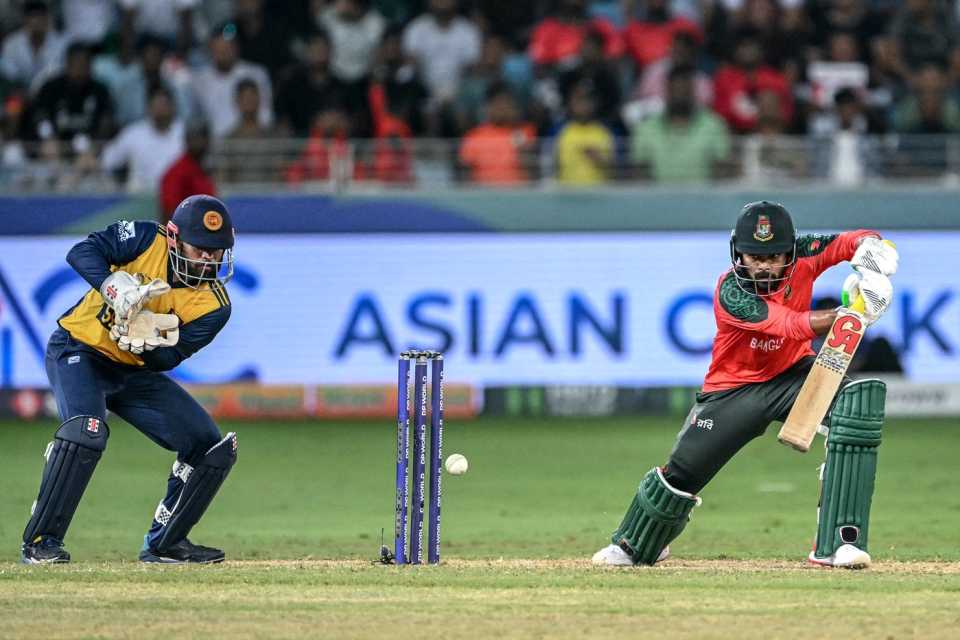
The powerplay is particularly important because fielding restrictions create opportunities for attacking batters. Teams often attempt to score quickly during these overs while protecting wickets. Losing two or three early wickets, however, can force a side to change its strategy and focus on rebuilding instead of maximizing the powerplay.
The middle overs then become a tactical battle between batters trying to maintain momentum and bowlers attempting to restrict boundaries. Spinners can be particularly useful during this stage if the pitch provides assistance. At the same time, batters who can rotate the strike and find occasional boundaries can prevent the bowling side from completely controlling the innings.
Key Batting Factors
Batting performances are likely to remain central whenever these teams meet. The opening pair has the responsibility of establishing a platform, but the middle order must also be capable of accelerating the innings. A team with several dependable batting options can adapt more effectively when the match situation changes.
Sri Lankan cricket has traditionally produced technically accomplished batters who can play both conventional and attacking shots. Bangladesh have similarly developed players capable of building innings while also increasing the scoring rate when required. In T20 cricket, versatility is especially valuable because a batter may need to face spin, pace, slower balls, and yorkers within the same innings.
Another important factor is batting depth. A team with capable lower-order hitters has more freedom to attack during the middle and final overs because the batters at the crease know that there is support behind them. This can make a significant difference when a side needs a high scoring rate late in the innings.
Bowling Strategies and Conditions
Bowling can determine the direction of a sl vs ban contest, particularly when the pitch offers assistance to spin. Asian pitches can sometimes become slower as matches progress, making changes of pace and intelligent use of the crease important weapons for bowlers.
Fast bowlers also have important roles to play. During the opening overs, they can attempt to exploit movement and create early breakthroughs. During the final overs, accuracy becomes critical because even a small error can disappear for a boundary. Yorkers, slower deliveries, wide lines, and variations in length are commonly used to restrict aggressive batters.
Spin bowling can be equally important. Rather than simply trying to turn the ball dramatically, effective spinners often focus on controlling scoring opportunities. Changes in flight, pace, and trajectory can force batters to take risks. The success of this strategy depends heavily on the pitch and the batter’s ability to read the bowler.
Players and Roles to Watch
Both teams have traditionally relied on a combination of experienced international players and emerging talent. Experienced players can provide stability during difficult moments, while younger cricketers often bring energy and new tactical approaches.
For Bangladesh, players such as Litton Das, Mustafizur Rahman, Mahedi Hasan, Nasum Ahmed, Shoriful Islam, and Mohammad Saifuddin have represented different aspects of the team’s limited-overs setup. Their roles can vary according to the format and playing XI, but experience in international and domestic cricket provides valuable depth.
Sri Lanka have similarly produced a wide range of players capable of contributing in different roles. Batters, fast bowlers, spinners, and all-rounders can all become important depending on the match conditions. In T20 cricket, a player who contributes in multiple areas can be particularly valuable because every squad position needs to provide tactical flexibility.
Factors That Can Change the Match
Several small details can have a major influence on sl vs ban. Unlike longer formats, T20 cricket leaves very little time for teams to correct mistakes. A poor powerplay can place pressure on the middle order, while an expensive bowling over near the end can completely alter a chase.
Important areas to watch include:
- Powerplay scoring and early wickets
- Middle-over run rate and spin bowling
- Death-over batting and bowling
- Fielding quality and catching opportunities
- Partnership length and wicket preservation
The toss can also have some tactical significance depending on the venue and weather. Captains may consider whether the pitch is likely to become easier or more difficult for batting later in the match. Dew, rain, cloud cover, and surface conditions can all influence the decision.
Why Venue and Weather Matter
Conditions are particularly important when Sri Lanka and Bangladesh play limited-overs cricket. Both countries are accustomed to playing in Asian conditions, but individual venues can behave differently. Some surfaces encourage stroke-making, while others reward bowlers who can vary their pace.

Rain introduces another complication. A reduced-overs game requires teams to change their scoring calculations quickly. Batters may need to attack from the beginning rather than spending several overs building an innings. Bowlers also have less margin for error because every over represents a larger percentage of the available match.
Weather interruptions can therefore create unusual results and tactical situations. Teams need players who can adapt immediately rather than relying entirely on a pre-match plan.
Following a Sri Lanka vs Bangladesh Match
Fans following sl vs ban can learn much more by watching the progression of an innings rather than focusing only on the final score. The opening partnership, wicket timing, bowling changes, and scoring patterns often explain the result better than the final margin.
Before a match, it is useful to consider the announced playing XI, recent performances, venue characteristics, and weather. Once the match starts, the powerplay can provide an early indication of the team’s approach. The middle overs reveal how effectively the bowling side is controlling the scoring rate, while the final overs often determine whether a competitive total becomes a winning one.
For a chase, the required run rate and wickets remaining are particularly important. A team may appear comfortably placed but still face pressure if wickets fall quickly. Conversely, a side with fewer runs on the board can remain competitive if it has several wickets in hand and strong finishers available.
Importance of the Rivalry in Asian Cricket
Sri Lanka and Bangladesh occupy important positions in Asian cricket. Their rivalry gives players from both countries regular opportunities to compete against familiar international opposition while also allowing younger cricketers to gain experience at the highest level.
The development of Bangladesh has added greater depth to Asian cricket. Sri Lanka, meanwhile, continue to introduce new generations of players following the retirement or reduced involvement of several established stars. As both teams evolve, their rivalry is likely to continue changing.
Another important aspect is the popularity of cricket among supporters. Matches between the teams attract considerable attention because fans follow not only the result but also individual performances, emerging players, tactical decisions, and memorable moments. This creates a competitive environment that adds significance to bilateral cricket.
What Makes SL vs BAN Interesting
The appeal of sl vs ban comes from the combination of history and uncertainty. Sri Lanka’s stronger historical record provides context, but Bangladesh have demonstrated that they can compete effectively and produce match-winning performances.
The matchup also contains several tactical contrasts. Batters must determine how aggressively to approach different bowlers, captains need to manage their bowling resources, and fielders must remain alert throughout the innings. One exceptional spell or partnership can change the entire contest.
Ultimately, the rivalry is not defined by statistics alone. Current form, conditions, team selection, player roles, and match situation all contribute to the final result. That makes every new meeting a separate contest rather than simply another chapter in the historical record.
Conclusion
Sri Lanka and Bangladesh have built a distinctive cricket rivalry that continues to develop across Test, ODI, and T20 cricket. Historical records show Sri Lanka with a clear advantage in the longer formats, while T20 cricket has produced a much closer contest. Bangladesh’s continued growth has added greater competitiveness to the matchup, creating more opportunities for memorable performances. The key elements of any sl vs ban contest include batting partnerships, bowling variations, spin effectiveness, powerplay execution, death-over performance, and fielding. Conditions can also have a major influence, particularly when weather interruptions or changing pitches affect the tactics available to both teams.