

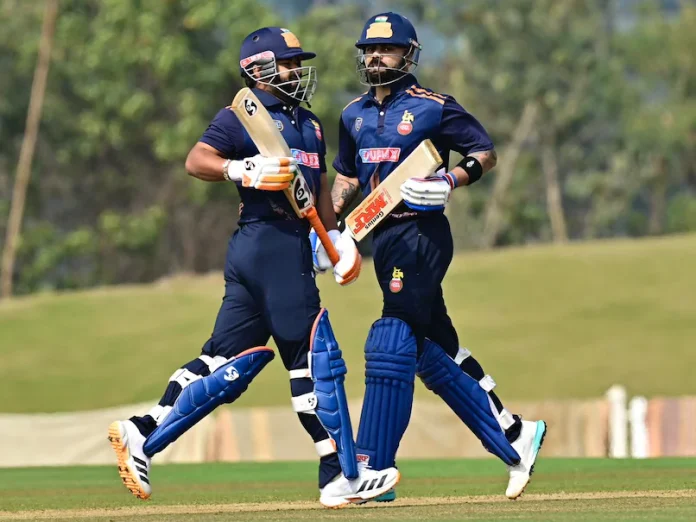


The Vijay Hazare Trophy is one of India’s most important domestic cricket tournaments, providing a competitive platform for state teams and emerging players to demonstrate their skills in 50-over cricket. Organized by the Board of Control for Cricket in India (BCCI), the tournament plays a significant role in developing India’s domestic cricket talent and preparing players for higher levels of competition.
Named after legendary Indian cricketer Vijay Hazare, the competition attracts attention from cricket fans who follow domestic one-day matches, emerging talents, established international players, and state-level rivalries. Strong performances can help players strengthen their positions in domestic cricket and attract the attention of national selectors.
This guide explains the tournament’s history, playing format, participating teams, qualification process, importance, notable players, records, and ways to follow the competition in India.
What Is the Vijay Hazare Trophy?
The Vijay Hazare Trophy is India’s premier domestic List A cricket competition. List A cricket generally follows the one-day international format, with each team permitted to bat for a maximum of 50 overs, subject to the applicable playing conditions.
The tournament brings together teams representing Indian states and cricket associations. It offers players an opportunity to compete in a structured national competition while developing their batting, bowling, fielding, and tactical decision-making skills.
Unlike international cricket, where national teams represent their countries, this domestic tournament focuses on state and association teams. It gives experienced cricketers an opportunity to maintain competitive form and allows younger players to gain valuable experience against strong opposition.
The competition is particularly relevant to Indian cricket because domestic performances can influence selection discussions for higher-level teams. However, selection depends on several factors, including consistency, fitness, team requirements, and performance in different playing conditions.
History and Importance of the Tournament
The competition began during the 1993–94 domestic season under the name Ranji One-Day Trophy. It was subsequently known as the Ranji Trophy One Day Tournament before being renamed the Vijay Hazare Trophy in honour of Vijay Hazare.
Vijay Hazare was a distinguished Indian batter and one of the country’s early cricketing greats. His contribution to Indian cricket made him an appropriate namesake for a competition designed to celebrate excellence in domestic one-day cricket.
Over the years, the tournament has developed into an important part of India’s domestic cricket calendar. It provides a consistent competitive environment in which players can demonstrate their ability to perform under pressure, adapt to different pitches, and contribute to their teams across multiple matches.
Its importance extends beyond winning the trophy. The tournament helps cricket associations assess their players, develops team combinations, and creates opportunities for talented cricketers to progress through India’s competitive cricket system.
Vijay Hazare Trophy Format and Rules
Understanding the competition format makes it easier for fans to follow the tournament and interpret team performances.
Match Format
Each match follows the List A one-day format, generally allowing both teams a maximum of 50 overs to bat. The team scoring more runs wins, subject to the official playing conditions and any applicable result rules.
Teams must balance scoring speed with wicket preservation. Batters need to build partnerships, while bowlers aim to restrict runs and take wickets during the innings.
Group Stage
Participating teams are divided into groups according to the competition structure for that season. Each team plays scheduled group-stage matches, earning points based on the results and applicable tournament regulations.
Wins help teams move towards qualification, while losses can make the remaining fixtures more important. Net run rate may also play a role in separating teams that finish level on points.
Knockout Stage
The teams that qualify from the group stage advance according to that season’s qualification rules. The knockout rounds determine which sides progress towards the final.
Unlike a league competition, where teams accumulate results over several fixtures, knockout matches place immediate pressure on players because a defeat can end a team’s campaign.
Key Match Elements
- Batting: Building partnerships, managing the powerplay, and accelerating during the later overs.
- Bowling: Taking early wickets, controlling the middle overs, and limiting runs at the death.
- Fielding: Saving runs, taking catches, and creating opportunities for run-outs.
- Team strategy: Selecting suitable combinations based on pitch conditions, opposition strengths, and player availability.
The precise competition structure, qualification rules, and match regulations can vary by season, so fans should check the relevant season’s official information.
Teams Participating in the Vijay Hazare Trophy
The tournament features teams representing Indian states and cricket associations. Depending on the season, the participating sides include established domestic teams such as Mumbai, Karnataka, Tamil Nadu, Maharashtra, Delhi, Punjab, Haryana, Bengal, Rajasthan, Gujarat, and Uttar Pradesh, alongside other eligible teams.
Each side has its own history, playing style, and development pathway. Some teams are recognised for producing technically accomplished batters, while others have built reputations through effective pace attacks, spin bowling, or balanced all-round performances.
Team combinations can change from one season to another because of injuries, player availability, selection decisions, and overlapping cricket commitments.
For fans, following individual teams is a useful way to discover emerging players and understand regional cricket rivalries. Supporters can also compare team performances across seasons to see how domestic cricket programmes develop over time.
Why the Tournament Matters for Young Cricketers
The Vijay Hazare Trophy is an important stage for cricketers seeking to establish themselves in competitive senior cricket. The 50-over format tests skills that may not always be fully assessed in shorter matches.
Opportunity to Demonstrate Consistency
Players must contribute across several matches rather than relying on one outstanding performance. Batters are expected to build innings and adapt to different situations, while bowlers must maintain discipline throughout their spells.
Consistent contributions can strengthen a player’s reputation within domestic cricket.
Preparation for Higher-Level Cricket
The competition provides experience in handling pressure, reading match situations, and performing against experienced opponents. These skills are relevant to players who aspire to represent India or establish themselves in other professional competitions.
However, success in one tournament does not automatically guarantee selection. Performance across formats, fitness, role suitability, and the wider selection process also matter.
Exposure to Different Conditions
India’s domestic cricket venues offer varying pitch characteristics and weather conditions. Players must learn to adjust their techniques and tactics to suit the surface, outfield, and opposition.
Such adaptability is valuable for anyone aiming to build a long-term career in professional cricket.
Notable Players and Memorable Performances
The tournament has featured many established Indian cricketers alongside promising domestic performers. Players such as Virat Kohli, Rohit Sharma, Shikhar Dhawan, and several other leading batters have participated in India’s domestic one-day cricket over the course of their careers.
The competition is also an opportunity to discover players who may become important figures in Indian cricket. A productive season can bring attention to a batter’s run-scoring ability, a bowler’s wicket-taking consistency, or an all-rounder’s contribution in multiple departments.
When assessing a player’s performance, fans should look beyond the total number of runs or wickets. A batter’s average, strike rate, consistency, and ability to perform in difficult situations provide a more complete picture. Similarly, a bowler’s economy rate, average, strike rate, and performance against strong batting line-ups can reveal more than wicket totals alone.
Season-specific records should always be checked against reliable scorecards because player statistics and tournament milestones change over time.
Vijay Hazare Trophy Stats and Records
Statistics are an essential part of following domestic cricket. They help supporters compare players, evaluate team strengths, and understand how individual performances influence match results.
The most useful statistics include the following:
| Statistic | What It Tells You |
|---|---|
| Total runs | The number of runs scored by a batter |
| Batting average | Runs scored per dismissal |
| Strike rate | Runs scored per 100 balls faced |
| Centuries | Innings in which a batter scores at least 100 runs |
| Total wickets | The number of batters dismissed by a bowler |
| Bowling average | Runs conceded per wicket taken |
| Economy rate | Runs conceded per over |
| Net run rate | A measure used in applicable group-stage standings |
For example, a batter with a high average and a strong strike rate may demonstrate both consistency and scoring ability. A bowler who takes wickets while maintaining a low economy rate can be particularly valuable in a 50-over match.
Fans researching Vijay Hazare Trophy stats should distinguish between career records, single-season achievements, individual match performances, and records from a specific edition. They should also verify whether a statistic refers exclusively to this competition or to a player’s entire List A career.
Schedule, Live Scores, and Results
The tournament schedule is important for fans who want to follow their preferred teams and players throughout the season. Match dates, venues, timings, and fixtures are determined by the official competition calendar.
To follow the tournament effectively, keep track of these details:
- Match schedule: Check upcoming fixtures and the dates on which teams play.
- Live scores: Follow runs, wickets, overs, partnerships, and required run rates.
- Results: Review final scores and the margin of victory after each match.
- Points table: Monitor wins, losses, points, and net run rate.
- Player statistics: Compare batting, bowling, and all-round performances.
Live-score updates are especially useful during close matches because they show how the required run rate changes and whether a bowling side is controlling the innings.
Since schedules and results change throughout the competition, avoid relying on outdated fixture lists when looking for current information. The latest season’s official announcements and scorecards provide the most reliable reference.

How to Analyse a Vijay Hazare Trophy Match
Watching domestic cricket becomes more engaging when fans understand the factors influencing a result.
First, examine the pitch and playing conditions. A surface offering movement may favour seam bowlers, while a dry pitch can sometimes provide opportunities for spinners. Actual conditions differ by venue and match.
Second, consider the batting order and partnerships. A team that loses early wickets may need to rebuild before accelerating. Conversely, a strong opening partnership can establish a platform for a high total.
Third, analyse bowling changes and field placements. Captains may use attacking fields when seeking wickets or defensive arrangements when trying to control scoring.
Finally, consider the match situation rather than looking only at the final score. A total that appears modest on one surface might be competitive on another. Similarly, a large score may reflect favourable batting conditions rather than an exceptional performance alone.
Common Mistakes When Following Domestic Cricket
One common mistake is treating a single strong performance as proof that a player is ready for international cricket. A more useful assessment considers consistency, opposition quality, match conditions, and performances across multiple games.
Another mistake is confusing List A career statistics with tournament-only records. These categories measure different things and should not be compared without clarification.
Fans should also avoid relying on unofficial social media posts for unverified records, team announcements, or fixture changes. Checking the date and context of a scorecard can prevent outdated information from being mistaken for current news.
A balanced approach combines statistics with match context, helping readers develop a clearer understanding of the players and teams competing in India’s domestic cricket system.
Frequently Asked Questions
1. What is the Vijay Hazare Trophy?
It is India’s domestic List A cricket tournament, featuring teams representing states and cricket associations in a 50-over format.
2. Who organizes the Vijay Hazare Trophy?
The Board of Control for Cricket in India (BCCI) organizes the competition as part of India’s domestic cricket calendar.
3. Why is the tournament named after Vijay Hazare?
It honours Vijay Hazare, a legendary Indian cricketer known for his contributions to the sport.
4. How can I check Vijay Hazare Trophy stats?
You can review season scorecards and official tournament statistics to compare runs, averages, strike rates, wickets, economy rates, and other performance measures. Make sure you distinguish tournament records from overall List A statistics.
5. Does performing well in the Vijay Hazare Trophy guarantee selection for India?
No. Strong performances can support a player’s selection prospects, but selectors also consider consistency, fitness, team requirements, performances in other competitions, and the player’s suitability for a particular role.
Conclusion
The Vijay Hazare Trophy remains a significant competition in Indian domestic cricket, combining the excitement of one-day matches with opportunities for player development and team achievement. Its format rewards consistency, tactical awareness, effective partnerships, disciplined bowling, and strong fielding.
For cricket fans, the tournament offers a valuable way to follow emerging talent, evaluate established domestic players, and understand the competitive structure beneath international cricket. By tracking schedules, results, team standings, and verified player statistics, readers can gain a deeper appreciation of India’s 50-over domestic game.
Whether you are interested in match results, historical milestones, team performances, or future prospects, the tournament provides plenty of cricketing stories to follow throughout each season.