


Introduction
The Vijay Hazare Trophy is one of the most important domestic cricket tournaments in India. Organised by the Board of Control for Cricket in India (BCCI), this prestigious List A competition provides a platform for talented cricketers to demonstrate their batting, bowling, fielding and overall match-winning abilities. Over the years, the tournament has become an important part of India’s domestic cricket structure, producing several outstanding performances and helping emerging players earn recognition at the national level.
For cricket enthusiasts, following vijay hazare trophy stats is an excellent way to understand the competition beyond individual match results. Statistics reveal which batters consistently score runs, which bowlers regularly take wickets and which teams perform well under pressure. They also help fans compare players from different domestic teams and recognise performances that deserve greater attention. From impressive centuries and five-wicket hauls to record-breaking team totals, the competition has delivered numerous memorable moments.
The 2025–26 edition provided another example of the tournament’s competitive nature. Vidarbha won their first title after defeating Saurashtra by 38 runs in the final. Individual performers also made headlines, with Aman Mokhade finishing as the leading run-scorer and Ankur Panwar topping the wicket-taking charts.
Understanding the Vijay Hazare Trophy and Its Format
The Vijay Hazare Trophy is named after former Indian cricketer Vijay Hazare, who made a significant contribution to Indian cricket. The competition was introduced during the 2002–03 domestic season and has developed into a major tournament for state and regional cricket associations. It follows the 50-over List A format, making it particularly valuable for players who want to develop their skills in one-day cricket.
The tournament generally features teams representing different Indian states and cricket associations. Teams compete through group-stage matches before the strongest sides progress to the knockout rounds. The competition includes an Elite structure and a Plate group, giving teams from different levels of domestic cricket opportunities to compete. This format also allows selectors to evaluate players in different match situations, including challenging run chases, high-pressure finishes and demanding bowling conditions.
Vijay Hazare Trophy Stats for the 2025–26 Season
The 2025–26 competition was particularly interesting because several batters delivered consistent performances while bowlers demonstrated their ability to control matches. Vidarbha emerged as champions, defeating Saurashtra in the final at Bengaluru. Vidarbha scored 317/8 before restricting Saurashtra to 279, securing a 38-run victory and their maiden championship.
Aman Mokhade was one of the biggest highlights of the competition. His outstanding consistency helped him finish at the top of the batting charts with 814 runs in 10 matches. Devdutt Padikkal also enjoyed an excellent campaign, collecting 725 runs in nine matches. On the bowling side, Ankur Panwar finished as the leading wicket-taker with 25 wickets, demonstrating how important disciplined bowling can be in a long domestic competition.
Leading Run-Scorers in the 2025–26 Edition
| Player | Matches | Runs | Average |
|---|---|---|---|
| Aman Mokhade | 10 | 814 | 90.44 |
| Devdutt Padikkal | 9 | 725 | 90.62 |
| Harvik Desai | 10 | 581 | 64.56 |
| Dhruv Jurel | 7 | 558 | 93.00 |
| Pukhraj Mann | 7 | 558 | 93.00 |
Source: 2025–26 Elite tournament statistics.
These numbers highlight the importance of consistency in List A cricket. Aman Mokhade’s 814 runs were particularly impressive because he maintained an average above 90 while contributing across multiple matches. Padikkal’s performances were equally valuable, showing his ability to build innings and accelerate when required. Dhruv Jurel and Pukhraj Mann also produced excellent averages, proving that a smaller number of appearances can still produce significant statistical achievements.
Top Batting Records and Individual Achievements
Batting records are among the most closely followed aspects of the Vijay Hazare Trophy. The tournament provides an opportunity for players to demonstrate their ability to handle different bowling attacks, pitch conditions and match situations. Unlike shorter formats, 50-over cricket requires batters to balance patience with aggression. Players must build partnerships, preserve wickets and accelerate scoring during the later stages of an innings.
One of the most remarkable batting performances in the competition’s history belongs to Narayan Jagadeesan. He scored an extraordinary 277 runs against Arunachal Pradesh during the 2022–23 edition. His innings demonstrated exceptional control, timing and attacking intent. It remains the highest individual score in Vijay Hazare Trophy history and one of the most remarkable performances in List A cricket.
Important Batting Milestones
Several individual batting records make the tournament particularly exciting for cricket followers. Ankit Bawne has been recognised as the competition’s leading career run-scorer in historical records published through December 2025, with 4,164 runs. He has also recorded 15 centuries, demonstrating remarkable consistency across seasons.
Other significant batting achievements include Narayan Jagadeesan’s 277-run innings, his 830 runs in a single edition during 2022–23, and Devdutt Padikkal’s outstanding career batting average in the historical records. These milestones show that the tournament rewards both long-term consistency and exceptional individual performances.
A player’s batting average is particularly useful when comparing performances. It indicates how consistently a batter scores runs before being dismissed. Strike rate, meanwhile, explains how quickly those runs are accumulated. Both figures should be considered together rather than judging a player only by the number of runs scored.
Leading Wicket-Takers and Bowling Performances
Bowling plays an equally important role in determining the outcome of Vijay Hazare Trophy matches. A strong batting performance can establish a competitive total, but disciplined bowling is necessary to defend it. Bowlers must maintain accurate lines and lengths, use variations effectively and adapt to changing pitch conditions. Fast bowlers often look for movement and bounce, while spinners focus on controlling the scoring rate and creating opportunities through changes in flight and pace.
In the 2025–26 Elite competition, Ankur Panwar finished as the leading wicket-taker with 25 wickets in 10 matches. Zeeshan Ansari and Satyanarayana Raju followed with 21 wickets each. Yash Thakur also delivered an impressive campaign, taking 19 wickets. These performances highlight the importance of bowlers who can consistently contribute throughout a tournament rather than relying on one exceptional match.
Leading Wicket-Takers in 2025–26
| Player | Matches | Wickets |
|---|---|---|
| Ankur Panwar | 10 | 25 |
| Zeeshan Ansari | 8 | 21 |
| Satyanarayana Raju | 7 | 21 |
| Yash Thakur | 9 | 19 |
| Prince Yadav | 8 | 18 |
Source: 2025–26 Elite bowling statistics.
Ankur Panwar’s achievement was especially noteworthy because taking 25 wickets requires consistency, fitness and the ability to perform against different batting line-ups. Zeeshan Ansari and Satyanarayana Raju also demonstrated their effectiveness by taking 21 wickets each. Their performances illustrate how bowling depth can make a substantial difference during the group stage and knockout matches.
Major Historical Records in the Vijay Hazare Trophy
Over the years, the competition has witnessed several extraordinary achievements. These records are important because they provide a historical perspective on how Indian domestic one-day cricket has developed. Batting standards have improved, players have become more aggressive and teams have increasingly adopted attacking strategies.
One of the most remarkable developments has been the rise of high-scoring matches. Modern bats have improved, batting techniques have evolved and players are increasingly comfortable attacking from the beginning of an innings. However, successful teams still need disciplined bowling and effective fielding to convert big totals into victories.
Highest Individual Score and Other Batting Records
Narayan Jagadeesan’s 277 remains the standout individual batting achievement. His innings against Arunachal Pradesh demonstrated how a batter can dominate an opposition attack over an extended period. It was not simply about hitting boundaries; his ability to maintain concentration, rotate the strike and capitalise on scoring opportunities made the performance exceptional.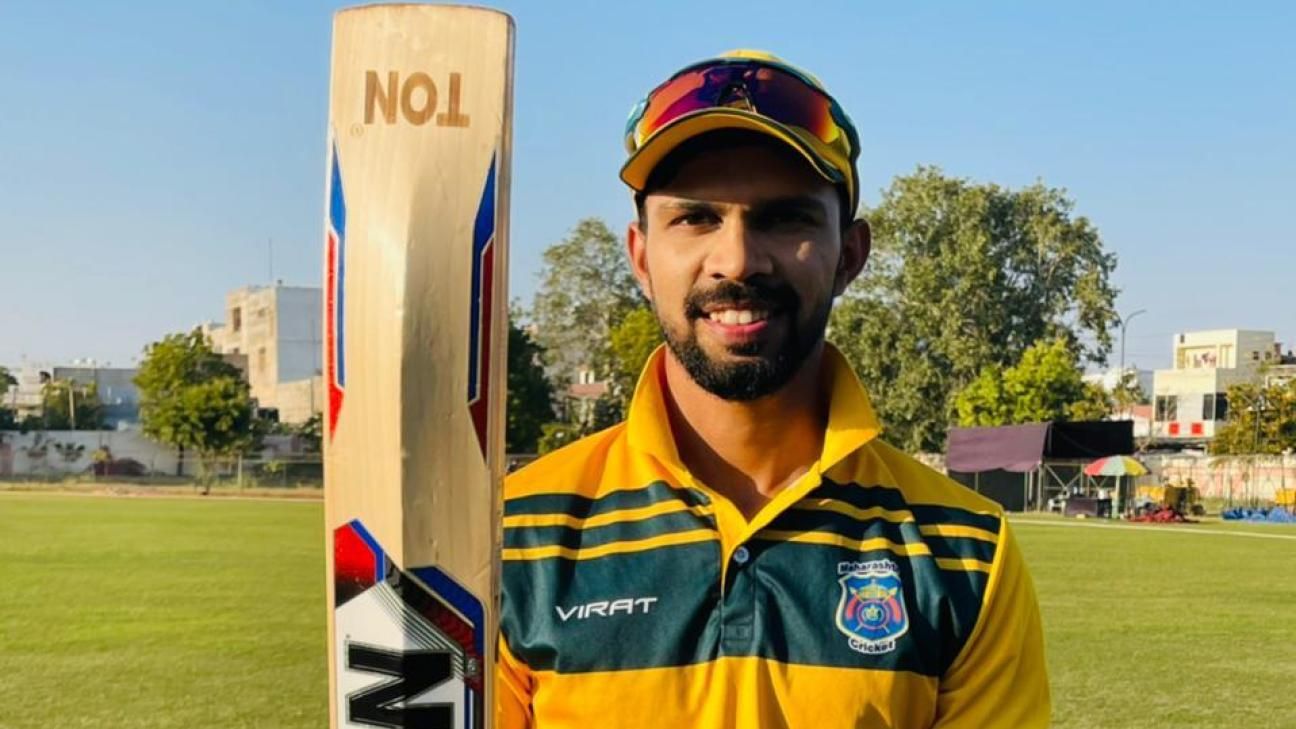
Other important historical milestones include the following:
-
Most career runs: Ankit Bawne – 4,164 runs in historical records published through December 2025.
-
Most centuries: Ankit Bawne – 15 centuries in the historical record.
-
Highest individual score: Narayan Jagadeesan – 277 runs.
-
Most runs in one edition: Narayan Jagadeesan – 830 runs in 2022–23.
-
Highest recorded partnership: Sai Sudarshan and Narayan Jagadeesan – 416 runs.
These achievements provide useful benchmarks for evaluating future players. They also demonstrate that the competition has consistently produced exceptional batting talent capable of competing at a high level.
Important Bowling Records and Milestones
Bowling records are another important part of the tournament’s statistical history. While taking wickets is the primary responsibility of a bowler, maintaining an economical spell can be equally valuable. A bowler who prevents the opposition from scoring freely can create pressure, force mistakes and change the direction of a match.
Siddarth Kaul holds the historical record for the most wickets in the competition, with 155 wickets in the records published through December 2025. Shahbaz Nadeem produced one of the most extraordinary bowling performances by taking eight wickets for just 10 runs. This remains an outstanding example of how an individual bowler can completely dominate an innings.
Other notable bowling achievements include Vinay Kumar’s record of 28 wickets in a single edition and Siddarth Kaul’s seven five-wicket hauls in the historical records. These performances highlight the value of accuracy, variation and consistency in domestic one-day cricket.
What Makes a Bowling Performance Special?
Several factors help explain why certain bowling performances become memorable. Wicket-taking ability is important, but match conditions, economy rate and the quality of opposition also influence how a spell should be evaluated. A bowler taking three wickets in a low-scoring match may have a greater impact than someone taking the same number of wickets after conceding considerably more runs.
The best bowlers also understand when to attack and when to concentrate on restricting the opposition. During the opening overs, fast bowlers generally look for movement and early breakthroughs. In the middle overs, spinners and seamers attempt to control scoring opportunities. At the end of an innings, yorkers, slower deliveries and accurate short balls become important weapons.
Team Records and Memorable Achievements
Team statistics provide another perspective on the tournament. While individual records attract attention, cricket remains a team sport in which batting partnerships, bowling combinations and fielding performances determine results. Successful teams usually have a balanced squad containing reliable top-order batters, dependable middle-order players, effective all-rounders and specialist bowlers.
Bihar created history during the 2025–26 season by scoring 574/6 against Arunachal Pradesh. This extraordinary total became the highest innings score in the competition. The innings also highlighted the increasingly aggressive approach of modern domestic batting. Karnataka, meanwhile, achieved a remarkable successful run chase of 413 against Jharkhand in 2025, demonstrating the importance of maintaining composure when pursuing a challenging target.
Karnataka and Tamil Nadu have historically been among the most successful teams in the competition, with five national championships each in the historical records. Mumbai has also enjoyed considerable success in zonal competitions. These achievements demonstrate the strength of established domestic cricket programmes and the importance of developing talented players over multiple seasons.
Vidarbha’s First Championship in 2025–26
Vidarbha’s title-winning campaign was one of the major stories of the 2025–26 edition. The team demonstrated consistency throughout the knockout stage and successfully defeated strong opponents to reach the final. Their victory against Saurashtra was particularly impressive because they defended a competitive total under pressure.
Vidarbha scored 317 runs for eight wickets in the final. Saurashtra responded with 279 runs before losing all their wickets, giving Vidarbha a 38-run victory. The result represented an important achievement for the team and added another chapter to the tournament’s history. Aman Mokhade’s batting contributions were particularly significant throughout the competition, earning him recognition as the leading run-scorer and Player of the Series.
Why Vijay Hazare Trophy Statistics Matter for Young Cricketers
The tournament plays an important role in identifying emerging cricketing talent in India. Young players get opportunities to compete against experienced domestic cricketers and demonstrate whether they can perform consistently at a higher level. Strong performances can help them attract attention from national selectors, franchise teams and cricket analysts.
Statistics also provide useful information about a player’s strengths and weaknesses. For example, a batter with a high average and a healthy strike rate may demonstrate an excellent combination of consistency and attacking ability. Similarly, a bowler with a strong wicket-taking record and controlled economy rate can become an important asset for any team.
For aspiring cricketers, the competition offers several valuable lessons:
-
Consistency: Scoring runs or taking wickets regularly is more valuable than relying on occasional exceptional performances.
-
Match awareness: Players must understand when to attack, defend or change their approach.
-
Team contribution: Partnerships, fielding and supporting performances are essential for winning matches.
-
Adaptability: Successful cricketers learn to perform under different pitch, weather and opposition conditions.
Following these aspects can help young players understand what professional domestic cricket demands. It also shows why statistics should be considered alongside technique, fitness, decision-making and overall match impact.
How to Analyse Vijay Hazare Trophy Stats Correctly
Understanding cricket statistics requires more than checking the highest run-scorer or wicket-taker. Different statistical categories provide different insights into a player’s contribution. Batting average measures consistency, strike rate indicates scoring speed and the number of centuries reflects the ability to convert good starts into substantial innings.
Bowling statistics require similar attention. Wickets indicate a bowler’s ability to dismiss batters, while economy rate measures the number of runs conceded per over. Bowling average explains how many runs a bowler gives away for each wicket taken. Bowling strike rate indicates how frequently the bowler takes a wicket. Considering these measurements together gives a more complete picture of performance.
It is also important to distinguish between Elite and Plate competition statistics. Players may face different opponents and match conditions, so comparisons should consider the level of competition and the number of matches played. A player who scores 500 runs in six matches has a different statistical profile from someone who scores the same number across ten matches.
For cricket followers, comparing performances across multiple seasons can reveal whether a player is improving or maintaining a consistent standard. This approach is particularly useful when evaluating young batters and bowlers who are still developing their professional careers.
What to Expect from Future Vijay Hazare Trophy Editions
The future of the Vijay Hazare Trophy looks promising because Indian domestic cricket continues to produce talented players. With the increasing popularity of limited-overs cricket, the tournament provides an important opportunity for emerging cricketers to develop their one-day skills. Players who perform well can strengthen their prospects of progressing towards higher levels of professional cricket.
Future editions are also likely to attract attention because of the growing emphasis on aggressive batting, versatile bowling and athletic fielding. Teams increasingly need players who can adapt to different situations rather than relying on only one specialised skill. All-rounders, flexible middle-order batters and bowlers with multiple variations can provide significant advantages.
Technology and statistical analysis are also changing how performances are evaluated. Teams can study batting patterns, bowling lengths, scoring areas and individual weaknesses in greater detail. These insights can help players prepare more effectively and make better decisions during matches.
As new seasons introduce emerging talent and fresh records, supporters will continue to follow the competition for its exciting performances and contribution to Indian cricket.
Conclusion
The Vijay Hazare Trophy remains a significant platform for domestic one-day cricket in India. Its history includes outstanding batting performances, remarkable bowling achievements, competitive team records and memorable championship campaigns. From Narayan Jagadeesan’s extraordinary 277 to Ankit Bawne’s career run-scoring achievements and Siddarth Kaul’s wicket-taking record, the competition has produced several milestones worth remembering.
The 2025–26 edition added another important chapter, with Vidarbha securing their maiden championship, Aman Mokhade finishing as the leading run-scorer with 814 runs and Ankur Panwar claiming 25 wickets. These achievements demonstrate the importance of consistency and teamwork in a demanding domestic tournament.
Following vijay hazare trophy stats helps cricket enthusiasts understand individual performances, compare players and appreciate the development of Indian domestic cricket. Whether someone is interested in batting milestones, bowling achievements or team championships, the tournament offers plenty of valuable information and exciting cricketing stories. Its continued contribution to discovering talented players makes it an essential part of India’s cricketing landscape.