

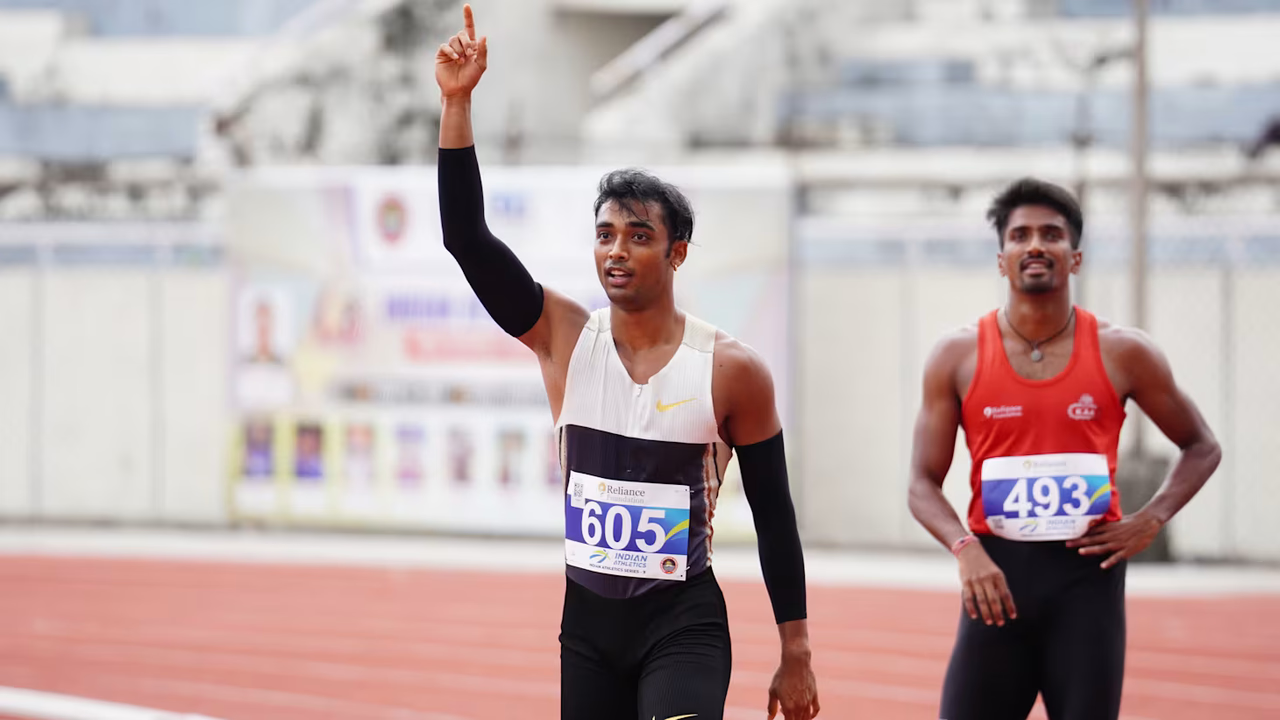


Indian athletics has entered an interesting phase in which established champions, emerging competitors and improved sporting systems are beginning to create a stronger competitive environment. Track and field has traditionally been one of the most demanding areas of international sport because success depends on years of technical development, physical conditioning, consistency and mental resilience. From sprinting and middle-distance running to race walking, jumping and throwing events, Indian athletes are increasingly competing across a broader range of disciplines.
The popularity of Indian athletics has also grown because Indian fans are no longer following only cricket and a handful of Olympic sports. Performances by athletes such as Neeraj Chopra have helped bring greater attention to athletics, while competitors in long-distance running, high jump, triple jump, hurdles and race walking have expanded the country’s presence on international stages. The 2025 World Athletics Championships in Tokyo featured Indian competitors across several disciplines, including javelin, high jump, long-distance running, race walking, steeplechase, hurdles and jumping events.
The current situation is particularly important because India is entering a period filled with major international opportunities. The 2026 sporting calendar includes the Commonwealth Games and the Asian Games, while domestic competitions continue to provide athletes with opportunities to establish themselves. This combination of international exposure and domestic competition could play an important role in determining how quickly India’s athletics ecosystem develops over the next several years.
The Changing Landscape of Indian Athletics
For many years, Indian athletics struggled to maintain consistent international success outside a few individual performances. The country produced talented athletes, but the journey from junior competition to the highest international level was often difficult. Limited access to specialized coaching, sports science, international competition and high-quality facilities could prevent promising competitors from reaching their full potential.
That landscape is gradually changing. Better training centres, professional coaching, greater access to sports medicine and increased exposure to international competitions are giving athletes more opportunities to develop. The Athletics Federation of India is also maintaining a busy domestic and international competition structure, with national championships, junior events and international competitions forming different stages of the athlete-development pathway. The federation’s 2026 calendar includes the National Open Athletics Championships and several junior and regional championships, showing the importance of competition depth in developing future talent.
Another significant change is the growing attention given to measurable performance. Modern athletics is built around precise timings, distances, biomechanics, recovery and training loads. Indian athletes increasingly operate within environments where performance can be evaluated scientifically rather than relying solely on traditional coaching methods. This approach can help identify weaknesses and create more individualized training programmes.
Neeraj Chopra and the New Visibility of Athletics
Neeraj Chopra has had an enormous influence on the visibility of Indian athletics. His Olympic gold medal in Tokyo and continued presence at the highest level of javelin competition demonstrated that an Indian athlete could compete consistently against the world’s best field-event specialists. His success has also encouraged young athletes to consider athletics as a serious sporting career.
His influence extends beyond medals. A successful athlete becomes a role model when young competitors can see a realistic pathway from domestic competition to global championships. Chopra’s international career has therefore contributed to a broader cultural change in how athletics is perceived in India. Javelin throwing, which once had a relatively limited mainstream audience, now attracts considerable attention whenever a major championship takes place.
The 2025 World Championships also demonstrated the depth developing around Indian javelin. Neeraj Chopra reached the final, while Sachin Yadav finished fourth with an 86.27-metre throw. Chopra recorded 84.03 metres in the final and finished eighth. These results show both the strength of India’s established star and the emergence of another thrower capable of challenging for major positions.
A Broader Group of Indian Track and Field Athletes
One of the most encouraging aspects of Indian athletics is that the country’s ambitions are no longer limited to one discipline. Athletes are competing in events ranging from 100 metres and 200 metres to 5,000 metres, 10,000 metres, steeplechase, hurdles, high jump, long jump, triple jump and race walking.
Gulveer Singh has become an important name in India’s distance-running group, while athletes such as Avinash Sable have helped increase interest in steeplechase. In the jumping events, Sarvesh Kushare has represented India at major championships in high jump, while competitors in triple jump and long jump continue to push the country’s standards higher. Women’s athletics is also developing through athletes competing in middle-distance races, steeplechase, hurdles, race walking and field events.
The importance of this broader talent pool cannot be underestimated. A healthy athletics programme does not depend on one superstar. It requires athletes at multiple levels, including juniors, developing seniors, national champions and established international competitors. That depth creates competition within the country and encourages athletes to improve their personal bests.
Major Events Shaping the Current Athletics Era
International championships provide the strongest test of an athlete’s preparation because competitors face different climates, tactics, travel conditions and levels of pressure. The 2025 World Championships in Tokyo offered Indian athletes valuable experience across a wide range of events. India’s participation included 19 athletes, with representation in both men’s and women’s competitions.
The 2026 Asian Games have been another major milestone. The Athletics Federation of India listed a 75-athlete Indian athletics squad for the Aichi-Nagoya Games, covering events from sprints and middle-distance running to jumps, throws, race walking and combined events. The scale of the squad illustrates how broad India’s participation has become.
The Asian Games also showed why athletics remains important to India’s overall sporting ambitions. Recent reporting identified athletics as one of India’s strongest contributors by total medals at the 2026 Games, even though the discipline did not produce a gold medal haul comparable with some other sports. That result creates a useful lesson: strong participation and medal depth are encouraging, but converting international-level performances into gold medals remains an important next step.
Key Areas to Watch
- Sprinting and hurdles, where improved speed development could create stronger international representation.
- Distance running and steeplechase, where Indian athletes are increasingly gaining international experience.
- Jumps and throws, which have traditionally provided some of India’s strongest medal opportunities.
- Race walking, an event in which India has built a recognizable international presence.
The Importance of Domestic Competitions
International medals attract headlines, but domestic competitions are the foundation of long-term athletics development. National championships allow athletes to compete regularly, establish rankings, achieve qualifying standards and test themselves against domestic rivals. They also provide coaches with opportunities to identify athletes who may otherwise remain outside the national spotlight.
Junior and under-23 competitions are especially important. A young athlete should not be expected to immediately perform at the level of an Olympic or World Championship competitor. Development requires time. Athletes must learn how to manage training, nutrition, competition pressure, injuries and recovery while gradually increasing performance levels.
India’s 2026 domestic calendar reflects this development model, with national open competition alongside junior and regional championships. The Athletics Federation of India has also announced an Indian Open U23 competition scheduled for Jaipur in October 2026, creating another opportunity for younger athletes to gain high-level competitive experience.
Where India Has Strong Potential
The future of Indian athletics could be particularly promising in field events. Javelin has already demonstrated what is possible when world-class talent receives sustained support, while high jump, triple jump, long jump and throwing disciplines have produced athletes capable of reaching major international competitions.
Distance running also deserves attention. Indian athletes have shown that they can compete internationally, but the gap between national-level performances and podium finishes at global championships remains significant. Improvements in sports science, altitude training, race strategy and competition exposure could help reduce that gap.
Women’s athletics represents another major opportunity. The development of women competitors across sprinting, middle-distance running, hurdles, race walking, jumping and throwing can substantially increase India’s overall strength. Greater participation at school and university levels can provide a larger talent pool from which elite athletes can emerge.
Challenges That Indian Athletics Still Faces
Despite the progress, Indian athletics has several challenges that cannot be ignored. International competition is extremely demanding, and producing one world-class athlete does not automatically create a world-class system. Training facilities need to remain available throughout the year, coaches need continuous professional development and athletes need reliable access to physiotherapy, nutrition and sports medicine.
Injuries are another major concern. Athletics places enormous stress on muscles, tendons, joints and the cardiovascular system. An athlete may spend years preparing for a major championship only to lose an important season because of an injury. Proper workload management and recovery therefore need to become an integral part of elite training rather than an afterthought.
Anti-doping education is equally important. India’s international sporting ambitions require athletes, coaches and support teams to understand anti-doping regulations and maintain rigorous standards. Clean sport protects both individual careers and the credibility of the entire national programme.
What Can Strengthen the Next Generation?
- Greater access to sports science and injury-prevention programmes.
- Stronger links between schools, universities, academies and elite training centres.
- More international competition for developing athletes rather than only established stars.
- Better long-term support for athletes outside the most commercially popular events.
- Continued investment in qualified coaches, nutrition and recovery services.
One Athlete Does Not Define a Sporting System
The rise of a superstar can transform public interest, but sustainable success requires a much wider structure. India’s athletics programme needs hundreds of young competitors training across different events so that a few can eventually reach the world-class level.
This is why the current generation should be viewed as part of a longer sporting transition. The goal should not simply be to find another Neeraj Chopra. The bigger objective is to create an environment where Indian athletes in multiple events can regularly reach finals at Asian, Commonwealth, World Championship and Olympic competitions.
The 2026 Asian Games squad provides an example of this broader approach. With competitors spread across numerous disciplines, the country is developing a more diversified athletics presence rather than concentrating entirely on one event.
Indian Athletics and India’s Olympic Ambitions
Athletics will also have a central role in India’s wider Olympic ambitions. India has expressed interest in hosting the 2036 Olympic Games, and the country’s current sporting strategy includes increasing international events, improving infrastructure and strengthening its position as a global sporting nation. Reuters reported in October 2026 that India is among the countries competing for the 2036 Olympic hosting opportunity, with a final decision expected in 2029.

For athletics, an Olympic hosting ambition can create an opportunity for long-term investment. More international meets, better stadiums, stronger training systems and greater public engagement could benefit athletes even before a hosting decision is made.
However, infrastructure alone will not produce medals. The real challenge is creating a complete athlete pathway that starts with grassroots participation and continues through junior competition, senior national championships, international exposure and elite preparation.
What the Future Could Look Like
The future of Indian athletics is likely to be defined by greater depth rather than dependence on a small number of famous names. Young sprinters, jumpers, throwers, distance runners and multi-event competitors are entering an environment in which professional training is becoming increasingly accessible.
Technology will also become more important. Video analysis, wearable devices, performance tracking, recovery monitoring and data-based training can help coaches make better decisions. When combined with experienced human coaching, these tools can provide athletes with a clearer understanding of how small technical improvements can translate into better performances.
International experience will remain equally valuable. Athletes need to learn how to compete against different styles and strategies rather than repeatedly competing only in familiar domestic environments. Regular participation in strong international meets can improve confidence and help competitors understand the demands of global competition.
Conclusion
Indian athletics is no longer simply a story about individual achievements. It is becoming a broader sporting movement supported by established champions, emerging athletes, national competitions, professional coaching and increasing public interest. The achievements of athletes such as Neeraj Chopra have raised expectations, but the next stage of development will depend on how effectively India builds depth across every major discipline. The current landscape offers plenty of reasons for optimism. India has a large population from which talent can be identified, an expanding competition structure and an increasingly professional approach to elite preparation. At the same time, international medals will require patience, scientific training, strong grassroots development and consistent support.