



Introduction
International cricket between South Africa and New Zealand has consistently delivered competitive encounters, exciting batting performances and memorable bowling spells. Both teams have developed strong cricketing identities, with South Africa known for its pace attack, athletic fielding and powerful batting lineup, while New Zealand has earned recognition for its disciplined approach, tactical awareness and ability to perform under pressure. Whenever these sides meet, cricket followers look forward to an entertaining contest featuring experienced international players and emerging talents.
The South Africa national cricket team vs New Zealand national cricket team match scorecard is particularly useful for understanding how a match develops beyond its final result. It provides important information about individual batting contributions, bowling performances, partnerships, extras, wickets and the overall scoring pattern. Supporters can use these details to understand which players influenced the result and how each team approached different stages of the game.
The 2026 ICC Men’s T20 World Cup produced another significant chapter in this rivalry. South Africa defeated New Zealand by seven wickets in their February 14 encounter, but New Zealand turned the tables in the March 4 semifinal, securing a nine-wicket victory. These contrasting results demonstrate how quickly the balance between two competitive teams can change in T20 cricket.
South Africa vs New Zealand: 2026 Match Overview
One of the most memorable meetings between these teams in 2026 took place during the first semifinal of the ICC Men’s T20 World Cup on March 4 at Eden Gardens, Kolkata. South Africa entered the match with an impressive tournament record and hopes of reaching the final. New Zealand, however, approached the contest with a clear strategy and delivered an outstanding performance in both innings.
New Zealand won the toss and elected to field first. South Africa managed to score 169 runs for eight wickets in their allotted 20 overs. Although the total provided a competitive target, New Zealand’s opening batters produced an extraordinary response. The team reached 173/1 in just 12.5 overs, winning by nine wickets with 43 balls remaining. Finn Allen was named Player of the Match for his remarkable century.
Match Information
The following details provide a quick overview of this important international encounter.
| Match Detail | Information |
|---|---|
| Tournament | ICC Men’s T20 World Cup 2026 |
| Match | First semifinal |
| Date | March 4, 2026 |
| Venue | Eden Gardens, Kolkata |
| Toss | New Zealand elected to field |
| South Africa | 169/8 (20 overs) |
| New Zealand | 173/1 (12.5 overs) |
| Result | New Zealand won by 9 wickets |
| Player of the Match | Finn Allen |
The result was significant because South Africa had entered the semifinal with strong expectations. New Zealand’s successful chase demonstrated the importance of aggressive opening partnerships, calculated shot selection and maintaining a high scoring rate throughout a T20 innings.
South Africa Batting Performance and Innings Analysis
South Africa started its innings with the intention of establishing a strong foundation. However, New Zealand’s bowlers applied pressure during the opening overs and prevented the opposition from building a comfortable partnership. Quinton de Kock scored 10 runs from eight deliveries before being dismissed, while Ryan Rickelton departed without scoring. Captain Aiden Markram contributed 18 runs from 20 balls, but his innings did not develop into the substantial score the team needed.
Dewald Brevis provided some resistance with an entertaining 34-run contribution from 27 deliveries. His innings included three boundaries and two sixes. Tristan Stubbs added 29 runs from 24 balls, helping South Africa maintain some momentum in the middle overs. Nevertheless, regular wickets restricted the team’s scoring opportunities and made it difficult to establish a strong finishing position.
Marco Jansen emerged as South Africa’s most successful batter on the evening. He remained unbeaten on 55 from just 30 deliveries, striking two fours and five sixes. His aggressive batting during the final overs helped South Africa reach 169 runs. Without his contribution, the team could have finished with a considerably lower total. The innings highlighted how important lower-order batting can become when the top and middle order fail to convert their starts into larger scores.
South Africa’s Important Batting Contributions
The major batting contributions from the South African innings included:
-
Marco Jansen: 55 not out from 30 balls.
-
Dewald Brevis: 34 from 27 balls.
-
Tristan Stubbs: 29 from 24 balls.
-
Aiden Markram: 18 from 20 balls.
These performances explain why South Africa managed to reach a reasonable total despite losing wickets at important moments. However, the team needed a stronger collective batting performance to put New Zealand under greater pressure.
New Zealand Bowling Performance
New Zealand’s bowling attack played an important role in controlling the first innings. The bowlers concentrated on taking wickets rather than allowing South African batters to settle comfortably. Cole McConchie provided two important breakthroughs by dismissing Quinton de Kock and Ryan Rickelton. Rachin Ravindra also delivered an influential performance, removing Aiden Markram and David Miller.
Lockie Ferguson contributed another important wicket by dismissing Tristan Stubbs, while James Neesham removed Dewald Brevis. Matt Henry also made valuable contributions by dismissing Corbin Bosch and Kagiso Rabada. These breakthroughs prevented South Africa from building a threatening partnership during the middle overs.
The bowling performance demonstrated New Zealand’s ability to combine spin and pace effectively. Rather than depending on one individual, the team distributed responsibility across different bowlers. This approach kept South Africa under pressure and created opportunities for the fielding side to control the match.
New Zealand Batting Performance: Finn Allen’s Outstanding Century
New Zealand’s chase became one of the biggest talking points of the tournament. Openers Tim Seifert and Finn Allen attacked the South African bowling attack from the beginning. Instead of allowing the required run rate to become a concern, they played positive cricket and scored boundaries regularly. Their partnership quickly shifted the pressure onto South Africa, whose bowlers struggled to find consistent control.
Tim Seifert played an important supporting role by scoring 58 runs from 33 deliveries. His innings included seven fours and two sixes. He maintained an impressive scoring rate and ensured that New Zealand continued to move towards the target. Kagiso Rabada eventually dismissed Seifert, but by that stage, the opening partnership had already given New Zealand a commanding position.
Finn Allen produced an extraordinary performance that became the defining moment of the match. He scored an unbeaten 100 runs from only 33 balls, including 10 fours and eight sixes. His strike rate of 303.03 demonstrated the extraordinary speed of his innings. Allen attacked both pace and spin, found gaps consistently and punished deliveries that allowed him to play attacking shots. Rachin Ravindra remained unbeaten on 13 from 11 deliveries, helping complete the successful chase.
The South Africa national cricket team vs New Zealand national cricket team match scorecard shows how dramatically the second innings changed the direction of the contest. New Zealand required only 13.48 overs to reach 173 runs, demonstrating the effectiveness of its opening partnership and aggressive approach.
Why Finn Allen’s Performance Was Special
Finn Allen’s century was particularly impressive because of the circumstances in which it was scored. A World Cup semifinal is an important occasion, and the pressure of a knockout match can affect even experienced international batters. Allen, however, maintained his attacking approach and showed excellent confidence throughout the innings.
His performance also demonstrated the importance of powerplay batting in modern T20 cricket. An aggressive opening partnership can reduce the required run rate, create pressure on the opposition and allow the chasing team to control the remainder of the match. Allen’s innings provided an excellent example of how an individual performance can influence an entire team’s result.
Key Bowling Performances in the Second Innings
South Africa needed early wickets to defend its total, but the bowling attack struggled to create enough opportunities. Kagiso Rabada dismissed Tim Seifert, providing a brief breakthrough. However, the remaining batters continued scoring quickly, leaving South Africa with limited opportunities to recover.
Marco Jansen, who had contributed an unbeaten half-century with the bat, found the bowling conditions difficult during the chase. Other bowlers also struggled to contain Allen’s aggressive stroke play. The team could not build pressure through consecutive dot balls or create a series of wickets. This allowed New Zealand to maintain an excellent scoring rate throughout the innings.
New Zealand’s batting performance also showed the importance of choosing the right approach according to match conditions. Rather than becoming defensive after losing a wicket, the team continued attacking and finished the contest comfortably. The result was a reminder that even a total approaching 170 can become vulnerable when the opposition has batters capable of scoring at an exceptional rate.
South Africa vs New Zealand T20I Series 2026: Latest Results
Apart from the World Cup, the two teams also competed in a five-match T20I series in New Zealand from March 15 to March 25, 2026. The series provided another opportunity to examine the strengths and weaknesses of both sides. Different players contributed throughout the matches, and the results demonstrated that neither team could dominate every encounter.
South Africa won the opening match by seven wickets after New Zealand managed only 91 runs. New Zealand responded strongly in the second T20I, winning by 68 runs, and continued its momentum with an eight-wicket victory in the third match. South Africa recovered in the fourth game, winning by 19 runs, before finishing the series with a 33-run victory in the fifth T20I.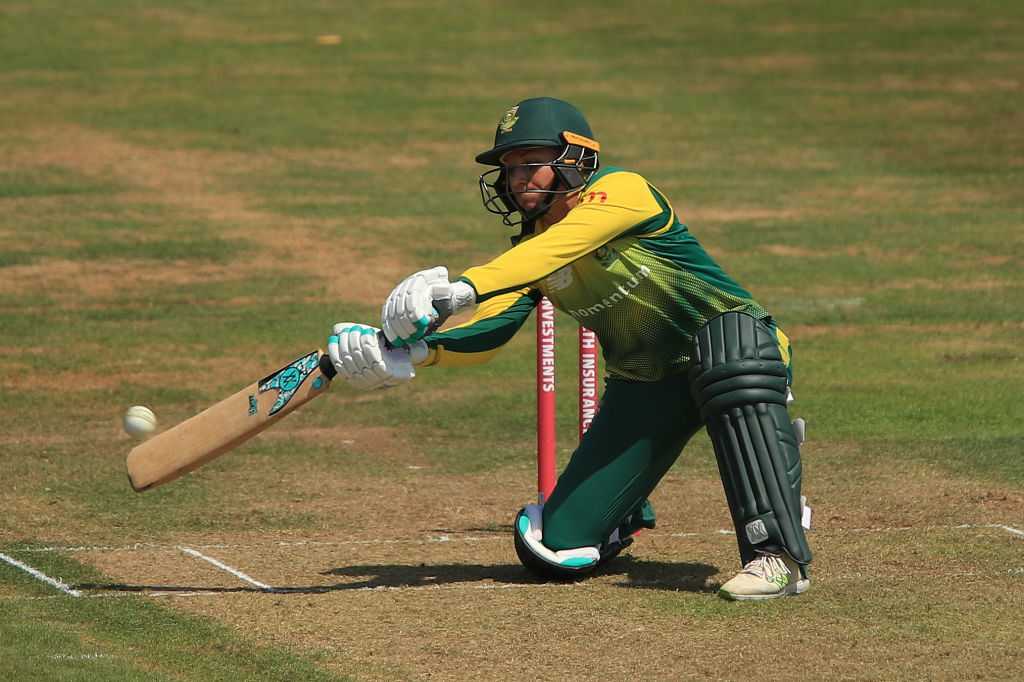
The South Africa national cricket team vs New Zealand national cricket team match scorecard from this bilateral series is useful for understanding the changing competitive balance between the teams. The results showed that both sides could perform strongly under different conditions, while the final two victories gave South Africa a positive finish to its tour.
Five-Match T20I Series Results
| Match | South Africa | New Zealand | Result |
|---|---|---|---|
| 1st T20I | 93/3 | 91 all out | South Africa won by 7 wickets |
| 2nd T20I | 107 all out | 175/6 | New Zealand won by 68 runs |
| 3rd T20I | 136/9 | 137/2 | New Zealand won by 8 wickets |
| 4th T20I | 164/5 | 145 all out | South Africa won by 19 runs |
| 5th T20I | 187/4 | 154/8 | South Africa won by 33 runs |
South Africa finished the five-match series with three victories, while New Zealand won two matches. The series was competitive because both teams experienced successful and disappointing performances during the tour.
Fifth T20I: Connor Esterhuizen’s Match-Winning Performance
The fifth T20I, played at Hagley Oval in Christchurch on March 25, 2026, was particularly important for South Africa. After winning the toss, New Zealand elected to field first. South Africa responded by scoring 187 runs for four wickets in 20 overs, establishing a challenging target of 188.
Connor Esterhuizen delivered an outstanding batting performance, scoring 75 runs from just 33 deliveries. His innings included five fours and six sixes, giving South Africa the acceleration it needed during the later stages. Rubin Hermann contributed 39 runs from 31 balls, while Wiaan Mulder scored 31 from 29 deliveries. Dian Forrester added an unbeaten 21, helping the team finish strongly.
New Zealand managed 154 runs for eight wickets in its 20 overs, falling 33 runs short of the target. Bevon Jacobs scored 36 runs from 19 deliveries, but the team could not maintain the required scoring rate. Connor Esterhuizen received the Player of the Match award for his outstanding innings. Gerald Coetzee and other South African bowlers helped restrict New Zealand during important stages of the chase.
Important Factors That Influence South Africa vs New Zealand Matches
The performances of both teams depend on several factors, including pitch conditions, weather, batting depth, bowling combinations and match situations. South African players generally bring considerable pace and physical intensity to their bowling attack. Their fast bowlers can create difficulties through bounce, movement and changes in pace. New Zealand, on the other hand, often relies on disciplined bowling, intelligent field placements and effective combinations of pace and spin. These contrasting approaches make encounters between the sides interesting for cricket analysts and supporters.
The South Africa national cricket team vs New Zealand national cricket team match scorecard also helps identify how conditions influence individual performances. For example, a batter’s strike rate can reveal whether the player was attacking or building an innings, while bowling economy provides an indication of how effectively a bowler controlled scoring opportunities. Partnerships are equally important because they show how players worked together to build a competitive total or chase a target.
1. Pitch and Ground Conditions
Pitch conditions can influence the result significantly. A flat batting surface generally supports aggressive stroke play, while a surface offering movement or additional bounce can benefit fast bowlers. Spin-friendly conditions may create opportunities for teams with quality slow bowlers. Eden Gardens and Hagley Oval offer different playing environments, making adaptability an important quality for both teams.
2. Opening Partnerships
Opening partnerships are especially valuable in T20 cricket because they establish the scoring pattern for the rest of the innings. New Zealand’s successful opening partnership in the World Cup semifinal demonstrated how an aggressive start can transform a difficult chase into a comfortable victory. South Africa also showed the importance of early partnerships during its successful performances in the bilateral series.
3. Middle-Order Stability
The middle order becomes important when early wickets fall or the opening batters cannot maintain their scoring momentum. Players such as David Miller, Tristan Stubbs and other middle-order options can help South Africa rebuild its innings. New Zealand also possesses batters capable of stabilising the innings while maintaining an appropriate scoring rate.
4. Death-Over Execution
The final overs of a T20 match often determine whether a team finishes with a competitive total. Batters must select attacking opportunities carefully, while bowlers need to control yorkers, slower deliveries and variations. A few successful overs can change the result, making death-over execution an important part of match preparation.
How to Read a Cricket Match Scorecard Correctly
For cricket followers, understanding scorecard statistics is useful because the final result does not always explain how a match was won. A complete scorecard contains several important measurements that describe the performance of each player. Runs and balls faced provide basic batting information, while fours, sixes and strike rates show how effectively a batter scored. Bowling figures include overs, runs conceded, wickets and economy rate, allowing readers to compare the performances of different bowlers.
When examining the South Africa national cricket team vs New Zealand national cricket team match scorecard, supporters should also pay attention to extras and fall of wickets. Extras include wides, no-balls, byes and leg-byes, which contribute to the team’s total without necessarily being credited to an individual batter. Fall-of-wickets information explains when important dismissals occurred and whether a team lost wickets during the powerplay, middle overs or final overs.
Here are some commonly used scorecard terms:
-
Overs: The number of completed and partially completed overs bowled.
-
Strike Rate: The number of runs scored per 100 balls faced.
-
Economy Rate: The average runs conceded per over by a bowler.
-
Partnership: The combined runs scored by two batters before a wicket falls.
Understanding these statistics makes it easier to analyse individual performances and compare the overall strength of both teams.
Current Scenario and Future Expectations
As of November 2026, the 2026 encounters between South Africa and New Zealand provide useful examples of the competitive nature of international T20 cricket. The World Cup semifinal showed New Zealand’s ability to produce an exceptional performance under knockout pressure, while the five-match bilateral series demonstrated South Africa’s ability to recover and finish strongly. These results offer valuable insights into the teams’ different playing styles and their ability to adjust to changing match conditions.
Looking ahead, both teams will continue focusing on developing their batting combinations, strengthening their bowling attacks and preparing younger players for international competition. South Africa will look to combine its experienced players with emerging talent, while New Zealand will aim to maintain its reputation for disciplined and adaptable cricket. Future meetings could produce different results depending on team selection, venue conditions, player availability and the format being played.
For supporters following the South Africa national cricket team vs New Zealand national cricket team match scorecard, it is important to distinguish between Test, ODI and T20I statistics. Each format has different requirements, and a player’s contribution can vary significantly depending on the match situation. Test cricket rewards patience and consistency, ODI cricket requires a balance between stability and acceleration, while T20 cricket places greater emphasis on scoring speed and immediate impact.
Conclusion
South Africa and New Zealand remain two competitive international cricket teams capable of producing exciting performances across different formats. Their 2026 encounters demonstrated the importance of individual brilliance, team coordination, tactical decisions and the ability to perform under pressure. South Africa’s seven-wicket victory in the February World Cup match, New Zealand’s nine-wicket semifinal victory in March and South Africa’s three wins in the subsequent five-match T20I series highlighted the changing balance of this rivalry.
The South Africa national cricket team vs New Zealand national cricket team match scorecard offers much more than a simple record of runs and wickets. It helps supporters understand batting contributions, bowling efficiency, partnerships and the important moments that influence match results. Whether following a major tournament, a bilateral series or an individual international fixture, analysing these statistics provides a clearer picture of each team’s strengths and weaknesses. As both teams continue competing at the international level, their future encounters are likely to remain an exciting part of the cricket calendar.