



The FIFA World Cup 2026 is set to be one of the most ambitious editions in the history of international football. The tournament brings together a record 48 national teams and expands the competition beyond the traditional 32-team format. Hosted across three countries, the event is designed to create a broader football experience while giving more nations the opportunity to compete on the world’s biggest stage. The tournament will take place in the United States, Canada, and Mexico, making it the first World Cup jointly hosted by three nations.
The expansion changes much more than the number of participating teams. It affects the group-stage structure, qualification opportunities, match schedule, travel demands, and the overall rhythm of the competition. Supporters will also experience football in a variety of cities and stadiums spread across North America. For players, the tournament represents an opportunity to compete in a larger global event, while emerging football nations will have a greater chance to test themselves against established international sides.
The FIFA World Cup 2026 is therefore not simply another edition of the world’s most watched football tournament. It represents a significant change in the way the competition is organized and experienced. From the opening matches to the final, the expanded tournament promises more games, more participating countries, and a wider representation of football cultures.
A New Era for the World Cup
One of the most important changes is the increase from 32 teams to 48. Previous editions featured eight groups of four teams, followed by the knockout rounds. The new format begins with 12 groups containing four teams each. The top two teams from every group advance, along with the eight best third-placed teams. This creates a Round of 32 before the traditional knockout journey continues.
The expanded format means that the tournament will contain more matches than previous editions. For football fans, that creates additional opportunities to watch different teams and discover players who may not have received as much international attention under the previous system. It also gives countries from regions with fewer qualifying places a stronger pathway into the global competition.
For national teams, however, reaching the tournament is only the beginning. The group stage will require consistency because every match can influence the qualification picture. Teams must manage squad depth, injuries, tactical adjustments, and the demands of traveling between host cities. The expanded competition could also produce more unexpected results because a larger number of footballing nations will have the opportunity to participate.
The Three Host Nations
The FIFA World Cup 2026 will be jointly hosted by Canada, Mexico, and the United States. This makes the tournament geographically distinctive because matches will be played across a huge area rather than being concentrated within one country. The arrangement allows supporters to experience different cultures, cities, stadium environments, and football traditions during the same tournament.
Mexico brings considerable World Cup history to the event. It has previously hosted the tournament twice and is now becoming the first country to host the men’s World Cup on three occasions. Canada, meanwhile, is hosting the men’s World Cup for the first time. The United States previously hosted the competition in 1994 and now returns as one of the principal host nations.
The shared hosting model also demonstrates the scale of football’s growth in North America. Soccer has developed substantially across the region, supported by professional leagues, youth programs, international competitions, and increasing fan interest. Hosting the World Cup provides another major opportunity to introduce the sport to new audiences and strengthen its position within the region.
How the Tournament Format Works
The group stage is one of the areas where fans will notice the biggest difference. With 48 teams divided into 12 groups of four, each team will play three group matches. The first- and second-placed teams in each group will qualify automatically for the knockout stage, while eight third-placed teams will also move forward.
| Tournament stage | Structure |
|---|---|
| Group stage | 48 teams across 12 groups |
| Group matches | Each team plays 3 matches |
| Round of 32 | 32 teams |
| Round of 16 | 16 teams |
| Quarter-finals | 8 teams |
| Semi-finals | 4 teams |
| Final | 2 teams |
This structure gives the tournament a different competitive dynamic. In the old 32-team system, finishing third in a group normally meant elimination. In 2026, some third-placed teams will continue into the knockout rounds. That means teams may remain alive in the competition even after collecting fewer points than the leading sides in their groups.
The knockout phase then becomes especially important because every match can end a team’s tournament. From the Round of 32 onward, teams must win their matches to progress, with extra time and penalties available when required under knockout rules. Tactical discipline becomes increasingly important as the tournament moves toward its decisive stages.
Host Cities and Stadium Experience
Another major feature of the FIFA World Cup 2026 is the number of host locations. Matches are scheduled across a wide selection of cities in the three host countries. This allows the tournament to showcase different metropolitan areas and football environments rather than focusing the entire event around one region.
The venues also offer different characteristics. Some stadiums are associated with long-established sporting traditions, while others are modern facilities designed to accommodate large crowds and major international events. For supporters, the stadium experience will be an important part of the tournament, combining football with local culture, entertainment, food, and community celebrations.
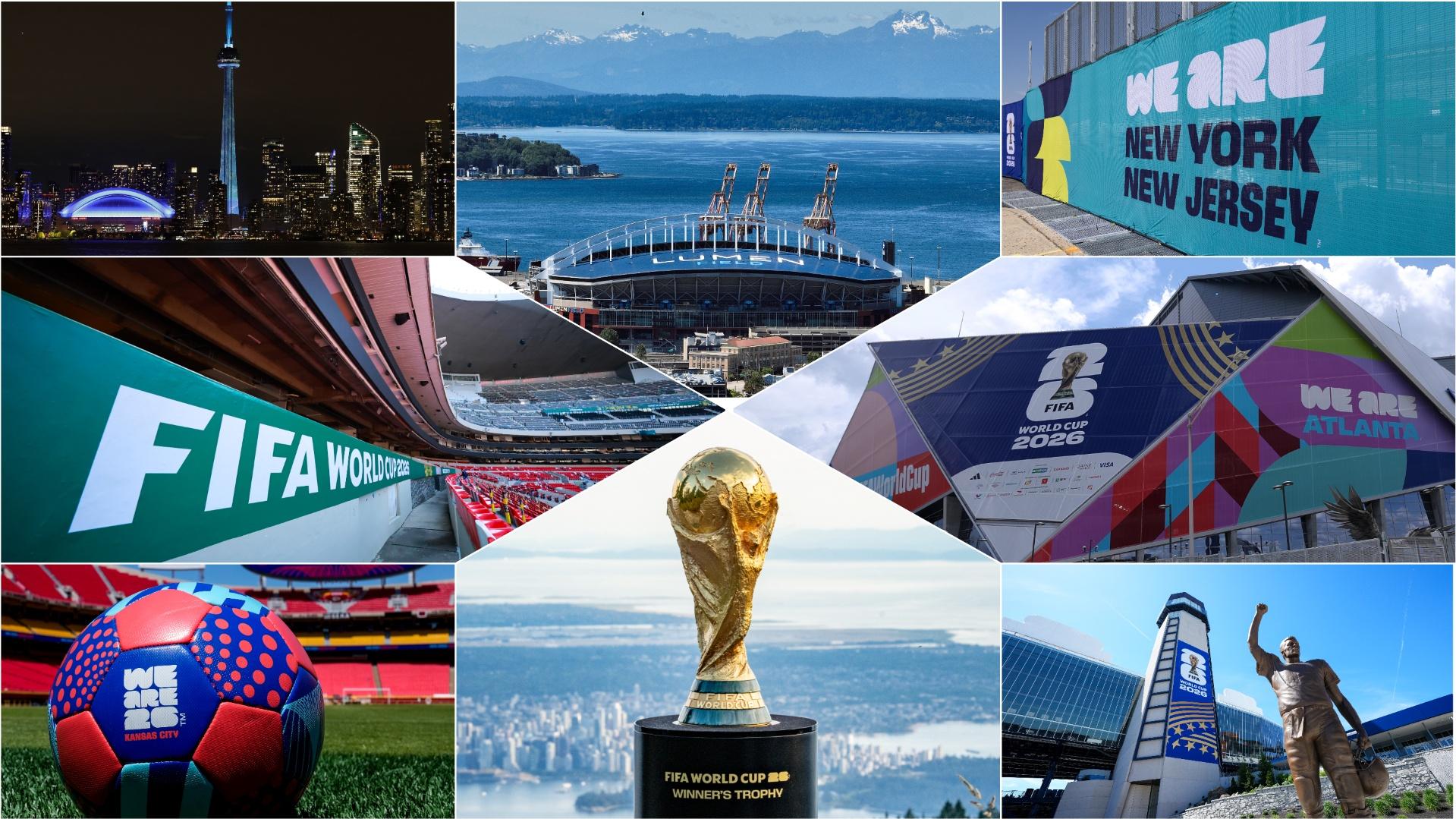
The geographical size of the tournament does introduce practical challenges. Teams and fans will need to consider significant travel distances between some locations. Weather conditions can also vary considerably across North America during the competition period. These factors may influence preparation, recovery, and match-day routines, making logistics an important part of the tournament experience.
Teams and Global Representation
The expansion to 48 teams is expected to create a more diverse World Cup field. More nations from different footballing regions can now participate, providing players and supporters with opportunities that were previously much harder to achieve.
For developing football nations, qualification can represent a major milestone. A World Cup appearance can increase domestic interest, provide valuable experience against stronger opponents, and inspire younger players. Even when a team does not progress deep into the tournament, competing at this level can have a lasting effect on the development of football within that country.
Established football powers will still enter the tournament with significant expectations. Teams with experienced international players and strong tournament histories will be closely followed, but the expanded format means there can be greater room for unfamiliar matchups. A nation making its debut or returning after a long absence could face one of the world’s most recognized teams, creating compelling stories throughout the group stage.
What Makes the 2026 Tournament Different
The scale of the competition is perhaps its defining characteristic. More teams, more matches, more host cities, and a larger geographic footprint combine to create an event unlike previous editions. Supporters will have more games to follow, while broadcasters and football organizations will have a much larger tournament to manage.
A few changes will be particularly noticeable:
- 48 national teams will participate instead of 32.
- The group stage will contain 12 groups of four teams.
- Eight third-placed teams will join the top two from each group in the knockout phase.
- Canada, Mexico, and the United States will jointly host the competition.
These changes also create new strategic questions for coaches. Managing player fitness across a longer tournament can become increasingly important, particularly for teams that progress through multiple knockout rounds. Squad depth may therefore become a major factor as teams attempt to maintain performance while dealing with fatigue and potential injuries.
The Role of Fans and Football Culture
The FIFA World Cup 2026 will bring supporters from around the world into cities across North America. International football has a unique ability to bring together people who may have little else in common. Fans travel not only to watch their national teams but also to experience the culture surrounding the tournament.
Public viewing areas, fan celebrations, local events, and football-related activities can transform host cities during major matches. Restaurants, hotels, transportation services, local businesses, and entertainment venues are also likely to experience increased activity around important fixtures.
For supporters traveling internationally, planning will be particularly important because of the tournament’s large geographical footprint. Unlike a World Cup hosted within a relatively compact country, following a team across several North American locations may require longer journeys and careful scheduling. Fans attending multiple matches will need to consider accommodation, transportation, match times, and recovery between trips.
Players to Watch and Emerging Talent
Every World Cup introduces football fans to players who become major international names. The expanded tournament provides even more opportunities for emerging talent to attract worldwide attention. Young players from established football nations may receive their first major tournament experience, while players from less frequently represented countries can gain global recognition through standout performances.
The tournament can also influence future careers. A strong World Cup campaign can increase a player’s reputation, attract attention from major clubs, and establish them as an important figure for their national team. At the same time, experienced players may see the tournament as an opportunity to add another significant chapter to their international careers.
The contrast between youth and experience is one of the most interesting elements of international football. Young players bring energy and unpredictability, while veterans often provide leadership during difficult moments. How coaches balance those qualities could have a major impact on their teams’ performances.
Technology and the Modern World Cup
Modern football tournaments increasingly depend on technology to support refereeing, broadcasting, stadium operations, and fan experiences. The FIFA World Cup 2026 will take place in an era where supporters can follow matches through television, mobile devices, streaming platforms, live statistics, and social media.

Technology has also changed how fans understand matches. Supporters can access detailed information about possession, shots, passing, player movement, substitutions, and other performance indicators. These developments make it possible to analyze a match almost immediately after a key moment occurs.
For referees and tournament officials, technological systems can assist decision-making and help maintain consistency. However, technology remains a supporting element rather than a replacement for human judgment. The balance between accurate officiating and maintaining the natural flow of football will continue to be an important part of the modern game.
Why the Tournament Matters Beyond Football
A World Cup can have effects far beyond the pitch. Hosting such a large international event can create opportunities for tourism, hospitality, infrastructure, cultural exchange, and community engagement. Millions of viewers around the world will see host cities through the tournament, potentially encouraging future travel and business activity.
The event can also influence young people. Seeing national teams compete at the highest level often motivates children to take up football and become more involved in local clubs or school programs. In regions where football has historically competed with other major sports for attention, a World Cup can provide an especially visible platform.
There is also a cultural dimension. Supporters bring flags, songs, traditions, languages, and customs from their home countries. The result is an international atmosphere where football becomes a common language. That sense of shared participation is one of the reasons the World Cup remains such a distinctive sporting event.
Preparing for the Biggest Matches
As the tournament progresses, attention will naturally shift toward the knockout stages. Group-stage results will determine the matchups, and a single poor performance can send a team home. Coaches will need to make difficult decisions about lineups, substitutions, formations, and player workloads.
For fans, the knockout phase often provides the most dramatic moments. A closely contested match can remain undecided after 90 minutes, forcing teams to handle the pressure of extra time or a penalty shootout. These situations can produce unforgettable sporting memories because the margin between success and elimination becomes extremely small.
The final stages will also test mental strength. Players must perform under enormous pressure while facing opponents with similar ambitions. Small tactical details, individual moments of quality, defensive concentration, and goalkeeper performance can all become decisive when the competition reaches its most important matches.
The Global Legacy of the 2026 World Cup
The FIFA World Cup 2026 has the potential to leave a lasting impact on football in North America and beyond. Hosting the tournament across Canada, Mexico, and the United States provides an opportunity to introduce international football to new audiences while strengthening existing fan communities.
Its legacy will not be measured only by the final score or the team that lifts the trophy. The tournament will also be remembered through the experiences of supporters, the emergence of new players, the performances of less-established football nations, and the memories created in host cities.
For football development, the tournament could encourage greater investment in youth systems, stadium infrastructure, coaching, grassroots programs, and professional competitions. The effects of hosting a major sporting event can continue long after the final match has ended, particularly when local communities remain engaged with the sport.
Conclusion
The FIFA World Cup 2026 represents a major transformation of international football. With 48 teams, 12 groups, three host nations, and matches spread across a vast part of North America, the tournament will be larger in both scale and scope than previous editions. Its expanded format creates new opportunities for nations that have historically found qualification difficult while also presenting established football powers with a different competitive environment. More importantly, the tournament will bring together football cultures from around the world. Players will compete for national pride, supporters will travel thousands of miles to follow their teams, and host cities will become temporary meeting points for millions of football enthusiasts. The combination of competition, culture, technology, and global attention makes this edition particularly significant.