

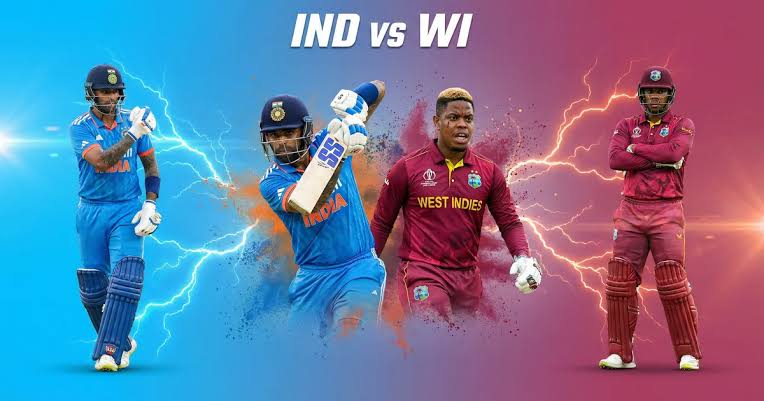


The India vs West Indies T20 2026 series has begun with plenty of excitement as two teams with contrasting styles meet in a five-match T20 international contest. India entered the series after winning two of the three preceding ODIs, while West Indies finished the ODI leg with a strong five-wicket victory in the final match. That result added an interesting competitive edge before the shortest-format matches began. The T20 series is being played across five Indian cities from October 6 to October 17, giving players several opportunities to establish themselves and giving supporters a packed schedule of high-intensity cricket.
The opening match in Lucknow immediately demonstrated why this contest is attracting attention. India defeated West Indies by eight wickets after restricting the visitors to 171. Shai Hope and Sherfane Rutherford provided resistance with important half-centuries, but India’s bowling attack continued to take wickets at regular intervals. The chase then became a one-sided affair as captain Shreyas Iyer produced a remarkable unbeaten century and Ishan Kishan provided valuable support. India reached the target in only 14.4 overs and consequently took a 1-0 lead in the five-match series.
With four matches still scheduled after the opening contest, the series remains open to significant changes in momentum. The Ranchi fixture is next, followed by matches in Indore, Hyderabad and Bengaluru. Each venue presents different conditions, meaning that a strong start does not automatically guarantee control of the entire series. The remaining games should therefore provide opportunities for tactical changes, player rotation and individual performances that could influence the final outcome.
India vs West Indies T20 2026 Schedule and Venues
The series consists of five T20 internationals, all scheduled to begin at 7:00 PM Indian Standard Time. Rather than keeping the entire contest in one or two locations, the matches are distributed across five venues. This creates a broader challenge for both teams because they must adapt quickly to changes in pitch characteristics, ground dimensions and local conditions.
| Match | Date | Venue | Time |
|---|---|---|---|
| 1st T20I | October 6, 2026 | Lucknow | 7:00 PM IST |
| 2nd T20I | October 9, 2026 | Ranchi | 7:00 PM IST |
| 3rd T20I | October 11, 2026 | Indore | 7:00 PM IST |
| 4th T20I | October 14, 2026 | Hyderabad | 7:00 PM IST |
| 5th T20I | October 17, 2026 | Bengaluru | 7:00 PM IST |
The first match has already given India an advantage, but the schedule leaves little room for complacency. The second match in Ranchi becomes particularly important for West Indies because another Indian victory would put the hosts in a commanding position. For India, the priority will be to carry the confidence of the opening performance into the next venue without becoming overly dependent on one outstanding batting performance.
First T20I: India Make a Powerful Start
The opening contest provided an excellent example of how quickly a T20 match can change direction. West Indies were asked to bat first and struggled during the early stages against India’s disciplined bowling. The visitors lost three wickets for 44 runs during the powerplay, creating pressure on the middle order. Hope and Rutherford then produced a valuable partnership, but India continued to find breakthroughs and eventually dismissed West Indies for 171 in 19.1 overs.
India’s response was even more impressive. Early wickets briefly offered West Indies hope, but Ishan Kishan and Shreyas Iyer took control. Iyer’s unbeaten 102 from 43 balls became the defining innings of the match, combining aggressive stroke play with excellent control. His century helped India complete the chase with 32 balls remaining. Such a large margin is significant in a T20 international because it demonstrates that India did not merely edge past the target; they dominated the second half of the contest.
For West Indies, the opening defeat highlights the importance of improving their powerplay batting and preventing India from settling into comfortable partnerships. Their middle order showed enough ability to create a competitive total, but the team needed more contributions from the rest of the batting lineup. Against a strong Indian bowling unit, losing several wickets early can make recovery extremely difficult.
Indian Batting Will Be a Major Talking Point
One of the biggest attractions of the India vs West Indies T20 2026 series is India’s depth in the batting department. The squad includes players capable of attacking during the powerplay, controlling the middle overs and accelerating dramatically during the final phase. Abhishek Sharma brings aggressive intent at the top, while players such as Ishan Kishan, Sanju Samson, Tilak Varma and Shivam Dube provide different styles of batting throughout the order. The presence of young players also gives the management opportunities to assess combinations beyond the immediate series.
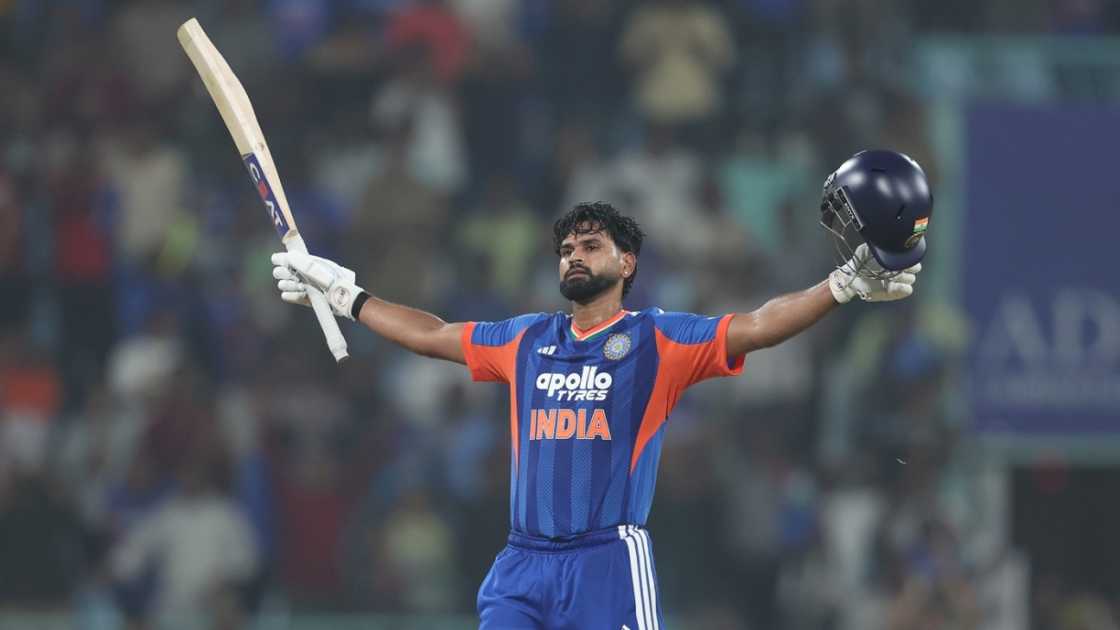
Shreyas Iyer’s opening-match century has naturally increased attention around India’s middle order. His ability to score quickly without allowing the innings to lose structure gives India another dimension. However, the larger challenge will be maintaining consistency across several matches. T20 cricket can change rapidly, and a team that depends too heavily on one batter may struggle when conditions become less favorable.
The selection of younger players is another storyline worth following. The squad contains emerging talent alongside established names, creating competition for places. Players who receive an opportunity in the remaining matches will be under pressure to show that they can perform at international level rather than simply benefiting from a favorable situation.
West Indies Need a Stronger Batting Response
West Indies have plenty of T20 experience and possess players capable of producing explosive innings. Their challenge in the opening match was not a complete lack of batting ability but the inability to sustain partnerships for long enough. Hope and Rutherford demonstrated that runs were available, yet the team lost wickets around their partnership and could not push the total significantly higher.
For the visitors, the remaining matches will require a more calculated approach. Aggressive cricket is an important part of T20, but aggression without a stable platform can lead to collapses. West Indies will need their top order to survive the initial overs while still maintaining a healthy scoring rate. If they can reach the middle overs with several wickets available, their powerful hitters can become much more influential.
The bowling department also has an important role. Defending against India’s deep batting lineup requires more than simply taking wickets. Bowlers need to control boundaries, vary their pace and force batters to take risks. If West Indies can prevent India from scoring freely during the powerplay, the pressure on India’s middle order will increase considerably.
Key Players to Watch in the Remaining Matches
Several players could become decisive as the series progresses. India’s bowling group includes Arshdeep Singh, Kuldeep Yadav, Axar Patel and other options who can contribute in different phases. Arshdeep’s ability to attack with the new ball and return during the death overs gives India tactical flexibility, while spin options can become especially important when opponents attempt to increase the scoring rate in the middle overs.
West Indies also have players who can change matches quickly. Shai Hope demonstrated his ability to build an innings during the opening match, while Sherfane Rutherford showed that he can provide aggressive runs when given enough time at the crease. Their challenge will be converting individual contributions into larger team totals.
The most important individual battles may therefore involve India’s bowlers against West Indies’ top order and West Indies’ bowlers against India’s aggressive opening batters. In T20 cricket, winning these small contests can often determine the direction of an entire innings.
Why the Remaining Matches Matter
The India vs West Indies T20 2026 contest is more than a five-match series because it gives both teams a valuable opportunity to evaluate combinations in competitive conditions. India has a large pool of players capable of competing for places, while West Indies can use the series to develop a combination capable of challenging stronger opponents.
For India, series control will be the immediate objective. A 2-0 advantage after the Ranchi match would create considerable pressure on West Indies, while a West Indies victory would bring the series back into balance. This makes the second match particularly important from a psychological perspective.
The short gap between matches also means recovery and adaptability will matter. Teams cannot spend several days rebuilding their strategy after every game. Players and coaching staff must quickly identify mistakes, adjust plans and prepare for different conditions. That aspect often separates successful T20 teams from sides that possess individual talent but struggle to maintain consistency.
Tactical Areas That Could Decide the Series
The powerplay will remain one of the most important phases. India’s ability to score quickly while preserving wickets gives them a strong foundation, but West Indies can change the contest by taking early wickets. Similarly, West Indies need to avoid losing multiple wickets during the opening six overs because that would leave their middle order under unnecessary pressure.
The middle overs could become a battle between spin and aggressive stroke play. India’s spin options can slow the scoring rate, while West Indies’ batters will be looking for opportunities to attack. Captains will therefore need to use bowlers intelligently rather than simply following a fixed sequence.
At the death, execution becomes even more important. Yorkers, slower deliveries and accurate wide bowling can restrict scoring, but one missed ball can disappear over the boundary. Batters, meanwhile, must identify the most favorable matchups and target specific bowlers rather than attempting high-risk shots on every delivery.
What Fans Can Expect From the Series
Fans can expect a mixture of aggressive batting, tactical bowling and opportunities for younger players. India’s strong start means the hosts currently have the advantage, but the series is long enough for West Indies to respond. The visitors also have experience in T20 cricket and should not be judged solely by the result of the first match.
The different venues add another layer of interest. Ranchi, Indore, Hyderabad and Bengaluru each offer their own atmosphere and playing characteristics. A batter who dominates in one venue may find conditions more difficult elsewhere, while a bowler who struggles on a high-scoring surface could become highly effective when the pitch offers more assistance.
The India vs West Indies T20 2026 series should therefore be viewed as a continuing contest rather than a result determined by the first game. India has demonstrated its ability to dominate, but West Indies still has enough quality to produce a strong response.
Important Storylines to Follow
A few major developments will be worth watching closely as the remaining matches unfold:
- Whether India’s aggressive batting approach continues to produce quick victories.
- How West Indies adjust their top-order strategy after the opening defeat.
- Whether India’s younger players receive opportunities during the series.
- Which bowlers become the most effective during the middle and death overs.
These storylines could become increasingly important if the teams remain close in the series standings. Individual performances may also influence future selection decisions, particularly for players competing for regular T20 positions.
India vs West Indies T20 2026 and the Bigger Picture
The series provides India with an opportunity to develop greater depth while continuing to build a winning T20 identity. The presence of several attacking batters means the team can potentially maintain pressure throughout an innings rather than relying on a single finisher. The bowling unit also offers variety, allowing the captain to change plans according to conditions and opposition matchups.
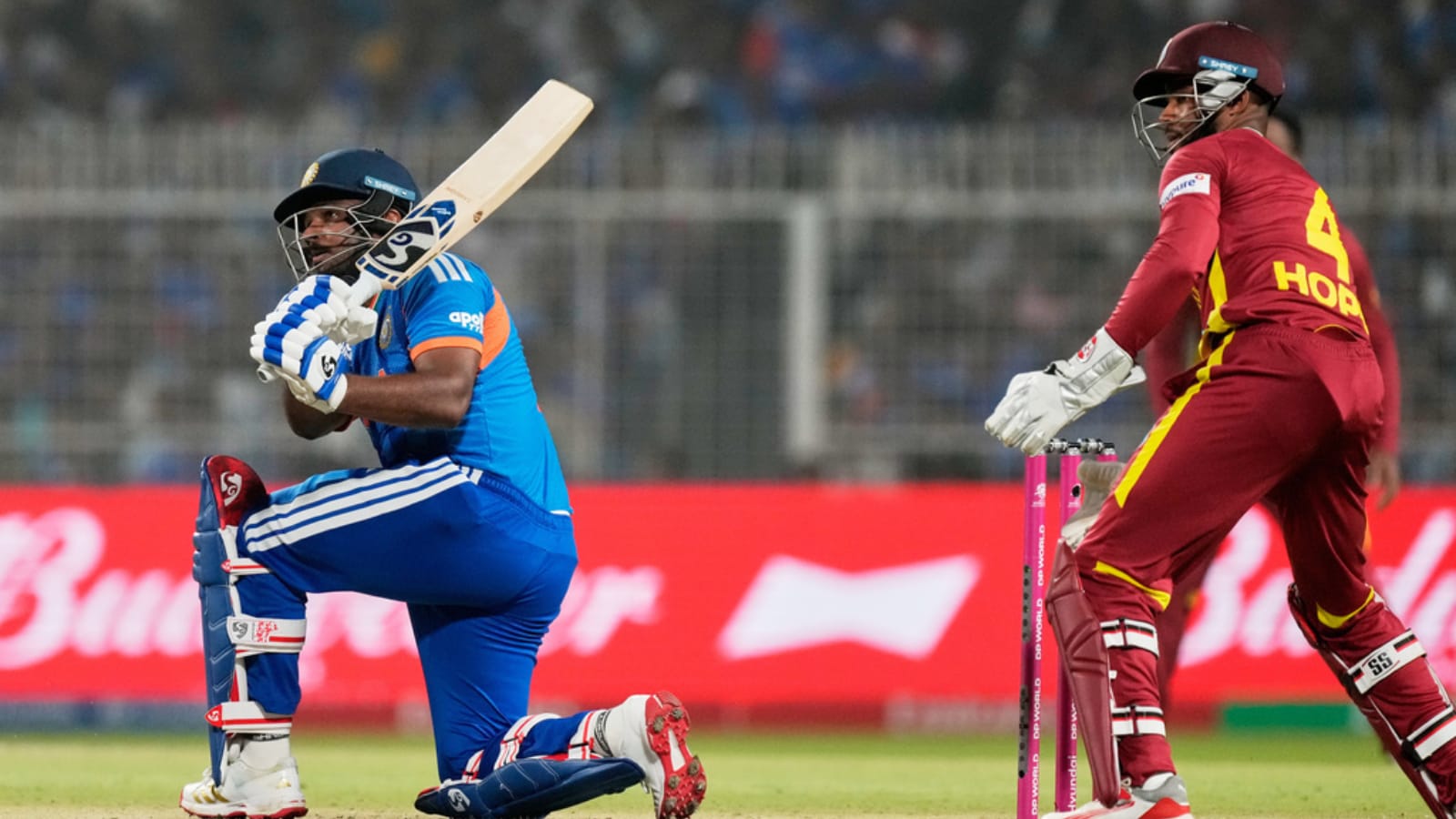
For West Indies, the series represents an opportunity to test their ability to compete against a strong side in Indian conditions. The team has the natural power and individual talent associated with West Indies cricket, but consistency remains crucial. Building partnerships with the bat and maintaining disciplined bowling spells will be essential if they want to challenge India across the remaining fixtures.
The broader importance of the India vs West Indies T20 2026 series also comes from the opportunity it provides to younger cricketers. T20 internationals can expose emerging players to pressure situations that domestic competitions cannot always replicate. A strong performance here can provide confidence, experience and greater clarity about a player’s international role.
Conclusion
The India vs West Indies T20 2026 series has already delivered a compelling opening chapter. India produced an emphatic eight-wicket victory in Lucknow after restricting West Indies to 171 and then completing the chase with exceptional speed. Shreyas Iyer’s unbeaten century was the headline performance, while India’s bowlers and Ishan Kishan also made important contributions. However, the contest is far from finished. Four matches remain, with Ranchi, Indore, Hyderabad and Bengaluru set to host the next stages of the series. West Indies will be looking for a stronger response, while India will attempt to build on its early advantage. The combination of experienced performers, emerging talent, different venues and contrasting playing styles makes the remaining matches worth following closely.