


Introduction
Women’s international cricket has become increasingly competitive, with India and South Africa establishing themselves as two exciting teams in the modern game. Both sides feature talented batters, disciplined bowlers and experienced players who can change the direction of a match within a few overs. Their encounters across Test matches, One Day Internationals and T20 Internationals regularly provide entertaining cricket and important moments for fans.
The India women’s national cricket team vs South Africa women’s national cricket team match scorecard is particularly interesting because it provides more than just the final result. It helps readers understand individual batting contributions, bowling performances, partnerships, extras, wickets and the overall progress of a match. Whether India are defending a competitive total or South Africa are chasing a challenging target, the scorecard offers a clear picture of how the contest develops.
In this article, we explore an important recent T20 international encounter between these teams, examine the performances of key players and explain the statistics that matter when evaluating their cricketing rivalry. The discussion also highlights the importance of match conditions, team combinations and strategic decisions in determining the outcome.
Latest India Women vs South Africa Women Match Scorecard
One of the notable encounters in the 2026 bilateral T20I series took place on April 27 at Willowmoore Park in Benoni, South Africa. It was the fifth T20 International of the series, and South Africa produced a strong batting performance before restricting India’s chase.
South Africa Women won the toss and elected to bat first. Their captain, Laura Wolvaardt, delivered an outstanding innings, scoring an unbeaten 92 runs from 56 deliveries. India eventually finished on 132/8 in their allotted 20 overs, giving South Africa a 23-run victory.
Match Summary
| Match Information | Details |
|---|---|
| Match | 5th T20I |
| Date | April 27, 2026 |
| Venue | Willowmoore Park, Benoni |
| Toss | South Africa Women won |
| South Africa Women | 155/6 (20 overs) |
| India Women | 132/8 (20 overs) |
| Result | South Africa won by 23 runs |
| Highest scorer | Laura Wolvaardt (92*) |
| India’s highest scorer | Bharti Fulmali (40) |
The result demonstrated South Africa’s ability to defend a competitive total through disciplined bowling and timely wickets. India’s batting unit had promising contributions but could not maintain the required scoring rate throughout the chase.
South Africa Women’s First Innings: A Strong Batting Performance
South Africa began their innings with the objective of building a solid foundation. Laura Wolvaardt and Sune Luus provided an important opening partnership, helping the team reach 75 runs before Luus was dismissed. Luus contributed 23 runs from 23 balls, including two boundaries and one six. Although the middle order experienced a few setbacks, Wolvaardt maintained control and continued to score at an impressive pace.
Wolvaardt’s unbeaten 92 was the defining performance of the innings. She faced 56 deliveries and struck 11 fours and two sixes, finishing with a strike rate of 164.29. Her innings combined excellent timing, intelligent shot selection and the ability to find gaps against different bowling styles. Sinalo Jafta also provided useful late acceleration, scoring 16 not out from just eight deliveries. These contributions helped South Africa finish at 155/6, a total that eventually proved sufficient.
Important Batting Contributions from South Africa
South Africa’s batting performance was built around Wolvaardt’s consistency rather than contributions from every player. The early partnership gave the captain enough time to settle, while the lower-middle order helped maintain momentum during the final overs. Chloe Tryon added 12 runs, while Anneke Bosch scored eight. Although these scores were relatively modest, the team’s ability to keep Wolvaardt at the crease proved decisive.
The innings also showed why partnerships are important in T20 cricket. A batter who remains unbeaten until the end can influence the final total even when wickets fall at the other end. Wolvaardt managed the innings intelligently, rotating the strike during quieter periods and finding boundaries whenever the bowlers offered opportunities.
India Women’s Bowling Performance
India’s bowlers had some successful moments, particularly during the middle overs. Shree Charani and Deepti Sharma claimed two wickets each, while Renuka Singh Thakur also picked up two important dismissals. Their efforts prevented South Africa from reaching an even higher total.
Renuka Singh delivered an economical spell, conceding 21 runs in four overs and taking two wickets. Shree Charani also bowled effectively, taking two wickets for 22 runs in her four overs. Deepti Sharma claimed two wickets but conceded 37 runs. These performances reflected India’s ability to create opportunities, although containing Wolvaardt remained a significant challenge.
India’s bowling could have benefited from greater consistency during the final overs. South Africa scored 49 runs in the powerplay and maintained enough momentum to finish with 155 runs. The Indian attack managed to take wickets, but it could not completely prevent the home team’s captain from controlling the innings.
India Women’s Run Chase: Where the Match Changed
India required 156 runs to win, which meant maintaining a scoring rate of 7.8 runs per over. However, the beginning of the chase was challenging. Shafali Verma was dismissed for four runs, while Jemimah Rodrigues could contribute only one run. These early wickets created pressure on the middle order and prevented India from establishing the aggressive start needed in a T20 chase.
Anushka Sharma scored 17 runs from 21 deliveries, while captain Harmanpreet Kaur contributed 22 from 28 balls. Their efforts helped stabilise the innings temporarily, but India struggled to accelerate consistently. South Africa’s bowlers continued applying pressure through accurate lines, variations and well-planned field placements.
Bharti Fulmali became India’s leading scorer with 40 runs from 30 balls. She struck four boundaries and two sixes, providing the innings with some much-needed attacking intent. Richa Ghosh remained unbeaten on 25 from 15 deliveries, showing her ability to score quickly towards the end. Nevertheless, the wickets lost earlier in the innings made the target increasingly difficult to achieve.
India finished on 132/8 after 20 overs, falling 23 runs short. The innings highlighted the importance of maintaining partnerships and accelerating at the right stages rather than depending heavily on the lower order for late runs.
South Africa Women’s Bowling: The Key to Victory
South Africa’s bowling attack played a crucial role in defending the target. Nonkululeko Mlaba and Nadine de Klerk claimed two wickets each, while Eliz-mari Marx, Chloe Tryon and Ayabonga Khaka picked up one wicket apiece. Their combined effort restricted India’s scoring opportunities and ensured that the required run rate continued to increase.
Mlaba was particularly impressive, conceding only 15 runs in four overs and taking two wickets. Her economical spell put pressure on India’s middle order at a critical stage. De Klerk also contributed with two wickets, including the dismissal of Anushka Sharma and Deepti Sharma. These performances demonstrated how a balanced bowling attack can defend a total even when the opposition has several experienced batters.
Best Bowling Figures
| Player | Overs | Runs | Wickets |
|---|---|---|---|
| Nonkululeko Mlaba | 4 | 15 | 2 |
| Nadine de Klerk | 3 | 26 | 2 |
| Eliz-mari Marx | 3 | 12 | 1 |
| Chloe Tryon | 4 | 28 | 1 |
| Ayabonga Khaka | 4 | 29 | 1 |
The figures explain why South Africa successfully defended their total. Mlaba controlled the middle overs, while the other bowlers regularly created wicket-taking opportunities. India’s batters were unable to build a substantial partnership, allowing South Africa to remain in control of the contest.
Key Players Who Influenced the Match
Individual performances often determine the outcome of closely contested international cricket matches. In this encounter, Laura Wolvaardt was clearly the standout performer for South Africa. Her unbeaten 92 provided the foundation for the team’s total and gave the bowlers a defendable target. She demonstrated excellent leadership by remaining at the crease despite losing partners at regular intervals.
For India, Bharti Fulmali and Richa Ghosh provided the most encouraging batting contributions. Fulmali’s 40 demonstrated her ability to attack the opposition, while Ghosh’s unbeaten 25 showed how quickly she can score under pressure. On the bowling side, Renuka Singh, Shree Charani and Deepti Sharma contributed two wickets each. Their performances offered some positives despite the final result going against India.
Why Laura Wolvaardt’s Innings Was Special
Wolvaardt’s innings was important because she combined patience with aggression. Instead of attempting risky shots from the beginning, she assessed the conditions and gradually increased her scoring rate. Her 11 fours and two sixes reflected her ability to find boundaries without depending entirely on power hitting.
Her performance also demonstrated the importance of batting through the innings. In T20 cricket, losing wickets can interrupt momentum, but an experienced batter can maintain stability while allowing other players to attack. Wolvaardt fulfilled that responsibility and remained unbeaten until the end.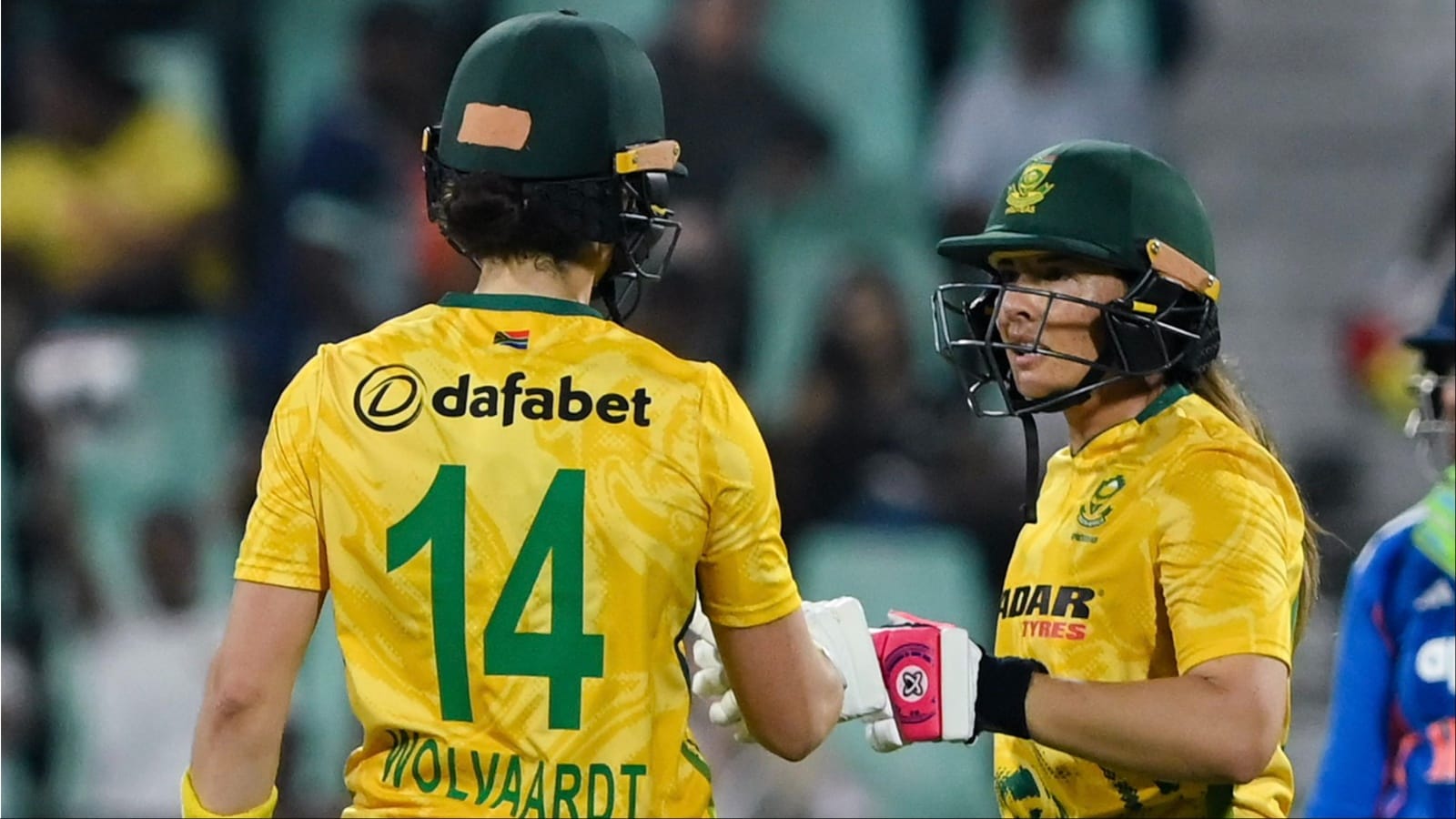
How to Understand the Match Scorecard
A cricket scorecard contains several statistics that help fans understand the progress of a match. For readers following the India women’s national cricket team vs South Africa women’s national cricket team match scorecard, knowing these details makes match analysis more meaningful.
The batting section displays runs scored, balls faced, boundaries, sixes and strike rates. The bowling section provides information about overs bowled, maiden overs, runs conceded, wickets taken and economy rates. These figures help readers identify which players performed consistently and which phases created difficulties for a team.
Some important scorecard terms include:
-
Strike Rate: The number of runs scored per 100 balls faced by a batter.
-
Economy Rate: The average number of runs conceded by a bowler per over.
-
Fall of Wickets: The team score and over at which each batter was dismissed.
-
Extras: Runs awarded through wides, no-balls, byes and leg-byes.
For example, Wolvaardt’s strike rate of 164.29 indicated that she scored at an excellent pace. Similarly, Mlaba’s economy rate of 3.75 showed how effectively she restricted India’s scoring. Understanding these statistics allows fans to evaluate performances beyond the final result.
Head-to-Head Rivalry Between India and South Africa Women
India and South Africa have developed a competitive rivalry in women’s international cricket. Their encounters across different formats have featured outstanding batting performances, effective spin bowling, fast-bowling spells and exciting finishes. Both teams have developed strong cricketing systems and regularly introduce talented players into their international squads.
India traditionally bring a combination of technically skilled batters, quality spin options and experienced all-rounders. South Africa, meanwhile, have built a competitive team around powerful batting, athletic fielding and a versatile bowling attack. Players such as Harmanpreet Kaur, Smriti Mandhana, Deepti Sharma, Laura Wolvaardt, Marizanne Kapp and Chloe Tryon have contributed to the quality and popularity of this rivalry.
The India women’s national cricket team vs South Africa women’s national cricket team match scorecard also helps fans compare performances across different formats. A batter who dominates in an ODI might approach a T20 match differently because the shorter format requires faster scoring. Similarly, bowlers must adjust their strategies depending on the pitch, boundaries and opposition batting combinations.
Tactical Lessons from the Match
The Benoni encounter provided several important lessons for both teams. South Africa showed that a strong batting performance does not always require every player to score heavily. A dominant innings from the captain, supported by useful contributions from other batters, was enough to establish a competitive total.
India, on the other hand, needed greater stability during the powerplay and middle overs. Losing early wickets made the chase more difficult, while the middle-order batters struggled to increase the scoring rate. The match demonstrated that building partnerships is just as important as hitting boundaries in T20 cricket.
A few major tactical takeaways were particularly noticeable:
-
South Africa benefited from an established opening partnership.
-
Wolvaardt’s ability to bat until the final overs strengthened the total.
-
Mlaba’s economical bowling created pressure during India’s chase.
-
India’s early batting dismissals affected the required run rate.
These lessons are relevant beyond one match because they highlight the importance of balancing aggression with consistency. A team must assess match conditions and select the right approach rather than relying on an identical strategy in every situation.
Upcoming India Women vs South Africa Women Cricket Fixtures
The rivalry is expected to continue with another important bilateral contest later in 2026. According to the published 2026–27 tour schedule, South Africa Women are scheduled to host India Women for a multi-format series beginning in December.
The programme includes a Test match starting on December 9 at St George’s Park in Gqeberha, followed by three ODIs and five T20 Internationals. The ODI matches are scheduled to take place in Paarl, Cape Town and Bloemfontein, while the T20I fixtures are planned for Benoni and Potchefstroom.
This upcoming series will provide another opportunity for both teams to test their combinations and prepare for future international competitions. India’s batters will look to perform consistently against South Africa’s bowling attack, while the home side will aim to use familiar conditions to its advantage.
For followers of the India women’s national cricket team vs South Africa women’s national cricket team match scorecard, the upcoming series should offer plenty of opportunities to compare player statistics, batting partnerships, bowling performances and match results.
What Fans Should Watch in Future Encounters
Future matches between these teams will likely depend on how effectively their top-order batters handle pressure. India have the batting depth to produce competitive totals, but they need consistent starts and better partnerships. South Africa will aim to continue using their strong batting lineup and disciplined bowling combinations to challenge their opponents.
The India women’s national cricket team vs South Africa women’s national cricket team match scorecard will remain an important reference for evaluating these improvements. Fans should pay attention to individual strike rates, bowling economy, powerplay scores and middle-order partnerships because these details often explain why one team wins and another falls short.
Another important factor will be adaptability. South African conditions can present different challenges for visiting batters, particularly when facing pace and bounce. India’s ability to adjust its batting technique and bowling plans will be an important part of the upcoming series.
Conclusion
The fifth T20I between India Women and South Africa Women on April 27, 2026, was an impressive performance by the home side. South Africa scored 155/6, powered by Laura Wolvaardt’s unbeaten 92, before restricting India to 132/8. The 23-run victory highlighted the importance of strong partnerships, disciplined bowling and effective execution under pressure.
The India women’s national cricket team vs South Africa women’s national cricket team match scorecard provides a detailed understanding of how the contest unfolded. Wolvaardt’s outstanding batting, Bharti Fulmali’s contribution and the effective bowling performances of Nonkululeko Mlaba and Renuka Singh were among the major highlights.
As both teams prepare for their upcoming international commitments, their rivalry promises more competitive cricket. For fans, analysing scorecards is an excellent way to understand player performances, identify team strengths and follow the development of women’s cricket. The upcoming 2026–27 series should provide another exciting chapter in this international rivalry.